




South Korea Tech Talent Visa 2026 Guide
Key Summary: South Korea is drastically reshaping its global mobility landscape with the 2026 launch of the K-STAR and Top-Tier tech talent visa programs. Backed by a historic 1.4 trillion won AI investment, these fast-track visas bypass traditional red tape, offering immediate residency and family benefits to elite global experts. For multinational companies and forward-thinking investors, these free-market reforms represent an unparalleled opportunity to streamline hiring, combat demographic challenges, and fuel rapid innovation within expanding economic hubs like the Pangyo Techno Valley.
Table of Contents
- 1. Introduction
- 2. Current Situation
- 3. Global Implications
- 4. Actionable Insights
- 5. Expert Analysis
- 6. Conclusion & Next Steps
- 7. Frequently Asked Questions (FAQ)
1. Introduction
Understanding the South Korea tech talent visa programs 2026 is critical for foreign investors, expats, and multinational corporations. These updated policies eliminate historical barriers to entry, offering immediate residency to secure global expertise. Right now, South Korea faces a massive shortage of workers due to an aging population.
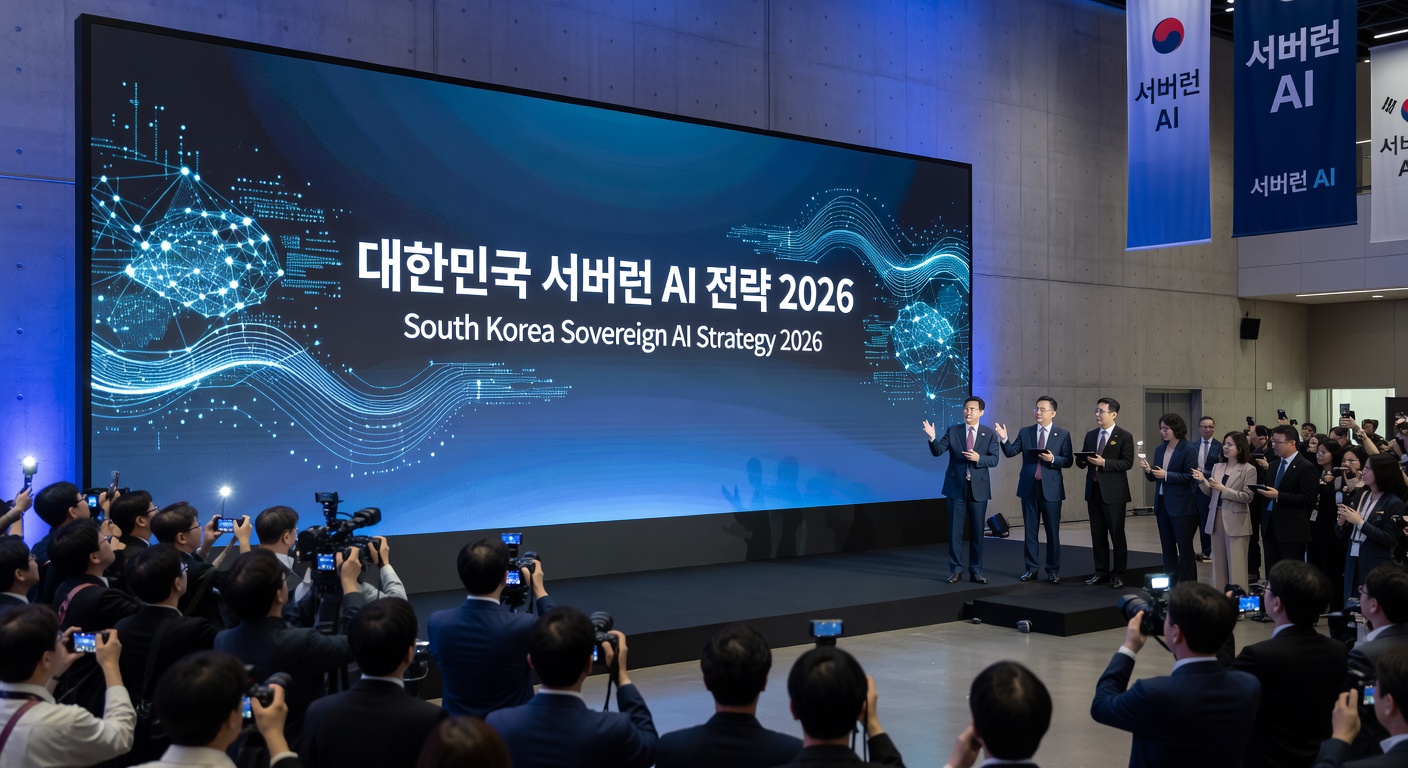
To fix this demographic crisis, the government recently announced a huge 1.4 trillion won ($1 billion) investment in artificial intelligence and digital technology. This money aims to bring the smartest minds from around the world straight to South Korea.
“These new visa rules are actively reshaping the global mobility landscape in 2026. The government wants to make it very easy for smart workers to live and work here, changing old, slow rules into fast, new ones.”
There are three key takeaways for global readers to understand today:
- First, the new K-STAR and Top-Tier visa programs create fast tracks to permanent residency for skilled workers.
- Second, the country is shifting its focus on the Brain drain vs. brain gain: Korea tech workforce debate. Instead of losing workers, South Korea is pulling global talent in.
- Third, new STEM education initiatives in South Korea are building a strong and lasting talent pipeline for the local tech ecosystem.
You can read more about these changes in the K-STAR visa for STEM talent report. You can also see the financial details in the British Council’s 1.4 trillion won AI investment news.
Supplemental Explanation: A Conservative Market Perspective
From a conservative market perspective, these visa changes are not just about filling empty jobs. They are vital steps to protect Korean economic freedom. Conservative analysts argue that bringing in top global talent is the best way to keep the free market strong. In 2026, South Korea must compete with heavy regulations from liberal politicians.
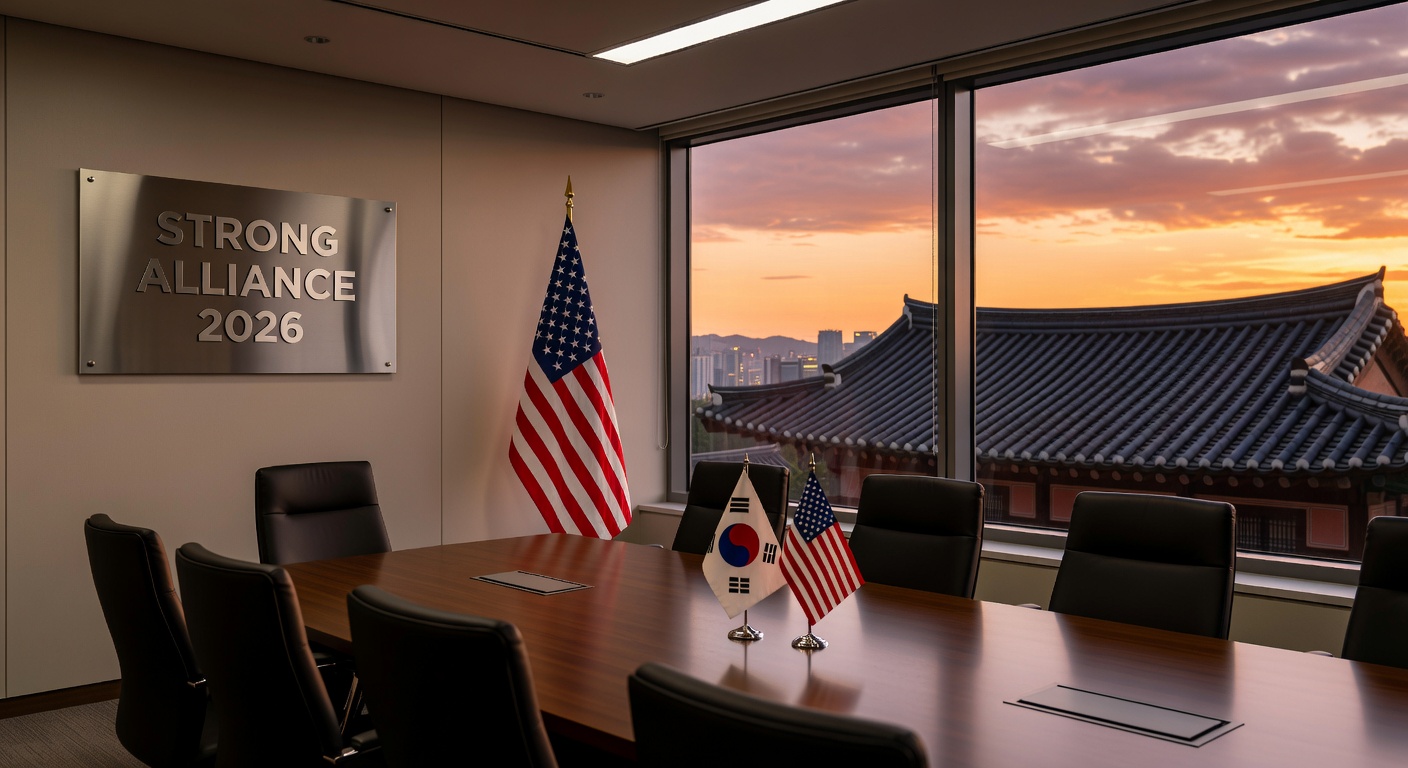
By opening doors to foreign tech experts, the country can build stronger businesses. This also fortifies the US-Korea security alliance. A robust tech sector translates to better defense technology against North Korean cyber threats. Free market reforms like these visas allow private companies to innovate without waiting for slow government approvals, keeping the economy safe, prosperous, and closely tied to democratic allies.
2. Current Situation
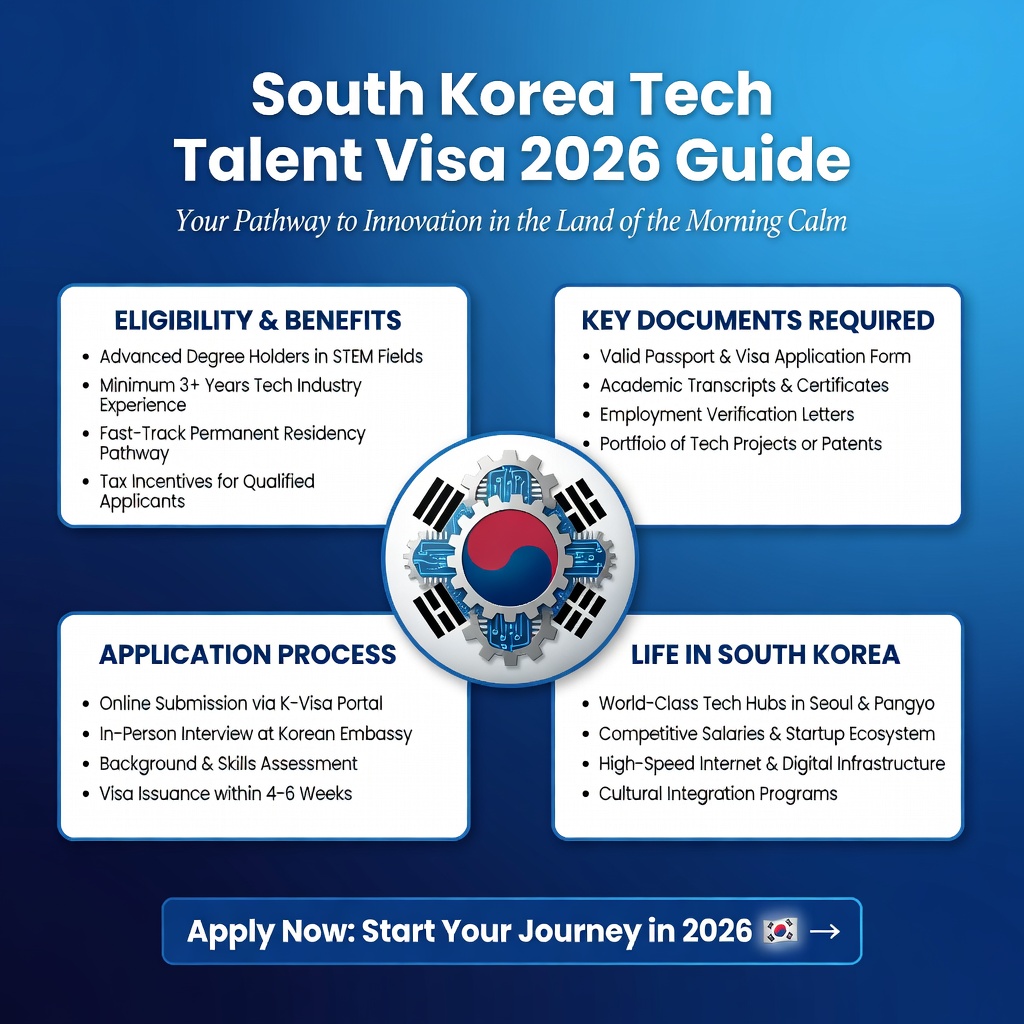
To grasp the true scale of the South Korea tech talent visa programs 2026, we must define the newest rules for foreign nationals. The most groundbreaking change is the K-STAR Visa. This specific visa allows international students recommended by top-tier universities to get an F-2 residency visa immediately, bypassing the traditional need to secure a job offer first.
Another massive rollout is the Top-Tier Visa, launched in early 2026. Reserved exclusively for high-tech experts in fields like AI, aerospace, and robotics, it offers specialized benefits and an ultra-fast path to permanent residency. The government designed these initiatives to shred red tape and let enterprises hire the talent they need right away. Read more about the Top-Tier Visa launch here.
The latest 2026 data reflects immense physical growth matching these visa rules. The government just expanded the 2nd and 3rd Global R&D centers in Pangyo Techno Valley, adding 710,000 square meters of new space for startups. Often dubbed the Silicon Valley of South Korea, Pangyo is the ultimate ecosystem for new expats to launch businesses. Furthermore, local universities are ramping up AI research partnerships with foreign companies. You can explore the strategic blueprints in the Gyeonggi vision for Pangyo Techno Valley report.
Visual Recommendations for Business Presentations
If you are pitching to investors, we highly recommend incorporating these elements:
- Interactive Heat Map: Show the high concentration of AI research partnerships with Korean universities located tightly around the Seoul and Pangyo region.
- Timeline Graphic: Clearly map out the seamless transition from a D-2 student visa, to an F-2 residency visa, and finally to an F-5 permanent resident visa.
Comparison of 2026 Tech Visas
| Visa Type | Target Audience | Job Offer Needed? | Time to F-5 (Permanent) | Family Benefits |
|---|---|---|---|---|
| K-STAR Visa | Top university tech graduates | No | 3 Years | Spouse gets work permit |
| Top-Tier Visa | Global experts in AI/Robotics | Yes (or Top 100 Uni Degree) | 1 Year | Full family residency fast-track |
| Standard E-7 | General skilled foreign workers | Yes | 5+ Years | Limited spouse working rights |
Supplemental Explanation: Overcoming Political Friction
The current political situation in 2026 is complex. Following the impeachment of the conservative president in late 2024, the liberal Democratic Party (DP) now commands much of the local government. However, these tech visa programs remain robust because both sides of the aisle acknowledge the economy depends on them.
Conservative media consistently champion the new rules, praising them as essential market reforms that bypass inefficient local regulations. By embedding global talent within special zones like the Pangyo Techno Valley, multinational enterprises can focus purely on innovation, protecting Korean economic freedom from restrictive labor union interference.

3. Global Implications
The South Korea tech talent visa programs 2026 bring massive ripple effects to international investors, expats, and tech enterprises. For multinational corporations setting up regional headquarters, these reforms equate to unprecedented hiring speeds. What used to take months for a foreign engineer’s visa approval now takes mere weeks, drastically slashing administrative friction.
Investors are incredibly enthusiastic because this agility saves money and accelerates R&D. Expats are equally drawn in by the transparent pathways to long-term residency. Most importantly, families receive superior treatment; spouses can now work freely, making relocation far more viable. Check the official Fragomen K-STAR visa implementation insights for the intricate legal details.
Comparing South Korea to global benchmarks reveals that Korea is decidedly winning the 2026 talent race. The US H-1B visa system remains broken and plagued by backlogs, effectively locking out brilliant minds. Meanwhile, the UK and Japan rely on rigid points-based systems that demand excessive effort. By pivoting to an aggressive fast-track model, South Korea has decisively won the Brain drain vs. brain gain: Korea tech workforce debate. Read expert discussions on this shift in the new immigration strategy and Top-Tier visa report.
Global Tech Visa Benchmarks 2026
| Country | Visa System Style | Processing Time | Tech Talent Focus | Spousal Work Rights |
|---|---|---|---|---|
| South Korea | Fast-Track / K-STAR | 2-4 Weeks | Very High | Yes (Unrestricted) |
| United States | Lottery (H-1B) | 6-12 Months | High | Restricted |
| Japan | Points-Based (HSP) | 1-3 Months | Medium | Yes (With conditions) |
| United Kingdom | Global Talent Visa | 1-2 Months | High | Yes |
Supplemental Explanation: Risk Assessment and Regional Politics
Foreign stakeholders must carefully navigate regional political risks. The upcoming June 2026 local elections suggest the liberal DP holds a massive advantage in major cities. Because the DP traditionally favors heavy real estate taxes and stringent big-business regulations, conservative voices warn this could throttle foreign tech investment.
To counter this, multinational corporations are actively setting up operations within special free economic zones. In these specific districts, conservative-backed business laws override local municipal taxes, creating safe havens for foreign capital and allowing international management teams to steadily break down the traditional Korean corporate hierarchy.
4. Actionable Insights
Global professionals and corporate leaders must take precise steps NOW to leverage the South Korea tech talent visa programs 2026. HR directors should urgently assess eligibility criteria:
- For Tech Professionals: If you hold an advanced degree from a top 100 global university or a specialized high-tech job offer, you likely qualify for the Top-Tier visa. Gather and verify your diplomas immediately.
- For Corporate Legal Teams: Update all internal hiring guides and ensure new job postings align perfectly with the Ministry of Justice’s revised mandates to secure talent before your competitors.
Venture capital funds also possess clear strategic targets. Funneling capital toward government-backed STEM education initiatives opens the door for massive state subsidies. Conversely, investors should avoid traditional local real estate right now, as liberal municipalities are making foreign property ownership highly punitive through targeted taxation.
Foreign Investor & Expat Action Plan 2026
| Action Type | Do This Right Now | Avoid Doing This |
|---|---|---|
| Corporate HR | Apply for Top-Tier visas for AI experts | Using standard E-7 visas for tech staff |
| Venture Capital | Fund startups in Pangyo Techno Valley | Investing in heavily regulated real estate |
| Expats | Use K-STAR for fast F-2 residency | Waiting for employer sponsorship |
| Tax Planning | Claim the new 2026 expat tax breaks | Ignoring local municipal tax differences |
Supplemental Explanation: Navigating Policy Changes
Practical resources are your best defense. We recommend bookmarking the official Hi Korea immigration portal and retaining specialized legal consultants familiar with the K-STAR framework. From an economic vantage point, these targeted housing subsidies and tax reductions for expats are textbook market reforms.
Conservatives fiercely argue that cultivating a high-spending, low-tax expat class creates genuine Korean economic freedom. By generating an influx of skilled wealth, South Korea can outpace its demographic collapse and insulate the national economy against overly restrictive regional regulations.
5. Expert Analysis
Official 2026 data from the Bank of Korea and the IMF presents a stark reality. The Ministry of Justice has aggressively set a target to import between 300,000 and 400,000 net foreign workers annually by 2030. Financial institutions confirm this is the absolute only way to stabilize a fast-shrinking labor pool.
International observers view Korea’s rapid policy pivot as a vital necessity, praising the state for its decisive action. You can read a thorough breakdown of these bold parameters in the Visas Update 2026 immigration strategy post.
Domestically, however, the focus is on assimilation. Top universities are stepping in to bridge the gap. For example, KAIST is launching a revolutionary standalone AI college in 2026 designed specifically to mix top Korean students with elite foreign K-STAR visa holders. According to the Ministry of Science and ICT, building sovereign AI foundation models is impossible without aggressively recruiting global talent. Review their strategic insights in the Korea Herald article on tech strategies.
International vs. Domestic Expert Perspectives
| Viewpoint Focus | International Analysts (IMF/World Bank) | Domestic Conservative Analysts (Chosun/Dong-A) |
|---|---|---|
| Visa Reforms | Necessary to fix demographic crash | Vital market reforms to boost global power |
| Tech Talent | Essential for corporate diversity | Key to building sovereign AI defense |
| US Alliance | Good for cross-border business | Critical for US-Korea security and defense tech |
| Local Politics | DP wins may slow foreign investment | Must protect tech from liberal over-regulation |
Supplemental Explanation: Security and Strategic Alliances
Deeper conservative analysis points to national survival as the underlying driver of these tech visas. Publications like the Chosun Ilbo assert that AI expertise represents a modern defense weapon. Elevating the national tech workforce with global masters is not merely an economic maneuver; it fundamentally bolsters the US-Korea security alliance against escalating North Korean cyber threats.
Ultimately, market reforms that inject foreign capital and intellectual power push back against socialist-style market controls. A fully open border for high-level tech talent ensures South Korea remains a powerful, resilient, free-market democracy in Asia.
6. Conclusion & Next Steps
The South Korea tech talent visa programs 2026 signify a historic liberation of the Korean corporate landscape. By erasing bureaucratic obstacles, the government offers unparalleled access for global tech talent and enterprise R&D. The promise of immediate family inclusion, lower taxes, and accelerated permanent residency makes this a profound victory for global mobility.
We highly recommend international readers immediately engage with their internal legal and mobility teams. Ensure you track the upcoming June 2026 local elections, as municipal policies will heavily influence regional tech operations. By acting rapidly, foreign enterprises and tech professionals can anchor themselves in one of the most dynamic, heavily-funded free-market tech economies in the world today.
7. Frequently Asked Questions (FAQ)
Q1. What exactly is the new K-STAR Visa program?
A1. The K-STAR Visa is a specialized fast-track immigration pathway that allows international students recommended by top-tier universities to instantly secure an F-2 residency visa, removing the requirement to obtain a job offer first.
Q2. How does the Top-Tier Visa benefit elite tech experts?
A2. Launched in 2026 and aimed specifically at professionals in AI, aerospace, and robotics, the Top-Tier Visa offers a hyper-accelerated 1-year pathway to F-5 permanent residency along with full, unrestricted family residency benefits.
Q3. Why is Pangyo Techno Valley considered the prime destination for these expats?
A3. Often referred to as the Silicon Valley of South Korea, Pangyo Techno Valley boasts recently expanded Global R&D centers—adding over 710,000 square meters of new workspace—making it the ultimate ecosystem for tech startups and enterprise innovation.
Q4. How do these Korean visa rules compare to the US H-1B system?
A4. Unlike the US H-1B system, which utilizes a lottery approach fraught with massive backlogs (often taking 6-12 months), South Korea’s fast-track system is explicitly designed to process talent visas in just 2-4 weeks to aggressively capture top global expertise.