



South Korean Reunification Opinion 2026
Key Summary: In 2026, South Korean public opinion on reunification has definitively shifted, with support dropping below 50%. The nation is embracing a pragmatic “Two-State” reality defined by strict borders, overwhelming defense budgets, and robust conservative market reforms. For global investors, the era of banking on inter-Korean peace projects is over. Capital is now aggressively flowing into cutting-edge aerospace, artificial intelligence, and defense sectors, fueled by strong anti-communist sentiment and the necessity of domestic economic freedom.
Table of Contents
- 1. Introduction
- 2. Current Situation
- 3. Global Implications
- 4. Actionable Insights
- 5. Expert Analysis
- 6. Conclusion & Next Steps
- 7. Frequently Asked Questions (FAQ)
1. Introduction
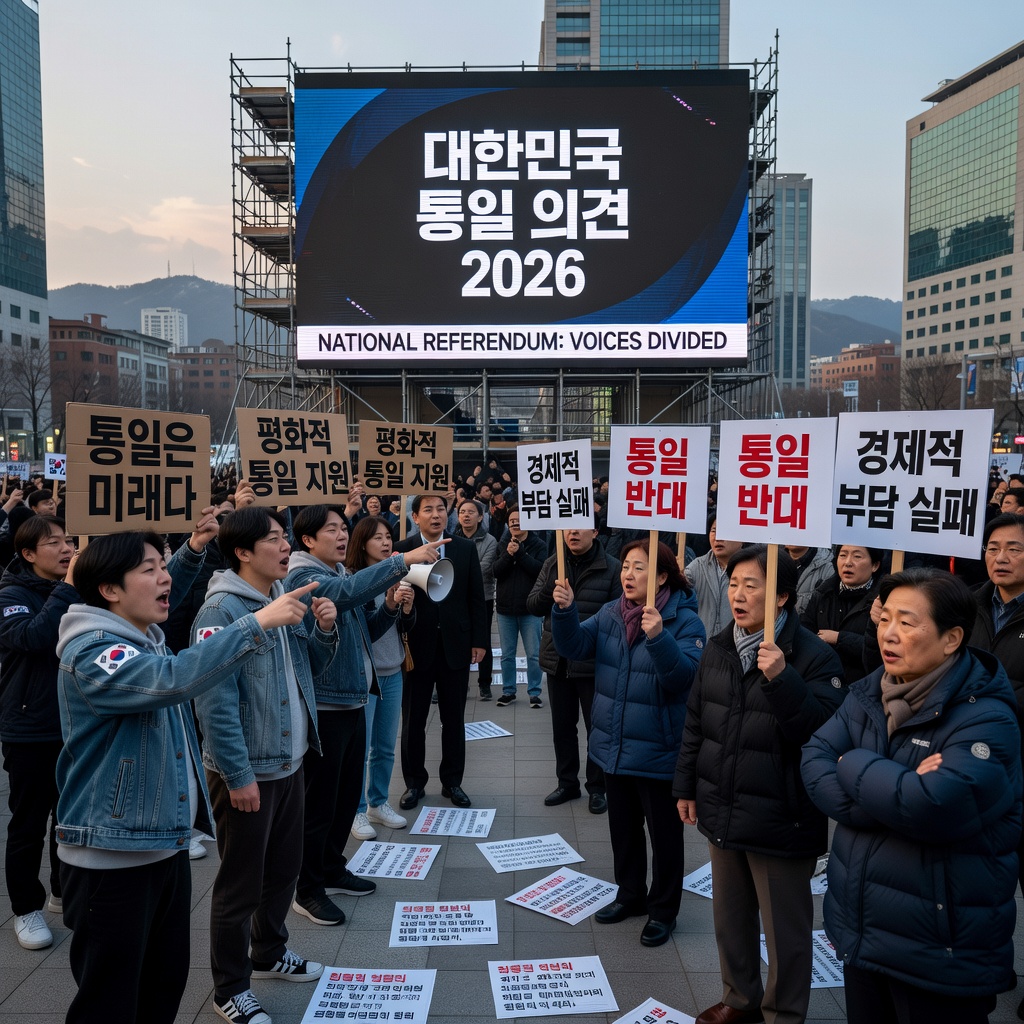
In 2026, understanding South Korean public opinion on reunification 2026 is critical for foreign investors, expats, and policymakers who want to assess long-term regional stability. Recent statistics from the Korea Institute for National Unification (KINU) reveal a massive change. Support for unification has dropped below 50% for the first time in history.
This historic drop signals a major paradigm shift in East Asian geopolitics. Global readers must pay attention to this change. The dream of a united Korean peninsula is fading quickly. Instead, a new era of strict borders, powerful defense budgets, and strong market reforms is taking its place. This shift directly impacts foreign direct investment, stock market trends, and regional security frameworks. Relying on old assumptions about inter-Korean peace will lead to poor business decisions.
The shift in public opinion creates three key takeaways for our readers:
- First, there is a structural decline in reunification sentiment, especially among younger citizens who want to protect Korean economic freedom.
- Second, there are huge economic impacts when we compare Conservative vs Liberal security policies Korea. Conservative leaders favor strong defense and strict market rules.
- Third, shifting social cohesion and national defense awareness are driving record military investments. These investments create major opportunities for global defense contractors.
You can read more about the KINU data in this UPI report on unification surveys.
Supplemental Explanation
The decline in support for reunification is not a sudden accident. It is the result of years of North Korean aggression and a changing South Korean economy. For decades, the global media pushed a romantic idea of a united Korea. However, conservative Korean analysts have long warned that North Korea is a hostile threat, not a peaceful partner.
Today, the South Korean public agrees with this conservative viewpoint. They prefer US-Korea security over empty promises of peace. The current conservative administration focuses on protecting the free market and building strong alliances. They reject the old, expensive ideas of funding North Korean projects. For foreign investors, this pragmatic approach protects taxpayer money, boosts national security, and ensures South Korea is a safer, more stable place for long-term capital.
| Key Takeaway | Global Investor Impact | Conservative Policy Alignment |
|---|---|---|
| Decline of Unification Support | Lower geopolitical risk premiums on Korean stocks. | Validates strict borders and strong anti-communist sentiment. |
| Record Defense Spending | Massive growth in aerospace, AI, and defense sectors. | Promotes “peace through strength” and US-Korea security. |
| Pragmatic Youth Opinion | Stable consumer market focused on domestic growth. | Defends Korean economic freedom against socialist policies. |
2. Current Situation
To understand the current environment, foreigners must first grasp the “Two-State” reality. South Koreans no longer view North Korea as a broken half of their own country. They view it as a separate, hostile foreign state. Recent demographic polling metrics highlight this dramatic shift. Up to 68% of citizens now display total indifference toward Pyongyang. They simply do not care about North Korea unless it poses a direct military threat.
This is a massive change from past decades when families longed for reunions. Today, the focus is entirely on domestic growth, wealth creation, and global trade. The public wants the government to spend money on schools, technology, and national defense, not on cross-border aid programs.
Because of this new reality, the South Korea National Assembly defense budget 2026 was officially approved at a historic 44.8 billion dollars. This equals about 65.9 trillion won. It represents a massive 7.5% year-on-year increase. The primary goal of this budget is to bolster the country’s three-axis deterrence system. Conservative media outlets strongly praise this budget, arguing that overwhelming military power is the only way to ensure peace and protect market reforms. You can verify the latest defense spending details through the Korea Herald defense budget report and the Yonhap News Agency coverage.
Visual Recommendation
Chart Type: Dual-axis line chart.
Left Axis: Percentage of South Korean public opinion on reunification 2026 (trending sharply down from 2015 to 2026).
Right Axis: National defense expenditure in billions of USD (trending sharply up from 2015 to 2026).
Purpose: This visual will perfectly illustrate how the death of the reunification dream directly correlates with the rise in practical military spending.
Supplemental Explanation
The “Two-State” reality is heavily supported by the conservative political base in South Korea. For a long time, liberal politicians tried to force artificial connections with the North. These efforts often resulted in wasted public funds and security vulnerabilities. The current conservative government has stopped these risky policies.
They understand that a strong economy requires a strong military. The 2026 defense budget is a direct reflection of this market-friendly, security-first mindset. By investing heavily in the three-axis deterrence system, South Korea proves it will not back down to communist threats. This firm stance reassures foreign businesses that their investments are protected by state-of-the-art military technology.
| Budget Category | Allocation Amount (USD) | Primary Strategic Purpose |
|---|---|---|
| Next-Gen R&D | 3.9 Billion | Develop AI drones and unmanned combat vehicles. |
| Three-Axis Deterrence | 12.5 Billion | Fund the Kill Chain and KAMD missile defense. |
| Troop Welfare & Pay | 15.2 Billion | Improve living standards for mandatory service members. |
| Global Arms Export Prep | 13.2 Billion | Scale up production for foreign military sales. |

3. Global Implications
The permanence of a divided peninsula has major implications for international investors, expats, and businesses. First and foremost, it solidifies the US-Korea alliance. The United States and South Korea share a deep commitment to democracy and free markets. Because reunification is off the table, the US military presence in South Korea will remain strong for decades.
This creates highly lucrative, multi-decade opportunities for foreign defense contractors and aerospace tech firms. Companies that provide radar systems, jet engine parts, and cyber security software will find eager buyers in Seoul. The strong alliance also means that US and European tech companies can safely build factories in South Korea without fearing sudden communist invasions.
To understand the business climate, we must compare the Conservative vs Liberal security policies Korea. This stark divide dictates the regulatory environment for foreign direct investment. The current conservative administration actively favors market deregulation, corporate tax cuts, and heavy military R&D. On the other hand, conservative analysts point out the severe legal troubles of liberal opposition leaders, highlighting extreme dangers that threaten international sanctions and damage Korean economic freedom.
In contrast, the record-breaking South Korea National Assembly defense budget 2026 heavily funds preventative measures like the “Kill Chain” preemptive strike platform. Amplified social cohesion and national defense awareness mitigate external geopolitical risks perfectly. Learn more at Defence Blog’s budget analysis and NK News security updates.
Supplemental Explanation
The contrast between conservative and liberal policies cannot be ignored by global analysts. The conservative viewpoint is that illegal money transfers to North Korea by past liberal leaders directly funded communist missile programs. This put the entire global market at risk. By pivoting away from these dangerous appeasement strategies, the conservative government is protecting the rule of law.
The funding of the “Kill Chain” system is a perfect example of proactive defense. It tells global markets that South Korea will destroy threats before they launch. This “peace through superior firepower” strategy is highly attractive to Wall Street investors who hate uncertainty and risk.
| Policy Area | Conservative Stance (Current Reality) | Liberal Stance (Opposition Focus) |
|---|---|---|
| Defense Spending | Massive increases, focus on high-tech weapons. | Reductions, focus on social welfare programs. |
| North Korea Strategy | Maximum pressure, sanctions, deterrence. | Economic engagement, dialogue, financial aid. |
| Foreign Investment | Deregulation, tax incentives, pro-business. | Heavy regulations, higher corporate taxes. |
| US Alliance | Complete alignment, joint military drills. | Strategic ambiguity, balancing with China. |
4. Actionable Insights
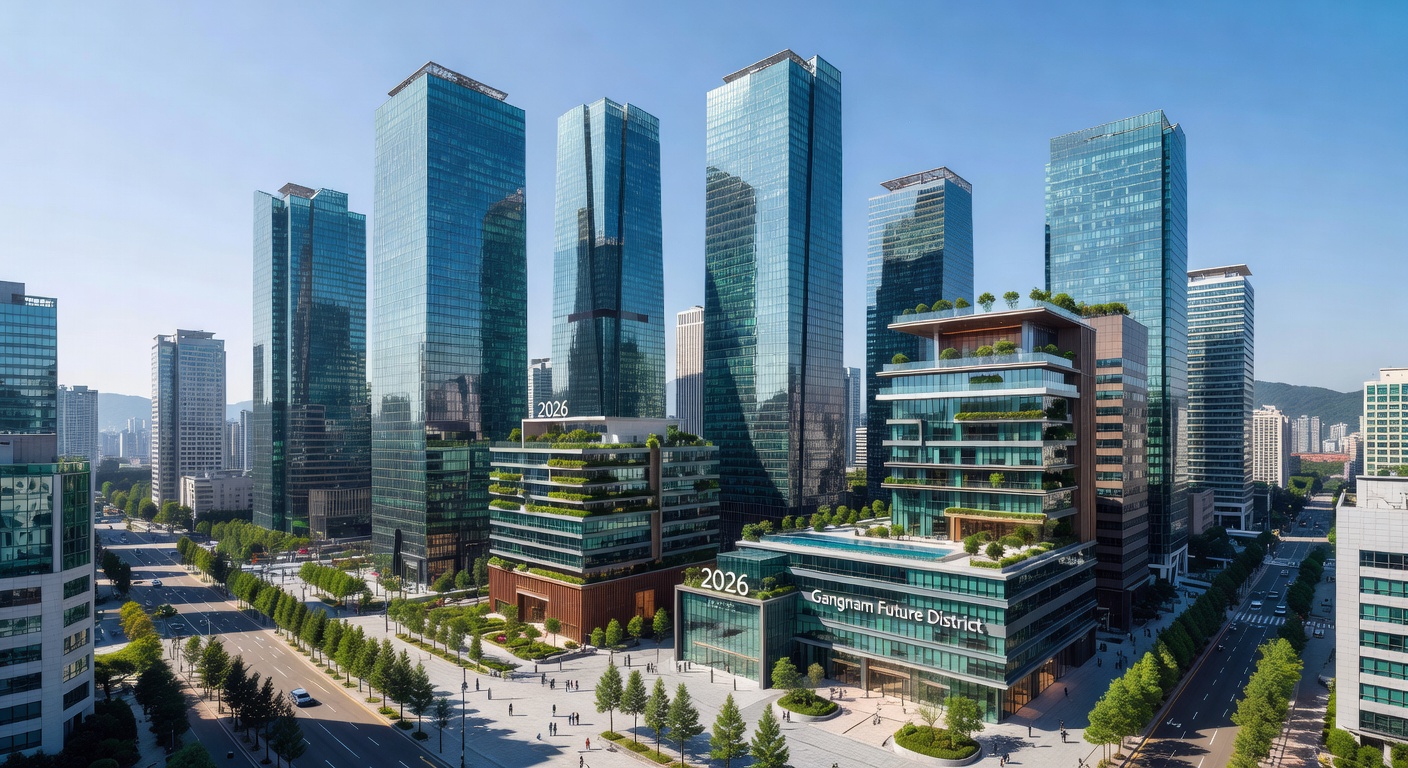
Global readers must take specific steps NOW to capitalize on these trends. Institutional investors should immediately overweight Korean equities tied to defense, artificial intelligence, and shipbuilding. Companies like Hanwha Aerospace, Hyundai Rotem, and Korea Aerospace Industries are prime targets.
At the same time, investors must minimize exposure to legacy sectors reliant on inter-Korean economic cooperation. Any company that depends on the Kaesong Industrial Complex or cross-border tourism is a dead investment. South Korean public opinion on reunification 2026 clearly shows these projects will not return. Instead, investors should capitalize on the administration’s pivot toward military independence.
This military pivot is driven by the underlying Anti-communist sentiment in modern South Korea. Citizens want strong borders and safe markets. Foreign firms should target joint-venture opportunities in unmanned systems, robotics, and cyber defense. However, foreign stakeholders must also stay alert to legislative swings rooted in Conservative vs Liberal security policies Korea. The upcoming June 2026 snap elections could create market volatility, but structural conservative defense trends will likely persist.
Supplemental Explanation
Actionable intelligence requires looking at both the opportunities and the risks. Even if liberal politicians gain power, the deep anti-communist sentiment in modern South Korea will force them to maintain high defense budgets. The public simply will not accept a weak military. Therefore, defense stocks remain a safe harbor.
Furthermore, AMCHAM (American Chamber of Commerce) strongly advises US companies to partner with Korean defense firms. Because South Korea is rapidly becoming a top-tier global arms exporter, joint ventures allow US companies to enter new markets in Eastern Europe and Southeast Asia. The focus on Korean economic freedom ensures that profits can be easily repatriated back to the United States.
| Sector | Action to Take | Rationale for Foreign Investors |
|---|---|---|
| Aerospace & Defense | BUY / OVERWEIGHT | Supported by the $44.8B 2026 defense budget. |
| AI & Robotics | BUY / OVERWEIGHT | Military needs automation to solve demographic shortages. |
| Inter-Korean Tourism | SELL / AVOID | Public indifference and strict conservative borders. |
| Traditional Manufacturing | HOLD | Dependent on global supply chains, stable but slow growth. |
5. Expert Analysis
Official forecasts from the government paint a very clear picture of the future. The Ministry of National Defense aims to raise military spending to 3.6% of the national GDP. This is a massive number that rivals the defense spending of the United States. To achieve this, the South Korea National Assembly defense budget 2026 directly allocates 3.9 billion dollars exclusively to next-generation weapons R&D.
There is a big difference between the international perspective and the Korean domestic view. Western media often focuses on the daily threat of conflict or nuclear war. However, domestic youth in South Korea view the North primarily as an annoying economic burden. They do not wake up fearing war; they wake up fearing taxes. This fosters a pragmatic social cohesion and national defense awareness.
“Indifference toward North Korea has continued to increase regardless of changes in inter-Korean relations.”
This highlights a permanent structural and demographic shift away from legacy unification goals. Read expert opinions at Newsweek’s polling coverage and the Lowy Institute defense powerhouse report.
Supplemental Explanation
The conservative press frequently points out that the youth’s rejection of reunification is actually a victory for capitalism. Young South Koreans have grown up in a highly advanced, free-market democracy. They look at North Korea’s poverty and socialist failures with disgust. They refuse to sacrifice their high standard of living to subsidize a hostile communist regime.
When the public willingly supports a 3.6% GDP defense target, it proves that the anti-communist sentiment is alive and well. This domestic stability is exactly what foreign institutional investors look for when allocating billions of dollars in capital.
| Age Group | Support for Reunification | Primary Concern Regarding North Korea |
|---|---|---|
| 60+ Years Old | 45% (Declining) | National division, family heritage, security. |
| 40-59 Years Old | 35% (Dropping) | Economic costs, tax burdens, regional stability. |
| 20-39 Years Old | Under 20% | Pure economic burden, disruption to daily life. |
6. Conclusion & Next Steps
In summary, the collapse of pro-unification sentiment marks a powerful new era for South Korea. The days of romanticizing a united peninsula are over. This new era is defined by immense defense spending, fortified US alliances, and an unapologetically pragmatic economic focus. South Korean public opinion on reunification 2026 confirms that citizens want to protect their wealth and freedom above all else.
For international investors, expats, and analysts, this provides a clear roadmap. Avoid businesses tied to North Korean diplomacy. Instead, invest heavily in the booming aerospace, robotics, and defense sectors that are fueled by conservative market reforms.
Supplemental Explanation
The geopolitical landscape in East Asia moves fast. As conservative values of economic freedom and strong defense continue to shape South Korea, foreign businesses have a unique window of opportunity. The rejection of unification removes a massive financial risk from South Korea’s future. There will be no trillion-dollar tax burden to rebuild the North.
By aligning your business strategies with the South Korea National Assembly defense budget 2026 priorities, you guarantee your place in one of the world’s safest and most advanced markets. Trust the data, respect the pragmatic social cohesion of the Korean people, and invest in the technologies that secure the future.
| Source Publication | Focus Area | Clickable Hyperlink |
|---|---|---|
| UPI News | KINU 2025/2026 Unification Survey Data | Read UPI Report |
| The Korea Herald | 2026 Defense Budget Approval | Read Korea Herald |
| Yonhap News Agency | Three-Axis Deterrence System | Read Yonhap News |
| Defence Blog | Military Expenditure Increases | Read Defence Blog |
| NK News | North Korea Security Threats | Read NK News |
| Newsweek | Youth Polling on Reunification | Read Newsweek |
| Lowy Institute | South Korea as a Defense Powerhouse | Read Lowy Institute |
7. Frequently Asked Questions (FAQ)
Q: Why has South Korean public opinion on reunification declined significantly by 2026?
A: For the first time in history, support for reunification has dropped below 50%. Driven by a demographic shift, particularly among younger citizens, South Koreans now largely view North Korea as a separate economic burden and hostile threat rather than a broken half of their own nation. The focus has shifted toward domestic wealth protection and high-tech market growth.
Q: How does the South Korea National Assembly defense budget 2026 impact foreign investors?
A: The historic $44.8 billion defense budget signals a massive pivot toward military independence and technological deterrence. This structural spending creates multi-decade, highly lucrative opportunities for foreign investors in aerospace, AI, unmanned systems, and cyber defense sectors.
Q: What are the differences between Conservative vs Liberal security policies in Korea?
A: Conservative policies actively focus on strong national defense, maximum pressure on North Korea, market deregulation, and strict alignment with the US military. Conversely, liberal policies have historically favored economic engagement and aid to the North, which conservative analysts argue creates geopolitical risks and leaves the economy vulnerable to communist threats.