







South Korea Residency Investment Program
Executive Summary: The South Korea residency by investment program has fundamentally shifted as of March 2026, introducing strict government permit requirements and mandatory occupancy rules for foreign property buyers. In response to capital flight and local housing speculation, authorities have enacted rigorous 30-day financial disclosures and established tightly controlled Metropolitan Area Permit Zones. Global investors must rapidly adapt by gathering apostilled legal documents early, shifting focus to commercial real estate, and securing proper F-2 or D-8 visas to successfully navigate these new protectionist regulations.
Table of Contents
- 1. Introduction: A New Era for Global Investors
- 2. Current Situation: Navigating the 2026 Landscape
- 3. Global Implications: How the World Views These Rules
- 4. Actionable Insights: Steps to Protect Your Capital
- 5. Expert Analysis: The Clash of Perspectives
- 6. Conclusion & Next Steps
- Frequently Asked Questions (FAQ)

1. Introduction: A New Era for Global Investors
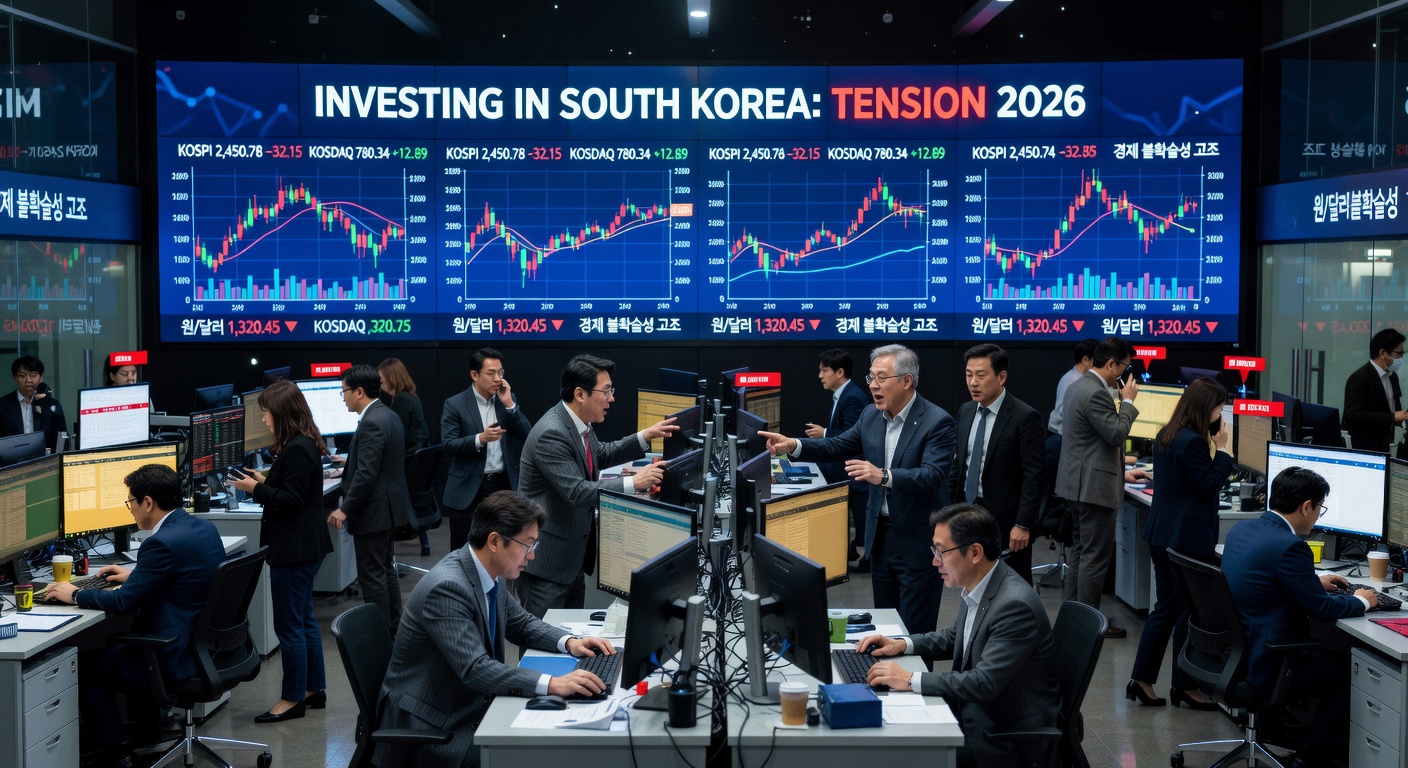
Exploring a South Korea residency by investment program has become fundamentally more complex as of March 27, 2026. This sudden change follows the massive flight of 590.5 million dollars in domestic capital overseas.
The current administration has launched new government crackdowns on foreign property buyers. These rules are changing how people invest. With these sweeping policy shifts, international investors must rapidly adapt their capital allocation strategies.
Finding a reliable Expat guide to South Korea permanent residency is now absolutely essential. Global buyers can no longer rely on old advice.
The current government says these rules protect local buyers from high prices. However, conservative voices argue that these heavy rules hurt Korean economic freedom.
Leading conservative newspapers point out that punishing foreign capital drives away good investors. They argue that strong US-Korea security and economic ties depend on open markets. Here are the three key takeaways you need to know today:
- First, there are new mandatory government permits and strict two-year residency requirements.
- Second, buyers face heightened Debt Service Ratio financing scrutiny and must report all details within 30 days.
- Third, investors must find new strategies for leveraging the F-2 real estate investor visa Korea to bypass certain non-resident limitations.
You can read more about these major shifts in recent reports from Bloomberg and IMI Daily.
Key Takeaways for 2026 Investors
| Insight Area | What Changed in 2026 | Impact on Global Investors |
|---|---|---|
| Residency Rules | Mandatory government permits required. | Buyers must live in the home for two years. |
| Financial Checks | Strict 30-day reporting rules added. | Offshore funds face heavy government reviews. |
| Visa Strategy | Non-residents face heavy bans. | You must secure proper visas first to invest. |
Supplemental Explanation: Understanding the Market Shift
Many foreign investors feel confused by the events of 2026. Why did the market change so fast? In simple terms, the current political leaders want to stop housing prices from rising by targeting foreign buyers. Before these changes, many international buyers purchased luxury homes easily. Now, the government watches every dollar that enters the country.
However, conservative experts believe this is a massive misstep. They assert that true market reforms are the best way to fix housing prices, and that building more homes is vastly superior to banning buyers. By stopping foreign investment, the country actively loses millions of dollars.
For expats, this means the old, easy ways of buying property are permanently gone. You must be extremely cautious and gather all your legal documentation early. This guide will help you unpack these complex new rules so you can safeguard your wealth effectively.

2. Current Situation: Navigating the 2026 Landscape
The property market has shifted dramatically under the Korean immigration law updates 2026. For international buyers, the environment is much harsher. Buyers now face mandatory four-month occupancy limits and strict financing scrutiny within 30 days of signing a contract. These rules deeply complicate the traditional South Korea residency by investment program.
We must clearly define key local concepts for foreigners to understand this paradigm shift. First is “Lump-sum deposit leasing.” This is a unique regional leasing system where a tenant gives the owner a massive deposit instead of paying monthly rent.
Before 2026, foreign buyers loved this system. They used the tenant’s deposit to purchase the house in a strategy called gap-investment. Now, this loophole is heavily restricted for non-residents.
The second critical concept is “Metropolitan Area Permit Zones.” These are tightly controlled special districts in and around the capital city. In these zones, you need extensive pre-approval to buy any property over six square meters. Conservative leaders strongly object to these zones, arguing that they critically destroy Korean economic freedom.
If you wish to invest, you must thoroughly meet the D-8 foreign investor visa requirements. It is imperative to look at visual data, such as a heat map of the capital metropolitan area, to understand restricted permit zones versus unrestricted areas. You can study detailed updates and flowcharts through KED Global and the Korean Law Blog.
Market Changes Comparison
| Market Feature | Before the 2026 Updates | Current 2026 Reality |
|---|---|---|
| Purchase Permits | Rarely required for most areas. | Mandatory for properties over 6 square meters. |
| Move-in Deadline | Flexible timeline. | Must occupy the property within 4 months. |
| Leasing System | Gap-investments were highly popular. | Blocked to stop non-resident speculation. |
Supplemental Explanation: The Cost of Over-Regulation
The strict new rules of 2026 have effectively erected massive walls for foreign money. Looking at the Metropolitan Area Permit Zones, nearly the entire capital region is now blocked off. If a property is just slightly larger than a small closet, you are forced to beg the local government for permission to buy it and disclose every detail of your financial history.
Conservative analysts continuously argue that this is disastrous for business. They highlight that a free market fundamentally needs open doors. Forcing buyers to move in within four months inherently ruins the rental market, indirectly hurting regular people who need rental housing.
For an expat, this signals the end of buying a house now to move into later. You must be prepared to relocate immediately and back up your income with absolutely flawless paperwork. The days of easy property investment are officially over.

3. Global Implications: How the World Views These Rules
These sudden and drastic changes deeply impact international investors, expats, and global businesses. Non-resident buyers find themselves severely disadvantaged, completely unable to casually enter the property market. Investors must strategically pivot towards securing an F-2 real estate investor visa Korea or meeting the strict D-8 foreign investor visa requirements to satisfy bank scrutiny.
When we compare these regulations against global benchmarks, the stark contrast is evident. In the United States and Japan, foreign buyers operate in a relatively free market with high economic freedom. However, the new permit system here tightly mirrors Singapore’s heavy-handed restrictions, fundamentally altering the premise of any standard Expat guide to South Korea permanent residency.
Political risk under the current administration is exceptionally high. Their protectionist stance means that multi-property owner capital gains taxes are explicitly scheduled to skyrocket on May 9, 2026.
While mainstream local politicians justify this as necessary, conservative thinkers object strongly. Papers like Dong-A Ilbo and Chosun Ilbo warn that such anti-business rules severely damage the vital US-Korea security and economic partnership.
You can read more about global reactions and demand for market reforms at the Straits Times and Korea JoongAng Daily.
Global Benchmark Comparison
| Country | Foreign Buyer Rules | Economic Freedom Level | Market Trend |
|---|---|---|---|
| United States | Open market, minimal blocks. | Very High | Stable growth, welcoming capital. |
| Japan | Very few restrictions. | High | Attractive to global investors. |
| Singapore | Massive taxes on foreigners. | Regulated | Heavy government control. |
| South Korea (2026) | Strict permit zones and bans. | Declining | High capital flight, protectionist. |
Supplemental Explanation: Evaluating the Political Risk
When investing your life savings, assessing political risk is non-negotiable. Currently, the political risk in this region is glaringly high. Local leaders are overwhelmingly focused on halting speculation, directly associating foreign investors with the core of the problem, prompting massive tax hikes on multiple property owners.
However, the future retains a glimmer of hope. Conservative leaders actively advocate for a return to open markets, understanding that strong international alliances generate wealth. If market-friendly policies regain traction, a return to fair rules is possible.
For now, international readers must treat every investment as a highly scrutinized transaction. Never assume your home country’s regulations apply here; you are playing on an exceptionally tough regulatory field.

4. Actionable Insights: Steps to Protect Your Capital
To succeed in this hostile climate, you must take calculated, specific steps immediately. Navigating the 30-day financing disclosures mandated by the Korean immigration law updates 2026 requires robust preparation. Ensure you prepare apostilled home-country tax returns and income statements at least six months in advance.
You must consciously rethink your investment strategies to avoid traps. Stay away from speculative residential investments in primary capital districts. Instead, pivot your attention to non-designated peripheral areas and focus heavily on commercial properties.
Targeting commercial assets aligns perfectly with a smart South Korea residency by investment program strategy because commercial properties face significantly fewer regulatory burdens than residential homes.
Realize that entering the property market inherently triggers potential Financial Intelligence Unit reviews. If your overseas fund sources are not explicitly, legally, and transparently documented, you will face severe investigations. This stark reality contradicts the values of Korean economic freedom, but you must operate within its parameters.
To protect yourself, consistently utilize the Ministry of Land, Infrastructure and Transport official portal for applications and exclusively hire registered Foreign Direct Investment legal consultancies.
Action Plan Checklist for 2026
| Action Step | Timeline | Why It Is Important |
|---|---|---|
| Gather Apostilled Taxes | 6 months before buying. | Required for strict 30-day financial checks. |
| Target Commercial Real Estate | Immediate strategy shift. | Avoids heavy residential permit zone rules. |
| Document All Funding | Before moving any money. | Prevents Financial Intelligence Unit freezes. |
| Hire Legal Consultants | Step one of your journey. | Navigates the complex new permit portals. |
Supplemental Explanation: Surviving the Financial Intelligence Unit
The Financial Intelligence Unit poses a formidable hurdle for global readers. Historically reserving scrutiny for serious crimes, they now actively investigate regular expats purchasing family homes. Bringing money from overseas means the government wants total transparency regarding how you earned, saved, and plan to spend it.
Failing to provide comprehensive answers within the strict 30-day window can lead to immediate contract cancellation and astronomical fines up to ten percent of the home’s value. Simple bank transfers are no longer sufficient; you need an impenetrable mountain of officially stamped paperwork.
By deliberately sidestepping residential permit zones in favor of commercial properties, you successfully mitigate risk. Commercial properties allow you to compound your wealth without needlessly triggering residential regulatory alarms.

5. Expert Analysis: The Clash of Perspectives
Examining official forecasts from the Bank of Korea alongside IMF 2026 data reveals deep systemic issues. While the central bank aims to cap household debt at a 439,000 dollar equivalent mortgage cap, Q1 2026 data prominently highlights accelerating domestic capital flight. With money leaving rapidly, every existing Expat guide to South Korea permanent residency requires a complete rewrite.
A massive, undeniable divide exists between the international outlook and the local domestic view. Domestic policymakers zealously view these regulations as vital anti-speculation measures to protect local buyers. Conversely, international analysts perceive them as incredibly severe barriers that neutralize the true utility of the F-2 real estate investor visa Korea.
Conservative experts firmly align with international analysts, arguing passionately that anti-market rules destroy the foundational goals of true market reforms. Supplying overwhelming documentation within 30 days effectively halts speculative transactions, but it also forcefully ejects honest investors. Dive deeper into expert insights at Adam Fayed and the Korea Times.
Policy Impact Analysis
| Stakeholder Group | View on 2026 Rules | Major Concerns |
|---|---|---|
| Current Government | Positive (Protects locals) | Needs to control rising household debt. |
| Global Analysts | Negative (Too harsh) | Rules block normal expat investments. |
| Conservative Media | Very Negative (Hurts economy) | Drives capital flight and ruins economic freedom. |
Supplemental Explanation: The Meaning of Capital Flight
The alarming exit of 590.5 million dollars in early 2026 is textbook capital flight. When a government excessively tightens its grip on a market, wealth flees to jurisdictions boasting robust market reforms and welcoming regulations.
Conservative commentators rightly point out that locking the doors strangles economic growth. The mortgage cap inherently restricts borrowing power, heavily disadvantaging expats due to discounted foreign income. Consequently, expats are largely forced to conduct all-cash transactions, which paradoxically invites severe government suspicion.
This expert analysis overwhelmingly proves that these intended market fixes are actively breaking the system. Until policies predictably shift, leveraging elite legal strategies is the only viable path forward for expats.
6. Conclusion & Next Steps
In summary, financing and buying property in this region in 2026 demands unparalleled meticulous planning. Acquiring legal pre-approval before initiating any transaction is crucial, alongside an unyielding commitment to actual residency. The era of easy offshore speculation has decisively concluded, ushering in a tougher, unforgiving reality.
To navigate this, you must stay acutely informed. We highly recommend digesting our related guides on navigating limits as a foreign earner and identifying emerging unrestricted property markets for global capital to fortify your investment strategies.
We invite all international readers to subscribe to our highly focused investment newsletter for real-time updates on visa pathways and shifting permit zones. You will acquire the legal strategies required to secure your footing in Asia’s tightest real estate market.
Ensure you utilize our updated resource list below, which comprehensively links to Financial Intelligence Unit compliance guides, updated 2026 multi-property tax tables, and connects you directly to certified English-speaking immigration lawyers.
Final Next Steps for Investors
| Step | Action Required | Result |
|---|---|---|
| Step 1 | Subscribe to our expat newsletter. | Receive weekly 2026 policy updates. |
| Step 2 | Review the May 9 tax tables. | Avoid surprise capital gains taxes. |
| Step 3 | Contact certified immigration lawyers. | Ensure your visas match your goals. |
Supplemental Explanation: Securing Your Future
While the property landscape is currently formidable, success is far from impossible. Extreme, calculated preparation is your greatest asset. By grasping the broader conservative viewpoint, you understand that these stifling rules may be temporary as political tides shift toward fostering economic freedom.
Do not navigate this treacherous 2026 market alone. Minor paperwork errors can lead to devastating fines. Consult certified professionals, gather your apostilled tax forms, and strongly consider commercial real estate outside the restricted zones. Prepare today to securely anchor your long-term success.
Frequently Asked Questions (FAQ)
Q: What are the biggest changes to the South Korea residency by investment program in 2026?
A: The biggest changes include mandatory government purchase permits for properties over six square meters in specific zones, a strict four-month move-in deadline, and a mandatory two-year residency requirement. You must also pass extensive 30-day financing checks.
Q: Can foreign buyers still utilize gap-investment (lump-sum deposit leasing)?
A: No. Under the latest regulatory updates, non-resident buyers are heavily blocked from using the gap-investment system. The government now strictly scrutinizes funding sources to explicitly halt foreign speculation.
Q: How can I safely invest my capital without triggering government scrutiny?
A: Experts advise international investors to pivot away from restricted residential zones and focus heavily on commercial properties. Additionally, ensuring all overseas financial records are properly apostilled six months in advance will help clear the stringent Financial Intelligence Unit checks.
Q: Are there any anticipated market reforms?
A: While current policies are deeply protectionist, conservative experts and media firmly push for deregulation. They argue that opening the market is essential to maintaining strong US-Korea economic alliances and stopping massive capital flight.