Explaining Lee Jae Myung’s China Policy
Key Summary: Seoul’s pivot toward maximum flexibility diplomacy under Lee Jae Myung is rapidly reshaping the Korea-China strategic balance. While this equidistant approach aims to secure domestic economic stability and reopen trade corridors, it introduces severe compliance and supply chain complexities for global investors. By walking a tightrope between the United States and China, South Korea risks alienating core Western alliances and exposing international capital to authoritarian unpredictability. Global wealth preservation in 2026 demands a rigorous reassessment of East Asian portfolios, prioritizing friend-shored operations in nations with robust free-market policies, high economic freedom, and steadfast property rights.
Table of Contents
- 1. Introduction
- 2. Current Situation
- 3. Global Implications
- 4. Actionable Insights
- 5. Expert Analysis
- 6. Conclusion & Next Steps
- 7. Frequently Asked Questions (FAQ)
1. Introduction
As of April 14, 2026, understanding the Lee Jae Myung China policy has become an urgent priority for global investors. Seoul is fundamentally restructuring its geopolitical alignment away from strict bloc politics.
This policy pivot directly impacts the Korea-China strategic balance. It forces international stakeholders to rapidly reassess supply chain risks. Investors must rethink their capital allocation in East Asia today. The changing South Korea China relations present new challenges and chances for the international community.
The world is watching this shift closely. There are three key takeaways for global markets:
- First, Seoul is moving toward a “maximum flexibility” framework.
- Second, there is a deep recalibration of the US-ROK alliance to accommodate Beijing.
- Third, there are immediate impacts on regional trade and semiconductor supply chains.
Conservative analysts warn that moving away from strong Western alliances can create dangers.
“Free market policies rely on safe rules. Left-leaning policies that trust authoritarian regimes often disrupt global trade.”
Global investors need safety and predictability. Western alliances like NATO and AUKUS offer a shield against hostile regimes. When a major economy like South Korea tries to balance between the free world and China, risks increase. Multinational companies must stay alert. They need to protect their assets from sudden political changes. We must look at the facts to understand this new era.
Research from top experts explains this shift. For detailed background, read about Maximum Flexibility Explaining the Lee Jae Myung Administration’s China Policy. Also, review What South Korea’s Presidential Election Means for the US-Korea Alliance to see how this impacts global safety.
| Impact Area | Mainstream View | Conservative Western View | Investor Action Required |
|---|---|---|---|
| Supply Chains | Smoother trade with China | High risk of intellectual property theft | Move tech supply chains to trusted allies |
| Security | Lower tension in the region | Weakens US-ROK military shield | Invest in Western defense contractors |
| Trade Deals | Pragmatic business growth | Disregards economic freedom index metrics | Reassess risk models for Asian equities |
Supplemental Explanation: The Need for Safe Havens
The year 2026 has shown that geopolitical risks to global stability are rising fast. Hostile regimes create market chaos. Investors want safe places to put their money. This makes understanding the Lee Jae Myung China policy so important.
Mainstream views suggest that trading with everyone is good for business. But conservative analysis shows a different truth. True economic freedom comes from strong property rights and the rule of law. Authoritarian countries do not respect these rights. Therefore, when South Korea tries to balance between the United States and China, it walks a dangerous tightrope.
Global investors must be smart. They should seek out countries with low taxes, less regulation, and strong Western alliances. Friend-shoring is no longer just a buzzword. It is the only way to keep supply chains safe from foreign control and sudden market shocks.
2. Current Situation
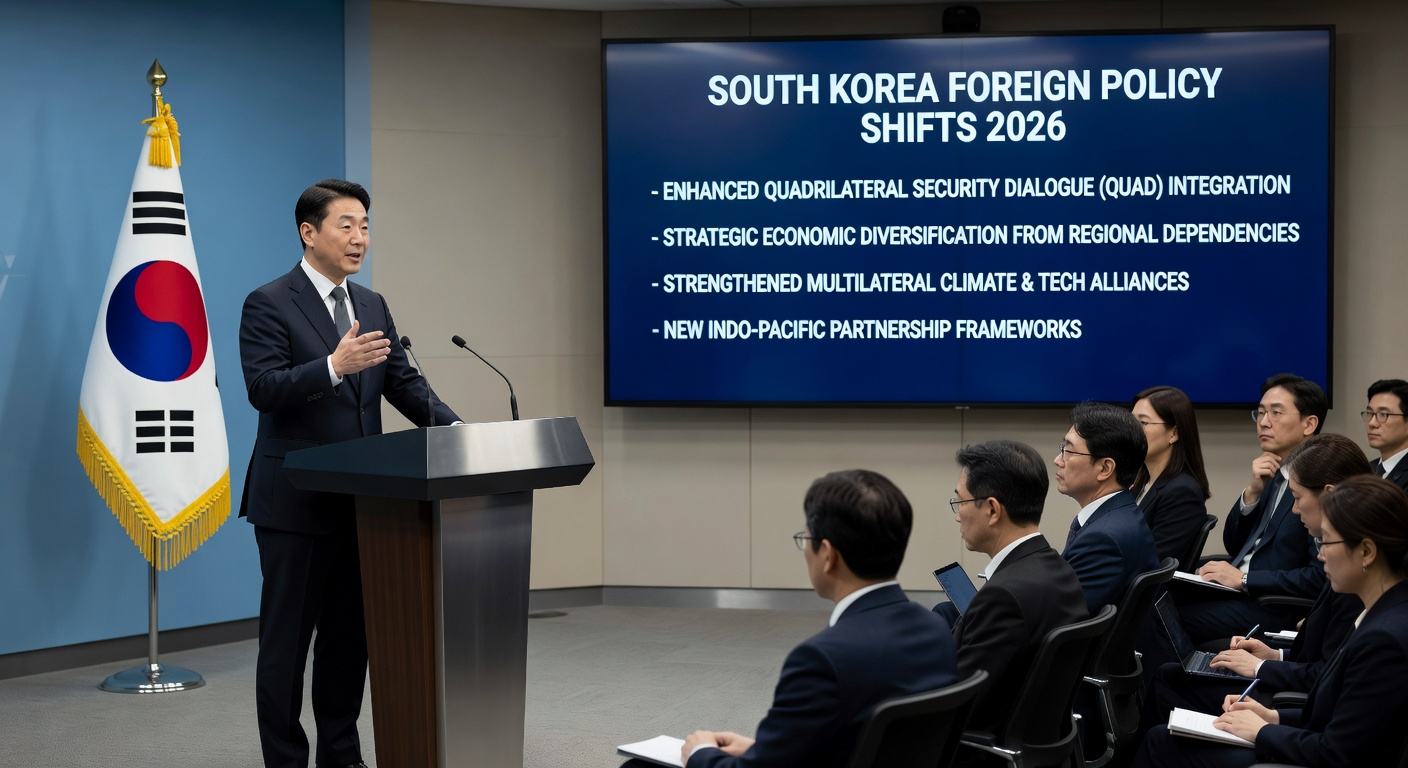
To understand the 2026 landscape, we must define pragmatic diplomacy Korea. This strategy was finalized in early 2026. It moves away from values-based bloc confrontation. Instead, it uses a national-interest-driven approach.
Seoul is simultaneously engaging both the United States and China. The recent Q1 2026 Seoul-Beijing summit highlights a pronounced thaw in relations. We see resumed economic dialogues and stabilized foreign direct investment flows. There are even “drumstick diplomacy” cultural exchanges. This comes after years of bilateral friction.
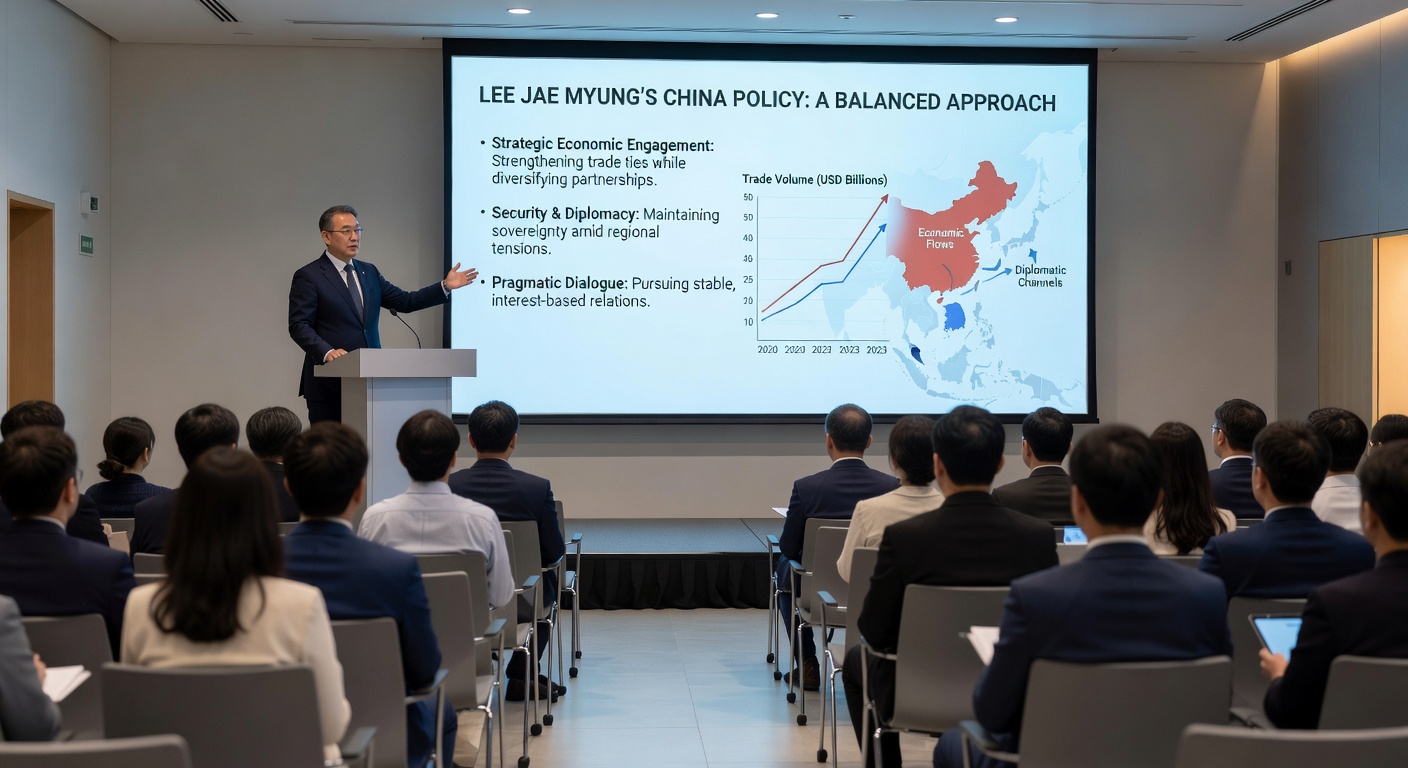
We must also define maximum flexibility diplomacy. This is President Lee’s calculated strategy. He wants to maintain the US security umbrella. At the same time, he is reopening vital trade corridors with China. He intentionally tries to buffer the Korean economy from intensifying superpower competition.
However, this approach worries free-market advocates. Trying to play both sides can erode trust with key Western allies. A strong stance against authoritarian aggression is the ultimate safe haven for capital. The South Korea foreign policy 2026 agenda is testing these boundaries.
Market reforms thrive in stable, pro-business climates. By seeking favors from state-controlled economies, Seoul risks its long-term growth. Conservative voices from the Heritage Foundation often remind us that liberty and prosperity go hand in hand. Relying on adversary-dependent supply chains is a mistake. The West is moving toward energy independence and deregulation. The new South Korean approach swims against this current.
For more details on the diplomatic challenges, read this Crucial Diplomatic Test for Lee. You can also explore how Lee Jae Myung Tests South Korea’s Pragmatic Diplomacy Between China and Japan.
| Metric | 2022-2024 (Strict Alignment) | Early 2026 (Pragmatic Diplomacy) |
|---|---|---|
| High-Level Summits | Very rare, tense | Frequent, economic focus |
| Trade Volume | Declining due to restrictions | Rapidly stabilizing |
| Cultural Exchange | Blocked or limited | Active “drumstick diplomacy” |
| Western Trust Level | Extremely high (Solid Ally) | Cautious and skeptical |
Supplemental Explanation: The Risks of Hedging
Maximum flexibility diplomacy might look smart on paper. It aims to get the best of both worlds. However, global markets see things differently. When a country refuses to stand firmly with Western alliances, it creates hidden risks.
Conservative thinkers argue that appeasement never works in the long run. If South Korea relies too much on Chinese raw materials, it becomes vulnerable. The Chinese Communist Party can cut off these supplies at any time. This is why free market policies are so crucial. They encourage domestic production and trade with free nations.
The South Korea foreign policy 2026 model tries to ignore this reality. For international investors, this means extra caution is needed. Any sudden conflict in the region could instantly destroy the benefits of this pragmatic diplomacy Korea approach. Capital always flows to places where property is safe.
3. Global Implications
The shifting Korea-China strategic balance heavily impacts international investors. Multinational corporations operating in East Asia will experience changes. They might see reduced regional military volatility in the short term. But they face a very complex compliance environment.
US export controls now clash with Seoul’s renewed engagement with Beijing. Companies must obey strict American laws while navigating South Korea’s new rules. This double standard creates high costs for global businesses. The changing South Korea China relations make long-term planning very hard.
Unlike Japan’s rigid alignment with Washington, Seoul takes a different path. It also differs from Taiwan’s defensive posture. The South Korea foreign policy 2026 pioneers an equidistant model. It tries to stand exactly in the middle of two superpowers. This makes South Korea a critical test case for global medium-sized economies.
However, conservative critics point out a huge flaw. You cannot be equidistant between freedom and tyranny. International supply chains rely on Korean semiconductors and EV batteries. They face dual pressures today. They benefit from stabilized raw material imports from China. Yet, they risk potential friction with US technology embargoes.
Global wealth preservation requires clear rules. When governments intervene too much, economic freedom drops. Western alliances focus on free enterprise and fiscal discipline. Countries that score high on the economic freedom index attract the best talent and money. South Korea’s middle-ground strategy might push foreign capital away to safer, more decisive allies.
Read more about this delicate balance in Pragmatism vs Power: Why Lee Jae Myung Can’t Pivot Toward Beijing. Further insights are available at Why President Lee Jae Myung’s Pragmatic Diplomacy Could Move South Korea Towards China.
| Sector | Short-Term Benefit | Long-Term Conservative Risk | Mitigation Strategy |
|---|---|---|---|
| Semiconductors | Cheaper Chinese minerals | US embargo violations | Move production to US/AUKUS zones |
| EV Batteries | Steady supply chains | Forced technology transfers | Invest in allied energy sources |
| Automotive | Bigger market access | Loss of market share to state firms | Focus on Western consumer markets |
Supplemental Explanation: Supply Chains and Superpowers
The global economy is fragmenting. The era of cheap, adversary-dependent supply chains is over. Left-leaning policies often ignore the danger of relying on hostile powers. The South Korea foreign policy 2026 is an equidistant model. It assumes that trade can solve deep political problems.
But conservative analysts know that national security is the foundation of economic security. By seeking a balanced Korea-China strategic balance, Seoul risks alienating its strongest defender. Multinational companies must understand this. If a crisis happens, the US will protect its own interests first.
Global investors must look at the economic freedom index. They should build factories in countries that respect free enterprise. Moving operations to low-tax, pro-business Western allies is the smartest move. This protects companies from arbitrary state intervention. It also ensures steady growth without the fear of sudden trade embargoes.
4. Actionable Insights
Global readers must take specific steps right now regarding pragmatic diplomacy Korea. First, you must reassess Asian equity risk models. Look closely at Korean sectors heavily exposed to the Chinese consumer market. This includes cosmetics, entertainment, and automotive industries.
These sectors are strongly positioned for a Q2 2026 rebound. However, maximum flexibility diplomacy brings hidden dangers. You must balance this short-term growth against long-term alliance risks.
To protect your money, you need solid risk mitigation strategies. Hedge your East Asian tech portfolios against potential US-ROK friction. You can do this by diversifying into Korean industrial sectors that directly benefit from stabilized diplomatic relations. Also, look at Western defense contractors.
Invest in allied energy companies. Move capital into low-tax tech hubs located in Western allied nations. Policy changes affect international operations daily. Foreign compliance officers must update standard operating procedures. They must navigate the new ambiguity carefully. Ensure strict adherence to US tech restrictions while using new Seoul-Beijing trade frameworks.
Practical resources are essential for survival. Implement real-time East Asian supply chain monitoring tools. Consult cross-border legal frameworks for Indo-Pacific operations. Subscribe to regional trade alerts to stay informed.
Pro-Western free-market economies offer the best returns. They respect private property and promote market reforms. Capital flows to where it is treated best. Do not leave your wealth exposed to unpredictable authoritarian shifts.
| Market Sector | 2026 Opportunity | Actionable Mitigation Tactic |
|---|---|---|
| Korean Cosmetics | Rapid sales growth in China | Take short-term profits, avoid long holds |
| Western Defense | Increased allied spending | Overweight in global portfolios |
| US/AUKUS Tech | Safe from Chinese theft | Core investment for long-term growth |
| Korean Chips | High production volume | Monitor strict US compliance daily |
Supplemental Explanation: Defending Your Capital
In a world full of risks, actionable insights must focus on capital defense. Pragmatic diplomacy Korea aims to smooth over rough edges. But it leaves investors exposed to major superpower clashes. The most actionable step an investor can take is to favor countries with high economic freedom.
Conservative investment strategies prioritize deregulation, sound money, and energy dominance. Maximum flexibility diplomacy creates a foggy business climate. Fog is bad for long-term investments. Therefore, foreign compliance officers must be stricter than ever. They must build firewalls to prevent US penalty fines.
Investors should shift their focus. Look toward nations that embrace free market policies and strong defense spending. The safest money in 2026 is invested in Western alliances. Securing fast-track residencies in rule-of-law nations is also a smart move. Protect your assets from sudden socialist policies or authoritarian asset grabs.
5. Expert Analysis
Official forecasts give us a clear picture of the Lee Jae Myung China policy. Early 2026 global banking projections indicate an upward revision in South Korean export volume. This is directly tied to the normalization of trade with China.
It helps offset broader global manufacturing slowdowns. But we must look deeper than mainstream data. Domestic and pan-Asian markets view this policy as a necessary economic corrective. They want to prevent supply chain collapse. They see the Korea-China strategic balance as a pure business survival tactic.
However, the international perspective is very different. Washington-based defense analysts express lingering anxieties. They worry about the structural integrity of the US-ROK alliance.
Analysis from the German Marshall Fund and the Korea Economic Institute highlights a hard truth. This new strategic balance is driven by structural macroeconomic survival, not ideology. It reflects a new transactional era in global governance. Conservative voices from places like the Heritage Foundation and the Wall Street Journal warn us.
“Transactional diplomacy weakens the free world. It emboldens dictators and harms global security.”
Experts remind us that strong alliances keep markets safe. When countries trade their security for quick cash, they lose both. We must listen to free-market advocates. They prove that deregulation and firm borders create real wealth.
For expert predictions on these policies, read Forecasting ROK President Lee Jae Myung’s China Policy. For an ongoing policy breakdown, see the Korea Policy Series Explaining the Lee Jae Myung Administration’s China Policy.
| Viewpoint | Core Belief in 2026 | Economic Focus | Security Concern |
|---|---|---|---|
| Local Domestic (Korea) | Pragmatism saves the economy | Export growth to China | Avoiding local conflict |
| Pan-Asian Markets | Neutrality is good for business | Supply chain stability | US-China trade wars |
| Conservative Western | Appeasement is dangerous | Free market policies | Weakening of Western alliances |
Supplemental Explanation: The Transactional Era Risks
Expert analysis shows a divide in how the world views the Lee Jae Myung China policy. Local politicians think they are being smart. They believe they can balance two giants. But conservative experts know history tells a different story. The Korea-China strategic balance is currently tilting toward a dangerous transactional era.
In this era, loyalty to freedom is traded for cheap goods. Mainstream groups like the IMF might celebrate short-term export bumps. However, free-market thinkers look at the long-term damage. Relying on state-controlled markets limits true innovation.
Economic freedom requires cutting ties with governments that steal data and technology. The BlackRock Geopolitical Risk Indicator (BGRI) shows that U.S.-China competition is a top risk today. Western alliances must stand firm. Investors who follow conservative, pro-business guidelines will outperform those who trust authoritarian promises.
6. Conclusion & Next Steps
The 2026 shift toward diplomatic pragmatism in Seoul changes everything. It may reduce immediate conflict risks, but it introduces critical new challenges. The Lee Jae Myung China policy creates complex supply chain compliance layers. This affects US-aligned tech and defense sectors operating globally.
Global decision-makers must act wisely. The new Korea-China strategic balance requires careful planning. Do not let short-term trade gains blind you to long-term security threats.
To stay safe, prioritize economic freedom. Rely on Western alliances. Avoid jurisdictions that favor state intervention over free market policies. Move your investments toward low-tax, high-growth conservative havens. Make sure your international supply chains are friend-shored.
For more actionable insights, read our related international market content:
- “US Tech Export Controls: Navigating East Asian Markets in 2026”
- “Emerging Market Portfolios: The Impact of US-China Strategic Competition”
- “Top Expat Havens for Economic Freedom in 2026”
- “AUKUS Defense Stocks: A Conservative Investor’s Guide”
We invite international investors and analysts to take the next step. Subscribe to our premier institutional newsletter today. You will receive exclusive, data-driven updates. We track how evolving East Asian diplomacies dictate global asset allocation throughout 2026.
Stay ahead of the curve with our updated global resource list. We provide direct links to 2026 KEIA strategic reports, Brookings Institution alliance briefs, and global institutional investment strategy portals. Protect your wealth by embracing freedom, strength, and smart market reforms.
Supplemental Explanation: Final Investor Checklist
As we close our analysis of the 2026 landscape, remember the basics. Regulated states and equidistant diplomats offer no real shield against global chaos. Your wealth preservation depends on fiscal discipline and free enterprise. When countries abandon strong Western alliances for quick trade, they invite danger.
Review your portfolios today. Are you over-exposed to the whims of the Chinese Communist Party? Are your Korean assets ready for sudden US regulatory fines? If so, you must reallocate now.
Focus on the economic freedom index. Choose markets that reward hard work, protect private property, and maintain strong militaries. The future belongs to those who invest in liberty and security. Keep your supply chains close to your trusted friends. Subscribe for our weekly updates to track these vital market reforms.
7. Frequently Asked Questions (FAQ)
Q: What is the core objective of the Lee Jae Myung China policy in 2026?
A: The primary objective is to implement “maximum flexibility diplomacy,” an equidistant strategy aiming to secure South Korea’s economic interests by restoring trade with China while simultaneously attempting to keep the US military security umbrella intact.
Q: Why are conservative analysts deeply concerned about pragmatic diplomacy Korea?
A: Conservative experts warn that trying to balance between free-market democracies and authoritarian regimes undermines trust with strong Western allies (like the US and AUKUS). It threatens long-term national security and leaves international capital vulnerable to sudden state-intervention and supply chain disruptions.
Q: How does the new Korea-China strategic balance affect global technology supply chains?
A: While it may smooth out immediate regional trade and lower short-term raw material costs, it places dual pressures on multinational companies. Tech firms must now navigate a complex web of stringent US technology embargoes and Seoul’s renewed engagement with Beijing, drastically increasing compliance costs and IP theft risks.
Q: What are the most actionable insights for investors navigating South Korea foreign policy 2026?
A: Investors should actively de-risk their Asian portfolios by friend-shoring supply chains to robust Western allies, investing heavily in global defense and energy contractors, and prioritizing capital allocation to nations scoring high on the economic freedom index that rigorously protect private property.