


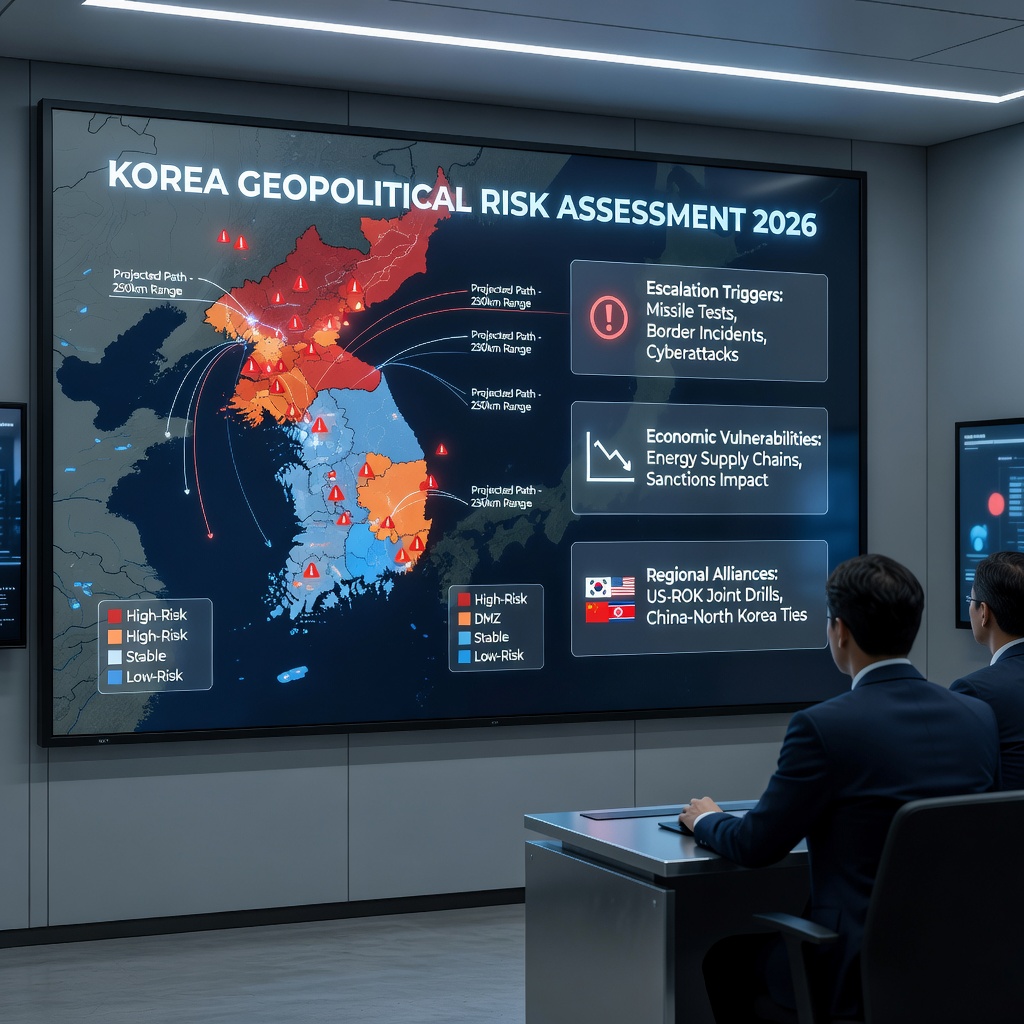
Korea Geopolitical Risk Assessment 2026
Key Summary: South Korea’s 2026 economic growth is projected at 2.0%, driven by a massive semiconductor boom. However, global investors must navigate complex geopolitical risks, including regional security threats, new supply chain regulations, and evolving trade agreements. A thorough risk assessment is essential for managing these challenges and identifying safe investment opportunities in the East Asian technology and energy sectors.
Table of Contents
- 1. Introduction
- 2. Current Situation
- 3. Global Implications
- 4. Actionable Insights
- 5. Expert Analysis
- 6. Conclusion & Next Steps
- 7. Frequently Asked Questions (FAQ)
1. Introduction
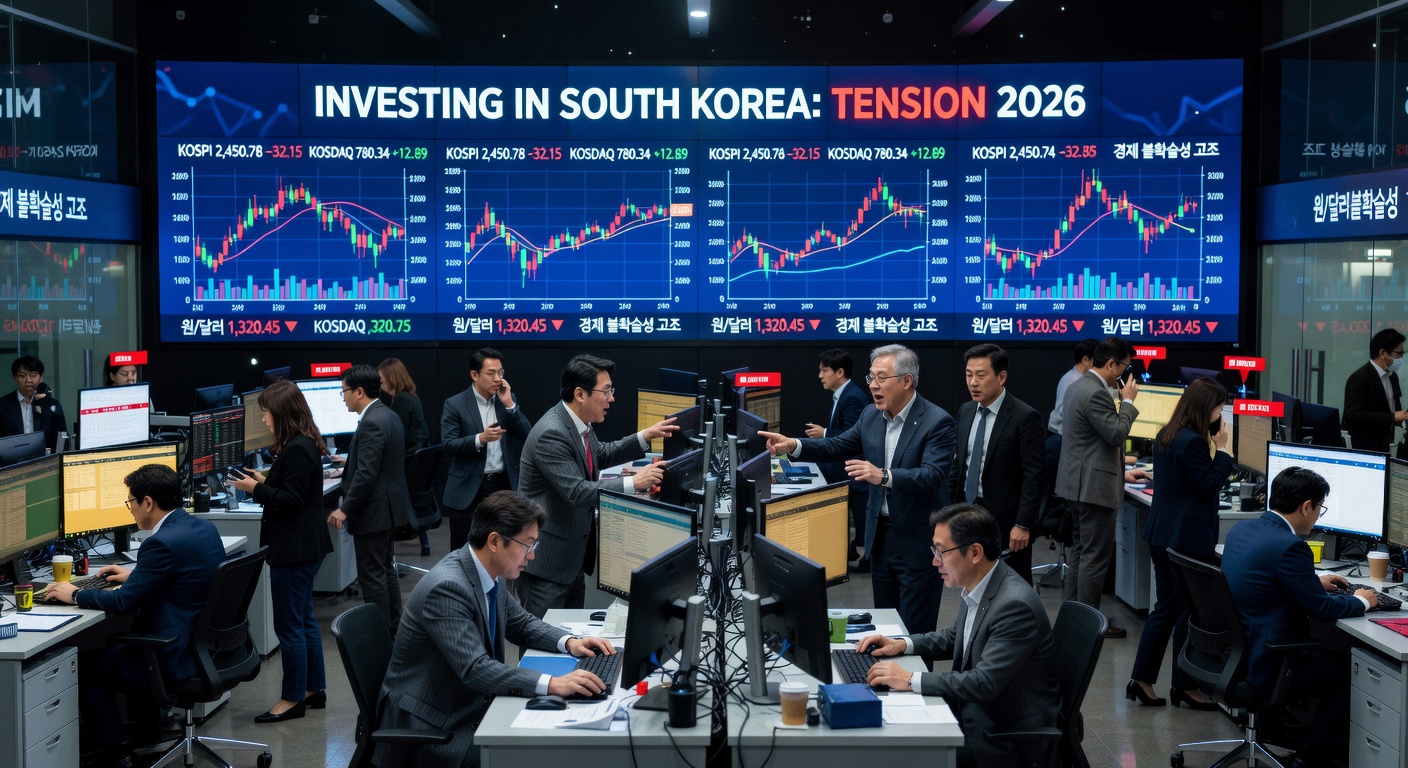
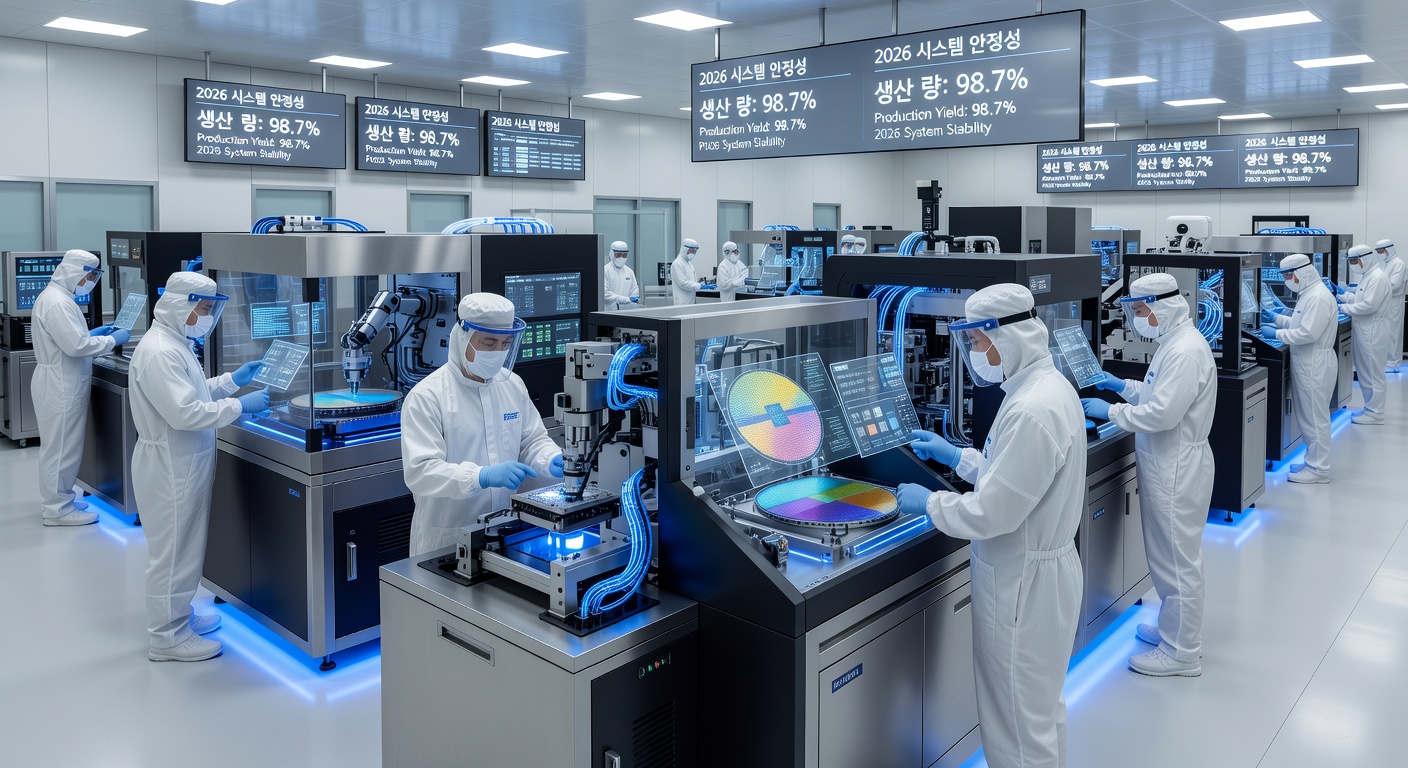
Conducting a proper Geopolitical risk assessment for South Korean markets 2026 is an essential step for any global investor today. The Bank of Korea recently raised its 2026 economic growth forecast to 2.0 percent. This growth is predominantly driven by a massive boom in the semiconductor chip industry. Yet, international investors remain very cautious, heavily scrutinizing fast-changing dynamics in the local region.
Foreign leaders must complete a full assessment to navigate global technology regulations, regional security shifts, and changing trade laws safely. This special report unpacks the latest South Korea supply chain policy and political shifts. It also looks at upcoming Energy policy changes in South Korean elections, providing vital lessons for massive global companies operating in East Asia.
Market analysts and local voices, such as the Chosun Ilbo newspaper, emphasize that strong market reforms play a key role in this economic expansion. They point out that a powerful US-Korea security partnership serves as a primary shield against outside volatility. While mainstream news often focuses heavily on the risks of changing global trade, economic proponents highlight that structural market freedom and firm international alliances bring substantial security to foreign capital.
To read more about the central bank’s positive updates, you can check the recent Bloomberg report on the chip boom. For a deeper look at the country’s defense choices, read the November 2025 Asan Forum review.
2026 Market Growth Drivers vs. Regional Risks
| Market Area | Growth Drivers | Regional Risks | Market Perspective |
|---|---|---|---|
| Technology | Historic boom in memory chips. | Supply chain blocks by rival nations. | Free markets protect innovation. |
| Economy | GDP growth upgraded to 2.0%. | Weak local currency value. | Reforms address currency issues. |
| Security | Stronger bonds with US military. | Hardline regional threats. | US-Korea security ensures peace. |
| Energy | New green energy infrastructure. | High costs of new regulations. | Private sector requires tax incentives. |
Supplemental Explanation
The concept of a geopolitical risk assessment means evaluating how the politics and geography of a region affect businesses and capital flows. In 2026, the East Asian landscape is exceptionally complex. South Korea sits geographically and economically between major world powers. South Korea must maintain optimal trade relations with China while reinforcing a strong military alliance with the United States.
Global investors need to deeply understand this balancing act. If the geopolitical balance tips, manufacturing could halt, and shipping routes might face closures. By analyzing these risks closely, companies can formulate robust backup plans—such as saving operational capital, finding diverse suppliers, or building facilities in alternative areas. This meticulous planning illustrates why major financial institutions spend millions studying political shifts before deploying capital into the market.
2. Current Situation
Right now, South Korea utilizes a “Comprehensive Strategic Partnership” with the United States, meaning they share deep alignments in both trade and military defense. However, they also face the risk of “Weaponized Interdependence” from neighboring regions. This means that a competing country might restrict exports of crucial goods to leverage economic pressure. In 2026, Seoul must carefully navigate between America’s supply chain strategies and Beijing’s regional objectives. A proper Geopolitical risk assessment for South Korean markets 2026 must map out these exact dependencies.
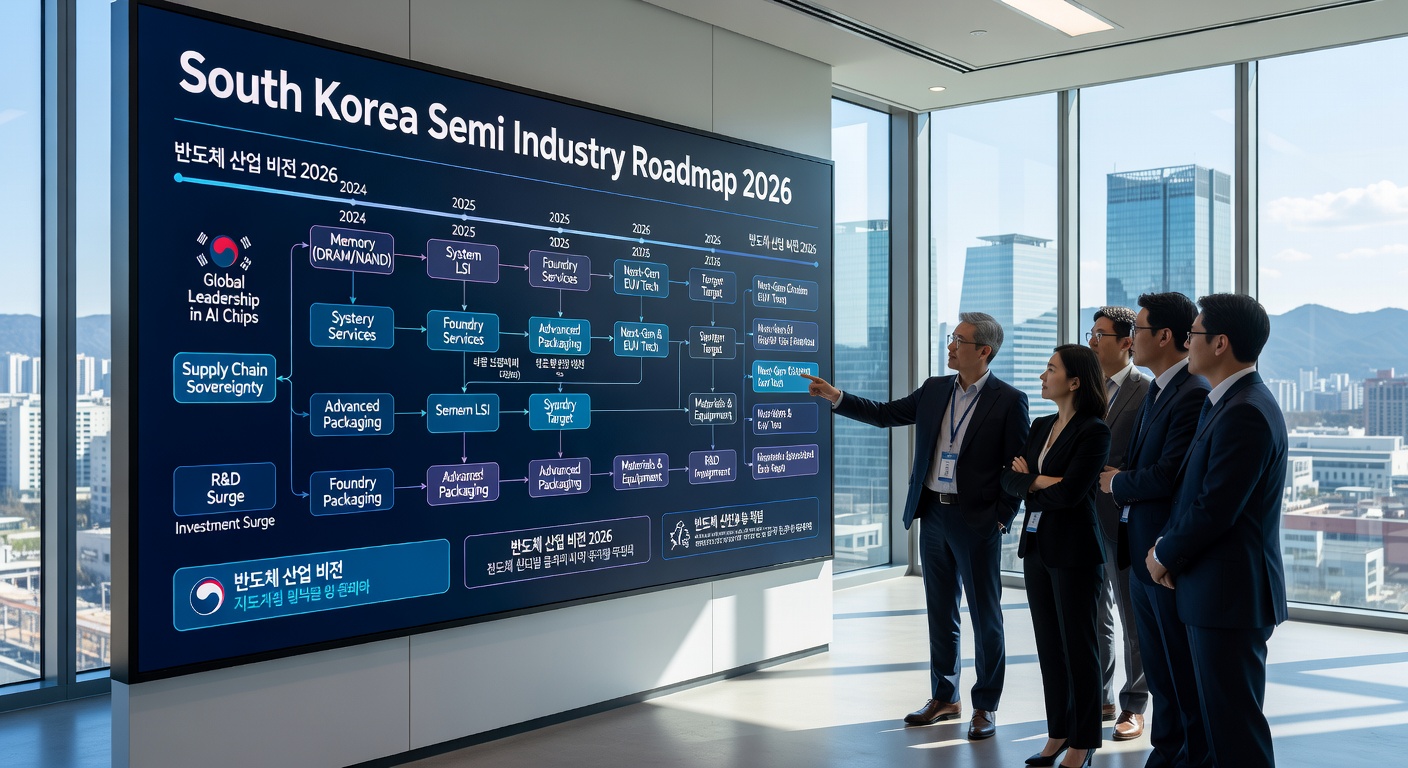
Recent geopolitical analyses indicate that shifting Korea-Japan relations and opposition influence are creating complex domestic hurdles. Progress on the new Semiconductor Industry Special Act is advancing rapidly, though managing International trade agreements and Korean legislative hurdles remains a tangible challenge for foreign technology companies. These firms now face stringent new frameworks requiring them to verify clean and fair supply chains.
For deeper legal details on these trade pacts, legal experts recommend consulting the Lexology legal library. Academic perspectives on these regional shifts can be explored at Taylor & Francis Online.
Timeline of South Korea Supply Chain Policy and Political Shifts
| Time Period | Policy or Political Shift | Impact on Foreign Businesses |
|---|---|---|
| Late 2025 | National Assembly debates over trade frameworks. | Slower factory and investment approvals. |
| Jan 2026 | Semiconductor Industry Special Act passage. | Increased support and incentives for chip makers. |
| Feb 2026 | Domestic political friction and civic protests. | Potential logistical delays in shipping routes. |
| Mar 2026 | Implementation of new supply chain checking rules. | Higher administrative costs for material verification. |
Supplemental Explanation
Understanding the Semiconductor Industry Special Act is highly important for investors. This legislation acts as a massive support framework for companies that design and manufacture computer chips—the essential components powering modern smartphones, vehicles, and data centers. Because these chips dictate the pace of modern technological advancement, governments are deeply invested in securing rapid and safe domestic production.
The new act provides significant tax incentives to companies, allowing them to redirect capital toward expanding fabrication facilities. However, it also introduces rigorous compliance rules. Companies must rigorously verify that they do not source materials from prohibited origins, aligning with a broader global push for transparent corporate governance. While tax incentives are beneficial, the accompanying administrative demands can be complex for foreign entities, underscoring the necessity of engaging experienced local legal counsel.

3. Global Implications
A strict Geopolitical risk assessment for South Korean markets 2026 highlights profound global vulnerabilities. Shifting tariff policies by major Western powers are introducing market friction. Furthermore, tighter strategic alignments among regional authoritarian states are posing indirect risks to the uninterrupted supply of memory chips and advanced displays. Given the global economy’s heavy reliance on these specific components, any localized disruption could trigger widespread international shortages.
Market observers must also analyze how Korea-Japan relations and opposition influence impact the broader technology ecosystem. Seamless diplomatic collaboration is required to maintain fluid industrial operations. Some economic analysts caution that strained relations with Tokyo could negatively affect regional stability, advocating heavily for barrier-free economic collaboration over political disputes.
Foreign investors must keep a vigilant watch on International trade agreements and Korean legislative hurdles. In late 2025, updated regulations mandated stricter corporate governance frameworks, including rules altering how unowned shares are managed and placing tighter scrutiny on foreign investment vehicles. These adjustments substantially alter the risk profile of domestic acquisitions.
To observe how these supply chain challenges affect global technology, read the CIO magazine report. For a macro perspective on international public affairs, refer to the Wiley academic journal.
Corporate Governance Changes and Global Impacts
| Rule Change in 2026 | What It Means | Global Market Impact |
|---|---|---|
| Extra Share Destruction | Companies must eliminate unsold treasury stock. | Alters valuation metrics for private investors. |
| Foreign Investment Rules | Stricter verification for offshore capital. | Increases friction for international acquisitions. |
| Supply Chain Checks | Mandatory proof of clean material sourcing. | Potential deceleration of global shipping times. |
| Defense Allocations | Increased budgetary shifts toward the military. | Redistributes government spending priorities. |
Supplemental Explanation
When evaluating “foreign private equity,” analysts refer to large international groups pooling capital to acquire businesses. Historically, these entities could smoothly purchase domestic firms, restructure them, and generate substantial yields. However, by late 2025, regulatory bodies implemented new hurdles intended to prevent excessive capital flight and protect local employment.
While these measures aim to stabilize the domestic workforce, they simultaneously induce hesitation among global investors regarding capital deployment. If investors view regulations as overly restrictive, capital tends to migrate toward more liberalized environments. Tracking these specific regulatory adjustments is therefore a vital component of forecasting market liquidity and growth trajectories over the coming years.
4. Actionable Insights
Global tech leaders must rapidly diversify their procurement of critical minerals. Engaging with frameworks like the Minerals Security Partnership is a direct and necessary response to ongoing South Korea supply chain policy and political shifts. By establishing diversified sourcing channels, companies mitigate the risk of isolation if a single region restricts critical metal exports—a strategic move that preserves significant operational value.
Furthermore, strategic investors should examine the $3.1 billion “West Coast Energy Highway” initiative. Opportunities are emerging in infrastructure development tied to Energy policy changes in South Korean elections. The nation urgently requires expanded power grids to support new Artificial Intelligence data centers. Because AI infrastructures demand immense electrical capacity, grid expansion represents a highly viable investment sector.
Conversely, analysts strongly advise avoiding exposure to high-risk non-bank real estate lending, as speculative commercial developments face intensifying regulatory audits. Instead, capital is better allocated toward the producers of High-Bandwidth Memory (HBM) chips. Driven by insatiable global demand, HBM manufacturers remain largely insulated from localized monetary fluctuations.
For practical implementation, international specialists should review updated D-8 visa protocols. Monitoring platforms such as the Ministry of Trade, Industry and Energy (MOTIE) English portal and utilizing CSIS minerals tracking data are highly recommended to stay informed.
Investment Action Plan 2026
| Business Sector | Action to Take | Risk Level | Important Resource |
|---|---|---|---|
| Important Metals | Diversify international procurement networks. | Medium | CSIS Minerals Data |
| Energy Grids | Assess participation in the Energy Highway. | Low | MOTIE English Portal |
| Real Estate Loans | Divest from high-risk non-bank commercial loans. | Very High | Local Financial News |
| Computer Chips | Acquire equity in tier-one HBM manufacturers. | Low | Tech Market Reports |
Supplemental Explanation
High-Bandwidth Memory (HBM) chips serve as the foundational hardware for the Artificial Intelligence revolution. While standard processing units handle linear data flows, HBM architectures utilize a stacked design, allowing them to process immense volumes of data instantaneously. Because AI models, such as advanced neural networks, require processing millions of variables per second, HBM hardware is indispensable.
South Korea dominates the high-end production of these specific chips globally. Consequently, even if domestic indicators—such as housing markets or local consumption—experience downturns, major semiconductor firms are poised to maintain massive revenue streams driven by international clients. Strategic investment in these specific semiconductor companies acts as a robust financial shield against localized volatility.

5. Expert Analysis
According to early 2026 evaluations from the IMF and the Bank of Korea, the nation’s economic output is successfully rebounding toward a 2.0 percent growth rate. Nevertheless, a comprehensive Geopolitical risk assessment for South Korean markets 2026 exposes structural vulnerabilities. The export-heavy economy remains sensitive to international tariff adjustments, where heightened duties could reduce the global competitiveness of Korean manufacturing exports.
“Prices for goods from 2025 to 2026 should stay calm at around 2 percent, but the chance of them going up has not fully gone away,” notes a prominent market watcher.
Experts point out that the local currency (the won) remains fragile against the US dollar. A depreciating won inherently dilutes the repatriated value of foreign investment yields. Additionally, stringent incoming mandates—such as requiring new private office spaces to meet “Zero Energy Building Grade 5” standards—demonstrate how Energy policy changes in South Korean elections are evolving from theoretical campaign platforms into capitalized development costs.
Some economic analysts assert that rapid implementations of stringent environmental standards can inadvertently stifle development agility. They suggest that measured, market-driven approaches to green energy may yield greater long-term economic stability. For broader institutional perspectives, review the IMF’s 2025 consultation report and the central bank’s export analysis via The Korea Times.
2026 Macroeconomic Forecast Data
| Economic Measure | Bank of Korea Forecast | IMF Forecast | Market Target |
|---|---|---|---|
| Total Growth (GDP) | 2.0% | 1.8% | 2.5% (with optimal reforms) |
| Price Increases | 2.0% | 2.0% | Under 2.0% |
| Currency Strength | Weak against Dollar | Weak against Dollar | Stabilized via free trade |
| Green Rules Cost | Very High | High | Requires calibration |
Supplemental Explanation
The “Zero Energy Building Grade 5” standard represents a highly rigorous environmental compliance metric. It demands that newly constructed commercial spaces generate nearly as much energy as they consume. To achieve this, developers must integrate premium solar arrays, advanced thermal insulation, and highly intelligent HVAC systems. While these mandates support ecological sustainability, they substantially inflate baseline construction budgets.
For an international real estate developer, a project initially modeled at $100 million may escalate to $130 million strictly due to compliance upgrades. Sudden regulatory shifts following electoral cycles can severely impact projected profit margins. This dynamic highlights why tracking electoral shifts in energy policy is critical for physical infrastructure investors seeking optimized returns.
6. Conclusion & Next Steps
In summary, the 2026 macroeconomic outlook for South Korea is buoyed by exponential growth in AI hardware and memory chips. However, successfully executing a Geopolitical risk assessment for South Korean markets 2026 remains an imperative requirement. Complex regional security dynamics, unpredictable geopolitical stances, and evolving regulatory architectures mean that international corporations must proactively manage their exposure. Strong bilateral security alliances, particularly the US-Korea partnership, serve as a fundamental stabilizing force for capital.
Investors are advised to pursue structural opportunities within liberalized market sectors while maintaining defensive postures against sudden legislative pivots. Staying educated on these trends allows international capital to flourish responsibly. We highly recommend reviewing supplemental resources such as Navigating the 2026 Semiconductor Industry Special Act and Zero-Emission Infrastructure Investments in the Indo-Pacific.
To maintain an edge in this rapidly shifting landscape, subscribing to dedicated policy newsletters is highly beneficial. Teams should consistently monitor updates from the Chatham House Indo-Pacific Briefings, the CSIS Minerals Security Partnership trackers, and the Bank of Korea’s data portals. Rigorous preparation and situational awareness are the definitive pathways to success.
Quick Reference Guide for Next Steps
| Step Number | Action Required | Why You Must Do It | Expected Result |
|---|---|---|---|
| Step 1 | Subscribe to policy newsletters. | Regulations evolve continuously. | Prevents compliance surprises. |
| Step 2 | Read the Semiconductor Act guide. | Technology represents primary growth. | Guides investments toward compliant firms. |
| Step 3 | Track CSIS mineral data. | Resource bottlenecks disrupt production. | Secures uninterrupted operational supply. |
| Step 4 | Monitor bilateral security updates. | Geopolitical stability underlines market confidence. | Reduces panic-driven asset liquidation. |
Supplemental Explanation
Enterprise risk management involves the deliberate identification, analysis, and mitigation of potential disruptions before they impact core operations. Entering 2026, managing risk profiles within East Asia requires a multi-dimensional approach. Financial spreadsheets must be contextualized with real-time geopolitical intelligence, military movements, and legislative developments within capital cities.
Effective risk management equips an organization with advanced warning capabilities—allowing leadership to steer operations away from impending friction safely. By actively monitoring policy briefings and remaining flexible, foreign enterprises leveraging agile, market-friendly strategies will not only endure the complexities of 2026 but potentially outpace their competitors significantly.
7. Frequently Asked Questions (FAQ)
Q1: What is driving South Korea’s economic growth projection for 2026?
The Bank of Korea’s 2.0% GDP growth projection for 2026 is predominantly driven by a historic surge in the semiconductor industry, specifically global demand for advanced memory chips crucial to AI and modern computing infrastructure.
Q2: How does the Semiconductor Industry Special Act impact global businesses?
The Act provides significant tax incentives for chip manufacturers to accelerate production facilities. However, it also introduces rigorous compliance requirements, compelling companies to meticulously audit their supply chains for clean material sourcing.
Q3: Why are High-Bandwidth Memory (HBM) chips considered a stable investment?
HBM chips are critical structural components for Artificial Intelligence applications. Due to extreme global demand that outpaces current supply, major South Korean manufacturers of these chips maintain substantial revenue streams that are highly insulated from domestic economic fluctuations.
Q4: What are “Zero Energy Building Grade 5” standards, and how do they affect real estate?
These are stringent environmental building codes requiring newly constructed commercial properties to generate nearly as much energy as they consume. While supporting green initiatives, these standards significantly inflate initial development costs and alter profitability projections for foreign real estate developers.