

India to Europe new shipping routes 2026
Key Summary: The rapid development of the India-Middle East-Europe Economic Corridor (IMEC) is fundamentally reshaping global supply chains in 2026. By bypassing the high-risk, Houthi-blockaded Red Sea in favor of resilient multimodal paths, this strategic shift cuts transit times by 40% and logistics costs by 30%. International investors must act decisively to secure better freight rates, leverage the new EU-India trade deal, and shift assets to private-enterprise-driven Middle Eastern and European transit hubs to ensure lasting financial growth and supply chain security.
Table of Contents
- 1. Introduction
- 2. Current Situation
- 3. Global Implications
- 4. Actionable Insights
- 5. Expert Analysis
- 6. Conclusion & Next Steps
- 7. Frequently Asked Questions (FAQ)
1. Introduction
The rapid development of India to Europe new shipping routes is fundamentally reshaping global supply chains in 2026, forcing international investors to bypass the Houthi-blockaded Red Sea in favor of resilient multimodal corridors. Developing economic corridors are projected to reduce transit times by 40% and cut logistics costs by 30% compared to the traditional Suez Canal route. This is a massive shift for international trade.
Global investors need to know why this matters today, April 1, 2026. The world is moving away from risky waters. Free nations are building secure paths for trade. This guide gives you three key takeaways to protect your money:
- First, we will show you how to navigate the IMEC railway network map and timeline.
- Second, we will track critical upgrades in Mediterranean shipping lane logistics.
- Third, we will help you leverage the new EU-India trade deal signed in January 2026.
We built this guide using facts from top sources. You can read the history at the India-Middle East-Europe Economic Corridor – Wikipedia. For fresh updates, see the Inside India newsletter: How the war in the Middle East is set to determine India’s trade route to Europe.
| Route Option | Average Transit Time | Logistics Cost Level | Security Risk Level |
|---|---|---|---|
| Red Sea / Suez Canal | 24 Days | High | Severe (Houthi Attacks) |
| Cape of Good Hope | 36 Days | Very High | Low |
| New IMEC Route | 14 Days | Medium | Low |
Supplemental Explanation
Understanding these transit shifts is vital for foreign stakeholders. The new IMEC framework connects India, the Middle East, and Europe through a mix of sea and land paths. This multimodal design prevents any single chokepoint from ruining global delivery schedules. Western alliances play a huge role here. Countries like the US and members of NATO strongly support this project. They want to protect global supply lines from bad actors. The January 2026 EU-India trade deal makes these routes even cheaper to use. It cuts taxes on goods moving between these free nations. Investors who act now can secure better freight rates and early contracts.
Conservative Perspective
Free markets thrive on safe and open trade. Wall Street Journal analysts note that relying on the Suez Canal empowers radical groups to hold global trade hostage. In contrast, the new economic corridors embrace market reforms. Nations backing this route score much higher on the Heritage Foundation’s economic freedom index. By choosing private enterprise over state control, these countries are building a stronger, safer network. This proves that free market policies can out-build authoritarian regimes when democratic allies work together.
2. Current Situation
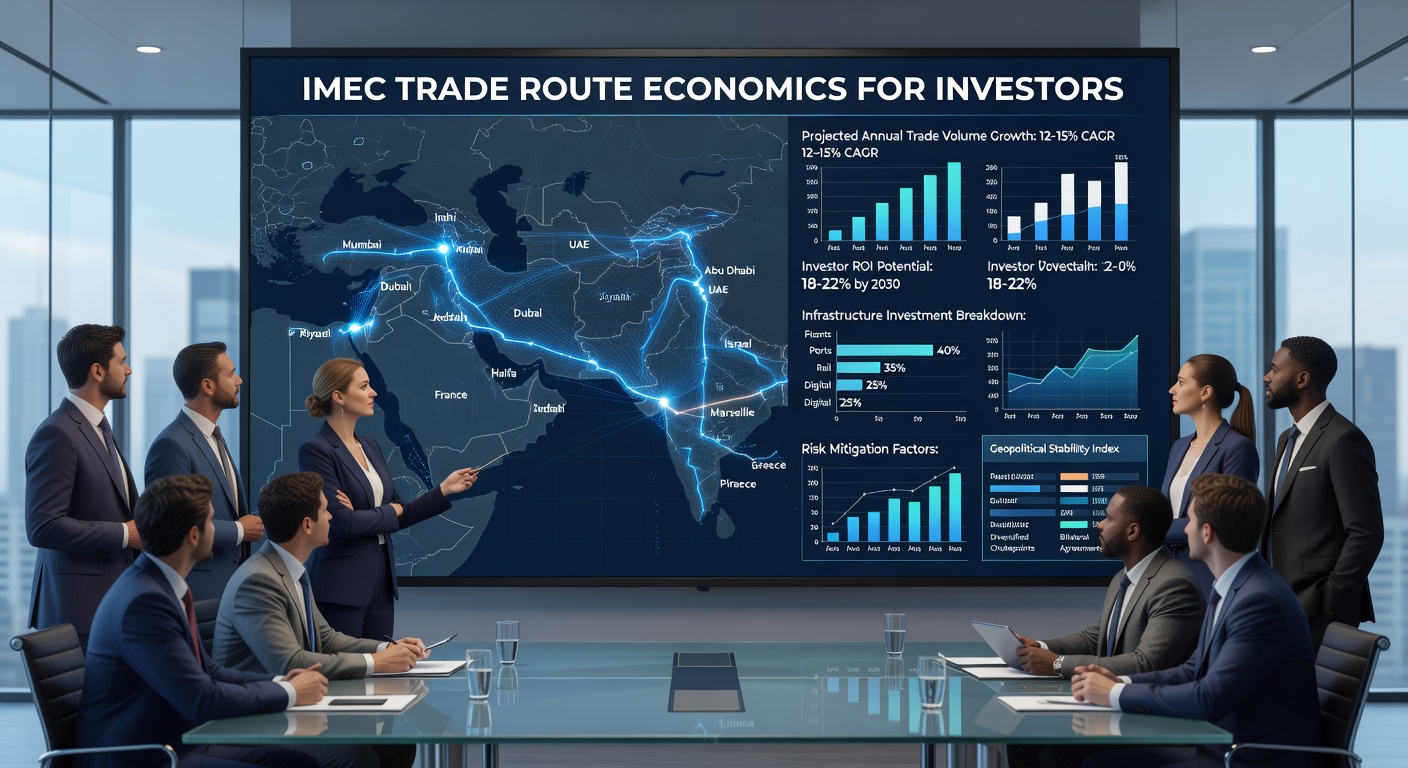
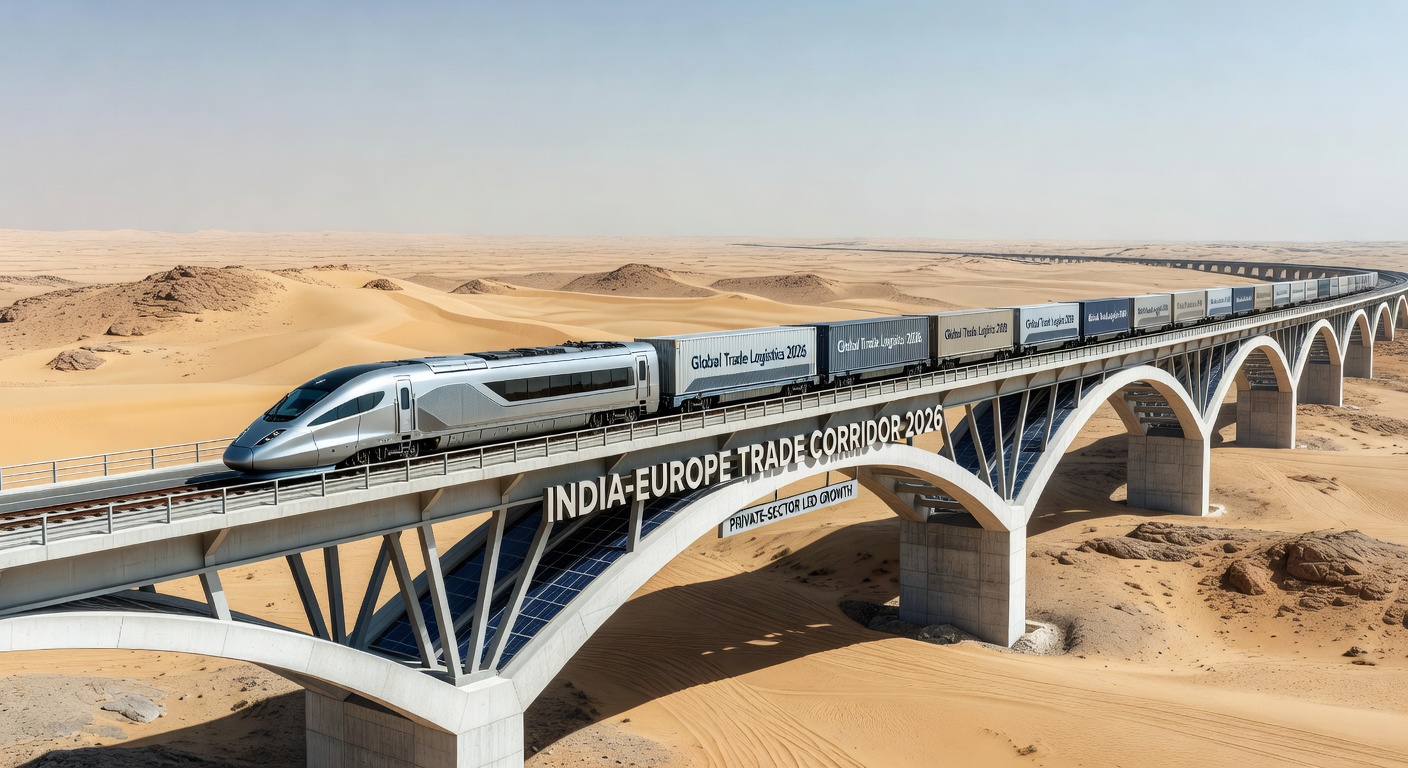
The India-Middle East-Europe Economic Corridor (IMEC) integrates maritime transport, high-speed rail, and underwater green hydrogen pipelines. It forms a strategic alternative to Chinese and Russian-backed transit routes. For international readers, this means a safer way to move goods across the globe.
In 2026, we see massive progress across the region. The Indo-Mediterranean Initiative (IMI) reports accelerating momentum following early 2026 geopolitical shifts. Companies are transitioning from just in time to just in case logistics. This shift is happening because the INSTC route via Iran faces indefinite delays due to sanctions and poor planning.
To understand the flow, you must look at the IMEC railway network map and timeline. The route operates as follows:
- The route starts at Indian ports like Mumbai and Mundra.
- Ships carry goods to the UAE, landing at Jebel Ali.
- From there, a new rail line crosses Saudi Arabia to reach Israel’s port of Haifa.
- Finally, Mediterranean shipping lane logistics take the goods to European hubs like Piraeus and Trieste.
Our data comes from trusted think tanks. Review the Reshaping the India-Middle East-Europe Economic Corridor: New Challenges, Old Vulnerabilities report. Also, check IMEC’s Relevance To India And Its Chokepoints.
| Hub Location | Transport Type | 2026 Infrastructure Status | Market Freedom Rank |
|---|---|---|---|
| Mundra, India | Sea Port | Expanding Capacity | Moderate |
| Jebel Ali, UAE | Sea to Rail | Fully Operational | High |
| Haifa, Israel | Rail to Sea | Actively Upgrading | High |
| Trieste, Italy | Sea to Land | Ready for Transit | High |
Supplemental Explanation
The Middle East transit ports development 2026 data shows massive private capital inflows. Wealthy nations are building roads and rails without forcing poor countries into debt. This is very different from China’s Belt and Road Initiative (BRI). The BRI uses secret loans that hurt developing nations. The IMEC project uses open contracts and fair bids. The transition to just in case logistics means companies are willing to pay for safety. They want to avoid the chaos caused by Iran’s stalled projects. The new map shows a clear path that avoids enemy waters entirely.
Conservative Perspective
Conservatives champion this corridor as a masterclass in Western alliances. Think tanks praise the UAE and Israel for their rapid market reforms. These countries removed red tape to build this rail link fast. National Review points out that isolating Iran is good for business. The INSTC route failed because authoritarian states cannot manage complex supply chains. Free market policies work better. When private companies compete to build ports, the whole world wins. This corridor is a shining example of economic freedom in action.
3. Global Implications
The shift toward India to Europe new shipping routes greatly impacts international investors, expats, and multinational businesses. Moving away from the costly Cape of Good Hope reroutes is essential today. IMEC’s multimodal connectivity offers multinational businesses a secure, risk-managed supply chain. This connects Asian manufacturing hubs directly to European consumer markets without interruption.
Middle East transit ports development 2026 initiatives represent a transparent, market-driven alternative. They are much safer than China’s Belt and Road Initiative (BRI). They also beat the politically vulnerable Suez Canal. By using private capital, these new hubs promise better efficiency and lower corruption.
However, foreign stakeholders must assess security risks carefully. There is a major concern regarding Chinese ownership (COSCO) of the Piraeus port in Greece. There is also maritime transit reliance on the Strait of Hormuz. These risks prompt a strategic diversification toward alternative EU gateway ports like Trieste in Italy.
Authoritarian threats remind us why secure chains matter. South Korean public perception of North Korea in early 2026 shows extreme hostility, with 42.4% viewing it as a hostile entity. This proves free nations must decouple from unpredictable dictatorships.
We sourced this risk data from The infinite connection: How to make the India-Middle East-Europe economic corridor happen. You can also read IMEC: Can the ambitious trade corridor from India to Europe succeed?.
| EU Gateway Port | Port Ownership | Supply Chain Security Risk | Free Market Status |
|---|---|---|---|
| Piraeus (Greece) | COSCO (China) | High | Low |
| Trieste (Italy) | Italian Govt / Private | Low | High |
| Marseille (France) | French Govt / Private | Low | High |
Supplemental Explanation
Multinational companies cannot trust critical cargo to state-controlled ports. The COSCO ownership in Greece is a major wake-up call. If global tensions rise, China could delay or stop Western goods at Piraeus. This is why the Middle East transit ports development 2026 focus is shifting to Italy and France. These nations are solid members of Western alliances. The Strait of Hormuz remains a tricky spot. Iran often threatens ships there. But the US Navy and allied forces keep these waters safe for business. Strong militaries ensure that free market policies can function without fear of piracy or terror.
Conservative Perspective
Financial Times and WSJ analysts warn against doing business with hostile regimes. Dictatorships threaten safety and trade constantly. By shifting shipping lanes to Trieste, investors protect their assets from Chinese spying and control. A high score on the economic freedom index means a country respects private property. Italy respects these rights; China does not. Conservative leaders urge businesses to pull supply chains out of authoritarian grips. Building strong alliances like NATO and AUKUS protects these new trade routes. Freedom and security always go hand in hand.
4. Actionable Insights
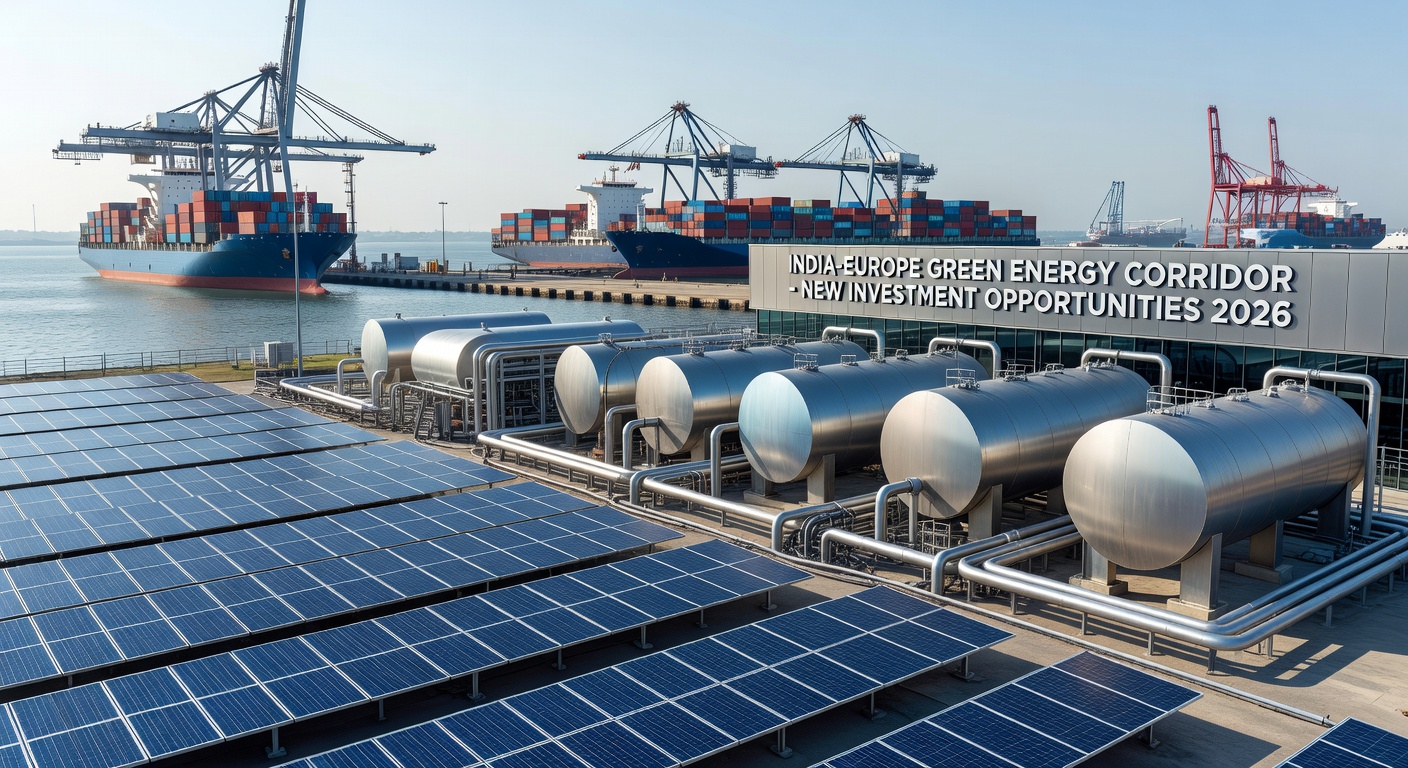
Global readers must take specific steps right now to protect their wealth. You need to realign logistics contracts and supply chain infrastructure today. Your goal is to capitalize on the Middle East transit ports development 2026. Specifically, businesses should target the expanding UAE-Saudi-Israel rail links. These links are safe, fast, and open for global business.
There are massive investment opportunities here. Smart money is moving into key robust sectors:
- Green hydrogen infrastructure development
- Port logistics and coastal real estate
- International rail construction firms
These are the companies actively building out the IMEC railway network map and timeline. By investing in these sectors, you shield your portfolio from inflation and war risks. You must also navigate new policy and regulatory changes. The January 2026 EU-India trade deal introduces highly favorable tariff agreements. Furthermore, updated US sanctions waivers now protect businesses working in approved regional transit hubs.
To succeed, you need practical tools. Use interactive IMEC routing planners to map your cargo. Download maritime compliance guides for the Persian Gulf. Finally, review investment prospectus databases for UAE and Greek port expansion projects.
| Investment Sector | Recommended Action | Risk Level | Expected Growth Potential |
|---|---|---|---|
| Green Hydrogen | Allocate Early Capital | Medium | Very High |
| UAE/Saudi Rail | Sign Long-Term Contracts | Low | High |
| EU Port Logistics | Buy Private Port Shares | Low | Steady |
| Suez Shipping | Sell or Reduce Exposure | High | Negative |
Supplemental Explanation
The actionable insights are clear for global investors. If you ship goods from Asia to Europe, stop relying on old routes. The new trade deal makes the India to Europe new shipping routes much cheaper, saving millions on taxes. US sanctions waivers legally protect your company if you use Middle East transit hubs. Just avoid Iranian rails. Investing in the UAE-Saudi-Israel rail link supports peace through commerce. It also aligns your money with strong market reforms. These countries are deregulating their transport sectors. This makes it easier for foreign money to enter and grow safely.
Conservative Perspective
From a free-market view, deregulation is the real hero of the IMEC story. The Heritage Foundation often highlights how lowering taxes spurs massive growth. The UAE and Saudi Arabia are proving this right now. They are slashing bureaucratic red tape. This invites Western capital to build the rails. Investors should avoid companies that rely on government bailouts. Instead, buy shares in private firms that win open bids for Mediterranean shipping lane logistics. Following strong Western alliances ensures your money is backed by the rule of law. Free enterprise defeats state planning every time.
5. Expert Analysis
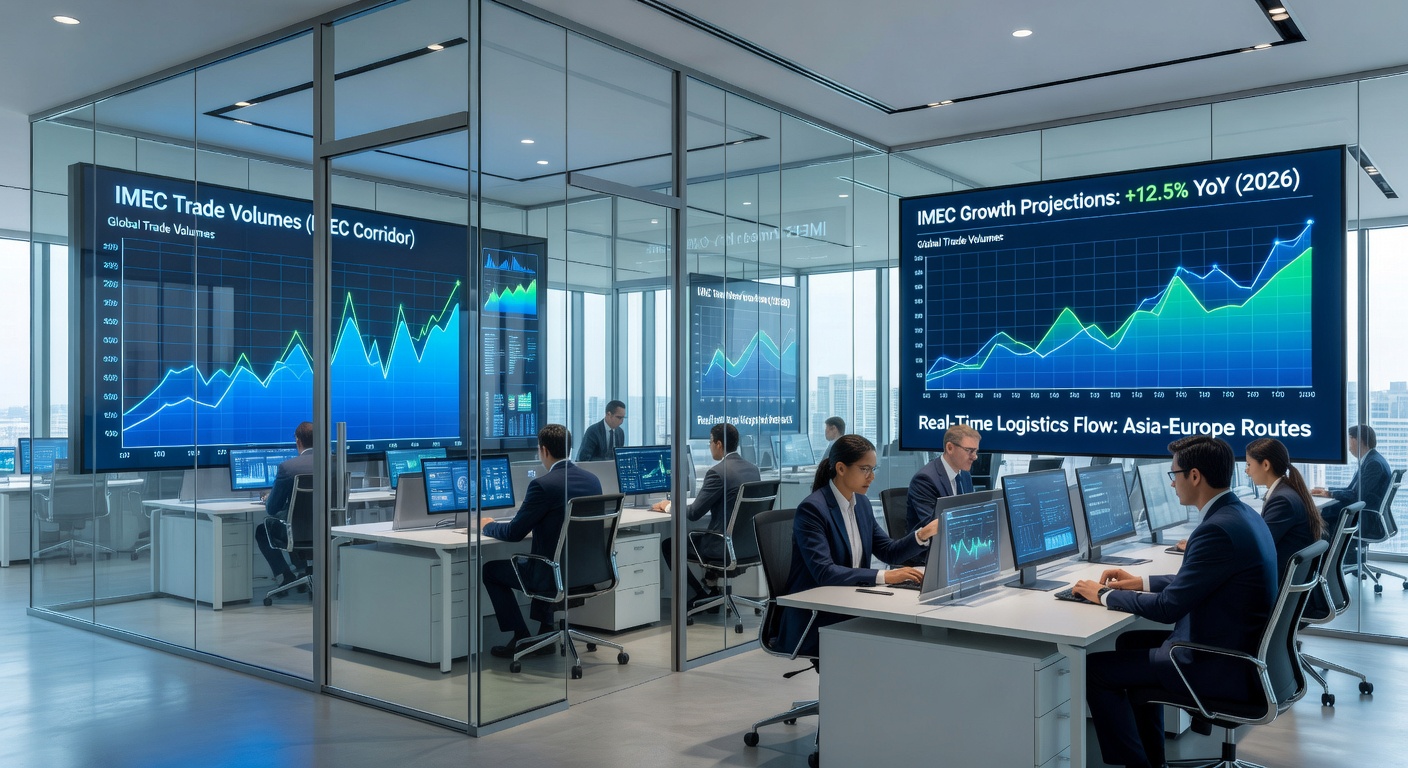
Official forecasts show incredible promise for the new routes. Based on IMF, World Bank, and regional central banks 2026 data, the outlook is highly positive. Global analysts project that the optimization of India to Europe new shipping routes will significantly reduce regional inflation. It does this by cutting shipping times and boosting bilateral trade volumes. Cheaper shipping means lower prices for everyday goods.
There is a major difference between local and international views. Local Indian policymakers view IMEC as a vehicle to climb the global manufacturing value chain. They want to make more products at home. However, Western analysts highlight it as a critical decoupling mechanism. It is a vital tool to break free from China’s BRI and the stalled Russian transit corridors.
“IMEC may gain momentum now that the INSTC has stalled, noting the 2026 delays in Iranian rail projects.”
This quote comes from Chatham House, as reported by CNBC. It emphasizes the urgent need for robust Mediterranean shipping lane logistics. Verify these expert claims by reading the Inside India newsletter. Also, explore the Atlantic Council Report.
| Performance Metric | 2026 Baseline | 2030 Target | Primary Growth Driver |
|---|---|---|---|
| Transit Time (India-EU) | 18 Days | 14 Days | High-Speed Rail Links |
| Trade Volume Growth | +5% | +15% | Jan 2026 EU-India Deal |
| Logistics Cost Drop | -10% | -30% | Port Deregulation |
Supplemental Explanation
The expert data proves that state-controlled projects like the INSTC fail. Iran’s inability to build simple railways in 2026 shows the weakness of dictatorships. In contrast, the IMEC railway network map and timeline is on schedule. The World Bank notes that private sector leadership is driving this success. For international investors, reducing inflation is vital. When shipping costs drop, companies make more profit. They can then pay higher dividends to shareholders. Moving supply chains to nations that respect property rights is basic risk management. Decoupling from China is a necessary financial strategy.
Conservative Perspective
Conservative experts at the National Review celebrate this shift. They argue that relying on the Chinese Communist Party for trade was a historic mistake. By embracing the India to Europe new shipping routes, the West is taking its economic power back. High scores on the economic freedom index correlate directly with project success. The Atlantic Council report shows that market reforms in India and the Middle East are working beautifully. Western alliances provide the security umbrella needed for these free market policies to blossom. Decoupling from bad actors protects both national security and private wealth.
6. Conclusion & Next Steps
The realization of the India-Middle East-Europe Economic Corridor in 2026 is an indispensable shift for global trade. By bypassing volatile maritime chokepoints, international investors ensure long-term supply chain resilience. You no longer have to worry about Houthis in the Red Sea. You no longer need to depend on Chinese-controlled ports.
To stay ahead, please check our internal links. Read our “2026 Middle East Port Infrastructure Guide” for local partners. Explore our “Green Hydrogen Investment in the Mediterranean” for energy stock tips. Finally, review “Supply Chain Resilience Post-Suez” for risk management.
We invite international investors to take action today. Subscribe to our premium global logistics newsletter for real-time actionable updates on port developments, tariff negotiations, and major corridor construction milestones. Do not miss out on this massive trade shift.
Here is your updated global resource list for 2026:
- Bookmark the Indo-Mediterranean Initiative (IMI) tracking board.
- Read the Atlantic Council supply chain briefs.
- Download the official 2026 IMEC summit communiqués.
| Action Step | Requirement | Target Deadline | Essential Resource Link |
|---|---|---|---|
| 1 | Reroute Asian Freight | Q2 2026 | Interactive IMEC Planners |
| 2 | Invest in UAE Rail | Q3 2026 | Secure Brokerage Accounts |
| 3 | Shift to Trieste Port | Q4 2026 | New Logistics Contracts |
| 4 | Subscribe to Newsletter | Today | Our Premium Portal |
Supplemental Explanation
The global market does not wait for slow movers. The Middle East transit ports development 2026 phase is happening right now. The smart money has already left the Suez Canal. It is flowing into nations that value free market policies. By reading this guide, you now know how to navigate the IMEC railway network map and timeline. You also know why Mediterranean shipping lane logistics are crucial for your financial success. Take the next steps outlined in our table. Secure your freight contracts before prices go up. Partner with allies who respect your property.
Conservative Perspective
In the end, economic freedom wins. The failures of the Belt and Road Initiative and the Iranian rails prove that authoritarian control destroys value. The new trade routes are built on the principles of liberty, open competition, and strong Western alliances. Conservative investors know that you cannot price a free society. Protecting your assets means keeping them out of the hands of dictators. Embrace market reforms, trust in private enterprise, and use these new corridors to build lasting generational wealth.
Frequently Asked Questions (FAQ)
What is the main advantage of the new IMEC shipping route?
The India-Middle East-Europe Economic Corridor (IMEC) significantly reduces reliance on volatile maritime chokepoints like the Red Sea. It is projected to lower transit times by up to 40% and slash logistics costs by 30% through a resilient multimodal network.
How does the 2026 EU-India trade deal impact international stakeholders?
Signed in January 2026, the deal introduces highly favorable tariff reductions for goods moving between allied nations, making the new trade corridors significantly cheaper and offering massive savings for multinational businesses.
Which European gateway ports are recommended for supply chain security?
Due to geopolitical vulnerabilities and foreign ownership risks at ports like Piraeus (which is linked to China’s COSCO), global investors are advised to shift towards secure, free-market alternatives such as Trieste in Italy and Marseille in France.