

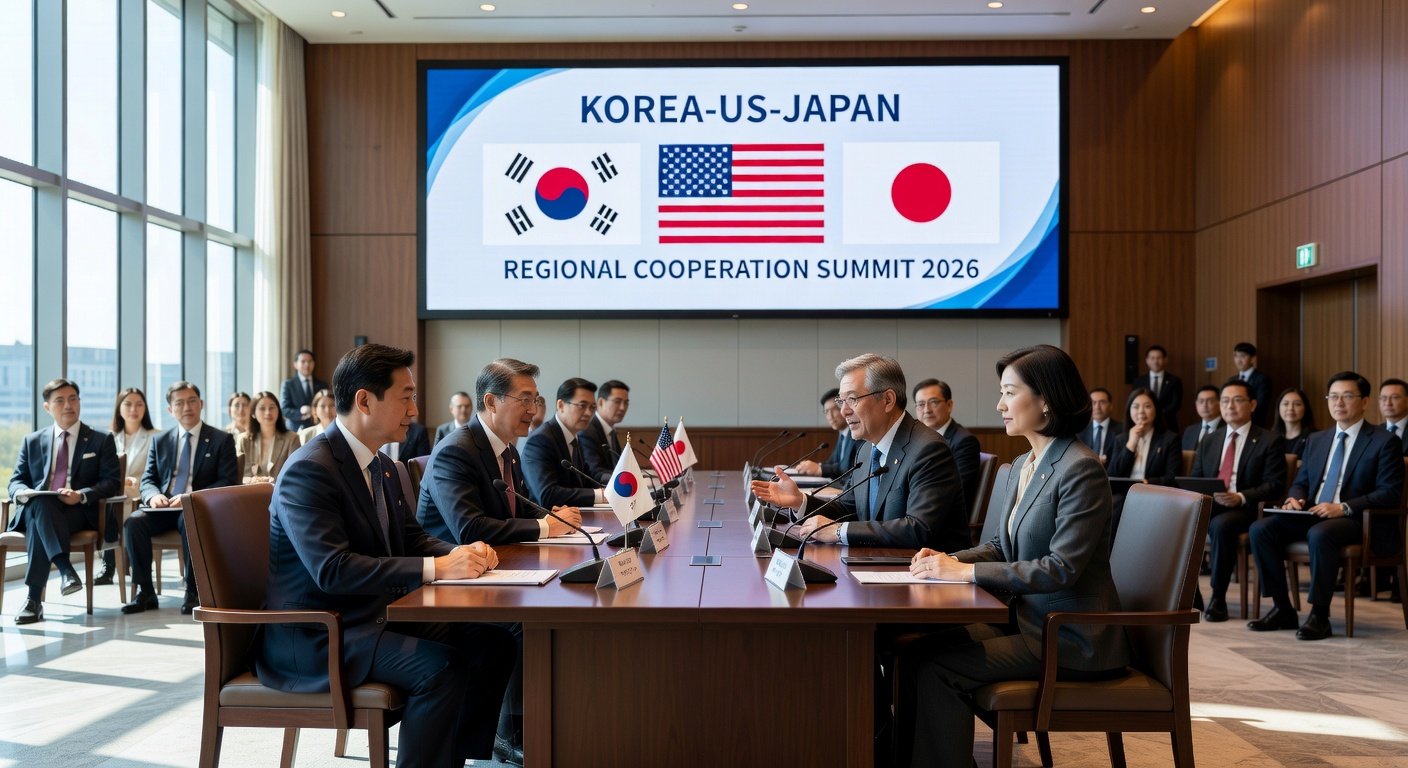
Korea-US-Japan regional cooperation 2026
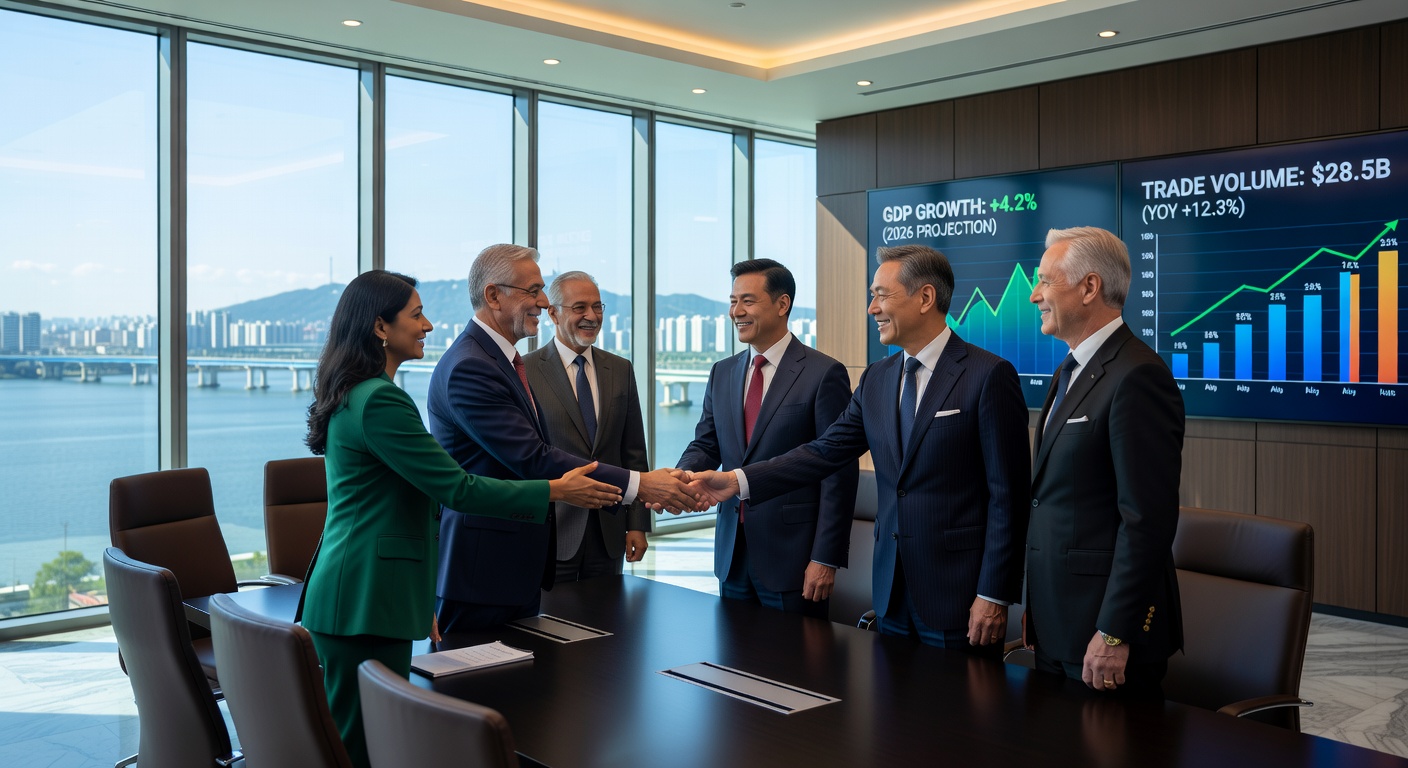
Key Summary: The 2026 economic landscape in South Korea is increasingly shaped by local municipalities taking independent action to secure foreign direct investment amid national legislative delays. By leveraging the trilateral cooperation between South Korea, the United States, and Japan, regional leaders aim to build robust, secure supply chains in the tech and defense sectors. While market advocates highlight these localized strategies as milestones for economic autonomy, global investors are primarily focusing on the reduced geopolitical risks and localized incentives these specialized zones provide.
Table of Contents
- 1. Introduction
- 2. Current Situation
- 3. Global Implications
- 4. Actionable Insights
- 5. Expert Analysis
- 6. Conclusion & Next Steps
- 7. Frequently Asked Questions (FAQ)
1. Introduction
With South Korea’s GDP growth projected to recover to 1.8-2.0% this year following the 2025 slowdown, international investors are closely monitoring how Korea-US-Japan regional cooperation 2026 is driving new localized economic opportunities. The strategic role of local government trade missions in South Korea is becoming critical for foreign stakeholders.
These global groups seek secure investments in the Indo-Pacific region amid rapidly shifting world politics. Currently, provincial leaders are proactively bypassing national legislative gridlock to attract direct foreign investment. They are deploying export-led growth strategies to quickly secure autonomous tech and defense contracts. Because of this fast local action, investors can navigate the medium-low political risks on the Korean peninsula by focusing capital firmly on strategic alliance-backed industries.
Various commentators argue that these market reforms and localized business initiatives offer an alternative to national political gridlock. Many analysts emphasize the benefits of a robust US-Korea security alliance, viewing trilateral teamwork as a stabilizing factor for free enterprise. Consequently, these local hubs currently offer attractive stability. By integrating local market-friendly policies with global alliances, South Korea presents a viable environment for expats and investors, as highlighted in the Bank of Korea 2026 Economic Outlook and recent Korea Times opinions.
| Strategy Element | Market Impact | Primary Investor Benefit |
|---|---|---|
| Local Government Trade Missions | Bypasses national political gridlock | Faster foreign direct investment approvals |
| Export-Led Growth Strategies | Secures local tech and defense contracts | Higher profits and independent deals |
| Trilateral Cooperation | Lowers overall geopolitical risk | Safer capital environments for expats |
| Market Reforms | Streamlines regulatory processes | Greater local economic autonomy |
Supplemental Explanation
The 2026 economic recovery in South Korea is a focal point for global investors. Transitioning from a slow economic year in 2025 to a 1.8% – 2.0% growth rate demonstrates measurable market stabilization. This recovery is closely tied to proactive local business initiatives. When national legislative processes face delays, local mayors and governors often step in, launching international missions to engage with foreign businesses directly. By offering customized incentives, such as tax relief and expedited permits, these local government trade missions aim to circumvent broader bureaucratic hurdles. By coordinating with regional allies, these initiatives strive to create insulated, reliable environments for incoming capital.
2. Current Situation
To fully grasp the current market dynamics, it is essential to explore the concept of “Friend-shoring.” Friend-shoring is a trade framework that prioritizes building supply chain networks within politically allied nations. Today, this practice forms the foundation of supply chain resilience in Korean provinces.
Recent 2026 data indicates that foreign direct investment is heavily concentrated in sectors supported by bilateral and trilateral defense frameworks. Simultaneously, international sister-city partnerships have expanded by 15%. These municipal relationships serve as efficient channels for economic coordination. As external pressures regarding global trade policies mount, local governments in South Korea are increasingly taking the initiative to secure regional semiconductor infrastructure independently, minimizing potential federal delays.
Many industry experts view this decentralization as a practical response to global trade friction. Proponents of deregulation argue that prioritizing strong alliances is essential for protecting modern supply chains, actively supporting regional leaders who offer streamlined processes for allied investors. You can track these capital movements in the Invest Korea 2026 FDI Report and the Ministry of Economy and Finance 2026 Briefings.
| 2026 Economic Indicator | Current Data Trend | What It Means for Investors |
|---|---|---|
| Foreign Direct Investment (FDI) | Heavily favors defense and tech | High demand for secure, allied supply chains |
| Sister-City Partnerships | Increased by 15% year-over-year | More direct paths for local business deals |
| Regional Semiconductor Hubs | Growing independent of federal help | Faster factory building times for tech brands |
Supplemental Explanation
Friend-shoring is reshaping international business strategies in 2026. Instead of sourcing materials solely based on the lowest cost, many companies are prioritizing geopolitical stability. For South Korea, this involves deepening economic ties with the United States and Japan. To mitigate domestic legislative delays, municipalities are forming “sister-city” relationships internationally, which facilitate more agile trade and infrastructure development. These networks are designed to maintain operational continuity even during global crises. For global investors, focusing on these highly active, alliance-driven provinces represents a strategic shift toward stability.
3. Global Implications
For international enterprises, the solidified Korea-US-Japan regional cooperation 2026 offers a reinforced foundation for capital deployment. This framework helps stabilize external security concerns and shifts the operational focus toward localized, predictable economic zones. Unlike regions with heavily centralized planning, South Korea’s provincial districts are increasingly utilizing autonomous export-led growth strategies.
When conducting risk assessments, foreign stakeholders must analyze regional data carefully. While domestic policy debates over corporate regulations are routine, global investors are advised to calculate the broader geopolitical risk premium. Engaging directly with supply chain resilience initiatives in Korean provinces can effectively lower this premium and streamline daily operations. Insights on these specific regional profiles can be found in the IMF South Korea 2026 Country Report.
| Global Benchmark | South Korea Local Hubs | Traditional Global Regions |
|---|---|---|
| Investment Strategy | Autonomous export-led growth | Centralized national planning |
| Security Shield | Trilateral Korea-US-Japan alliance | Broad, generalized treaties |
| Business Speed | Expedited via provincial leaders | Subject to federal timelines |
Supplemental Explanation
A unique pattern has emerged in South Korea compared to other global markets. In many regions, local municipalities rely heavily on national frameworks to dictate trade rules. Conversely, South Korean provincial leaders are proactively promoting their tech and defense capabilities directly to the international market. For global investors, this implies an opportunity to negotiate directly with regional authorities eager to attract capital. From a macroeconomic perspective, the trilateral security bond functions as a vital stabilizing mechanism, enabling business continuity regardless of regional tensions.
4. Actionable Insights
What specific steps should global readers take right now? Foreign enterprises should actively explore integration with international sister-city programs. Engaging at the municipal level often grants access to localized tax incentives and specialized testing zones for emerging technologies, bypassing broader regulatory bottlenecks.
Furthermore, strategic asset allocation is crucial. Consider the following targeted approaches:
- Focus on Free Economic Zones (FEZs): Align investments with regional trade missions operating freely within designated FEZs.
- Pivot from Traditional Retail: Limit heavy exposure to domestic retail sectors, which are more susceptible to national regulatory debates.
- Utilize Provincial Investment Boards: Process corporate expansions through local agencies rather than federal channels to capitalize on targeted visa and permit policies.
Advocates for deregulation stress that these FEZs represent prime examples of administrative flexibility, offering low corporate burdens and pro-business frameworks. Operating within these zones positions companies to benefit directly from the stability of localized international partnerships.
| 2026 Investment Action | Recommended Approach |
|---|---|
| Partnerships | Engage with localized sister-city programs |
| Sector Focus | Prioritize FEZs, Tech, and Defense infrastructure |
| Expansion Strategy | Process registrations via provincial investment boards |
Supplemental Explanation
Actionable insights require implementing strategies that protect long-term wealth. For 2026, zooming in on Free Economic Zones (FEZs) is highly recommended. These zones function as specialized enclaves where standard regulatory friction is minimized, making it easier to hire international talent and deploy capital. For executives relocating operations to Asia, bypassing heavily regulated domestic markets in favor of these trade missions can optimize returns. Engaging a local mayor’s office within an FEZ often yields immediate support, driven by their mandate to promote friend-shoring and regional growth.
5. Expert Analysis
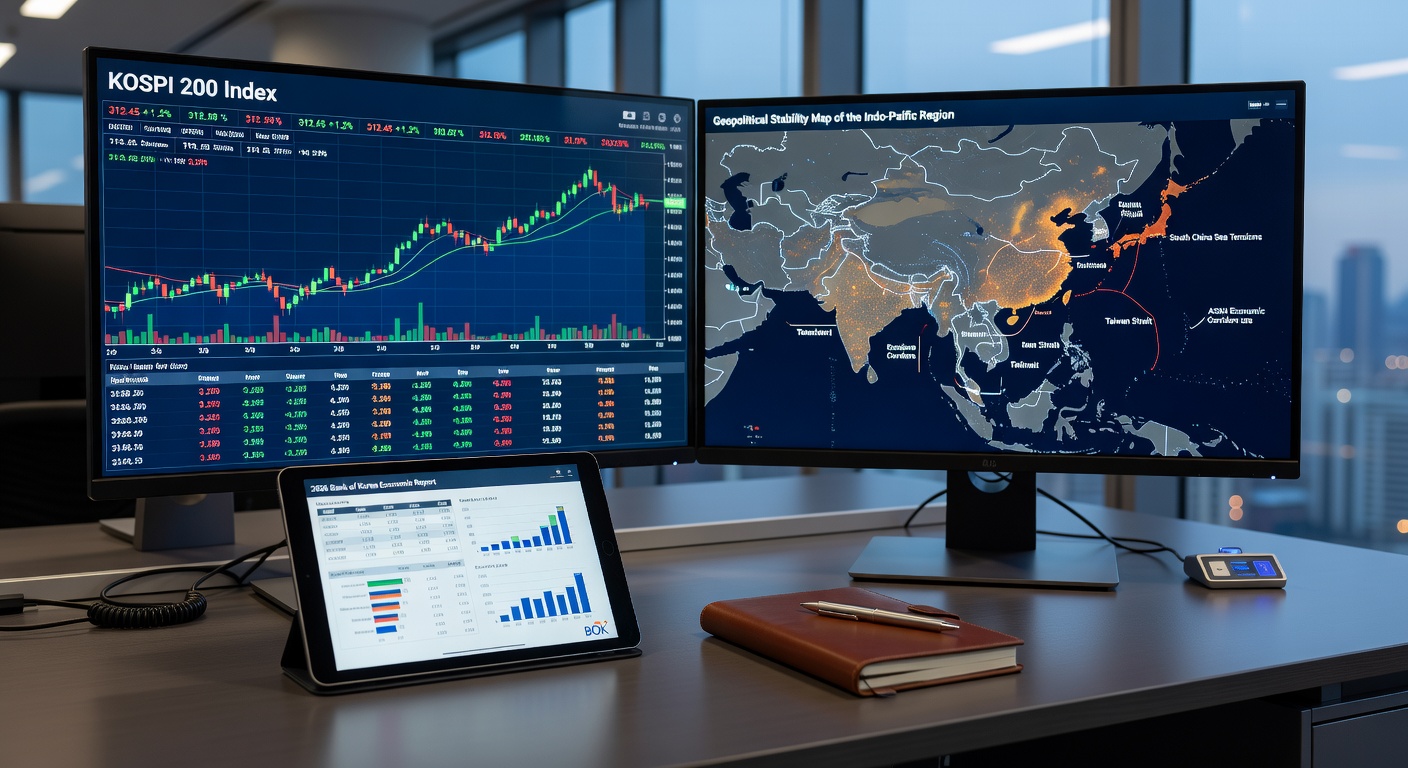
Official 2026 forecasts confirm that the macroeconomic recovery is proceeding steadily. Driven primarily by strong semiconductor demand, this success relies heavily on the evolving supply chain resilience in Korean provinces.
There is a notable distinction between domestic media focus and international risk analysis. While local reports frequently center on internal budgetary debates, global analysts view the strengthened regional cooperation as a highly successful mitigation of broader trade uncertainties.
“Political risk on the Korean Peninsula remains relatively medium-low due to internal institutional stability and robust alliance reinforcements, making provincial tech sectors highly attractive to foreign capital.”
Various financial commentators agree that consistent market reforms and strategic defense postures have established a secure economic floor. Comprehensive data supporting these trends can be found in the OECD 2026 Economic Survey of Korea and the Korea Economic Daily Global.
| Analyzing Body | 2026 Economic Outlook | Primary Driver of Growth |
|---|---|---|
| Bank of Korea (BOK) | 1.8% – 2.0% GDP Growth | Semiconductor demand & exports |
| OECD Forecasters | Steady Macro Recovery | Institutional stability |
| Global Analysts | Medium-Low Political Risk | Trilateral security & friend-shoring |
Supplemental Explanation
Assessments of South Korea in 2026 often reveal a dichotomy. Domestic discussions may highlight legislative friction, while international observers focus on the macro-stability provided by technological leadership and strong geopolitical alliances. The anticipated 1.8% to 2.0% growth rate is largely anchored by global reliance on South Korean microelectronics. Security analysts point out that this economic resilience is deeply interconnected with international defense frameworks, signaling to global markets that regional trade zones remain highly secure destinations for capital placement.
6. Conclusion & Next Steps
In summary, navigating the 2026 business landscape requires global investors to look beyond national-level gridlock. Capitalizing on provincial-level benefits alongside three-country security frameworks offers a strategic pathway for enterprise growth. The integration of local initiatives with broader alliances provides an optimized tool for managing risk and driving returns.
By focusing on areas implementing targeted regulatory flexibility, companies can secure their footing in the region. The export-led growth strategies fostered by regional authorities remain accessible and ready for international partnerships.
International readers are encouraged to evaluate these specialized zones immediately. Monitoring policy updates and utilizing provincial frameworks will be key to successful market entry. For more operational tools, please consult Invest Korea, the Bank of Korea English Portal, and the KOTRA Global Portal.
| Next Step Action | Resource | Expected Outcome |
|---|---|---|
| Monitor Economy | Bank of Korea Portal | Track ongoing macroeconomic targets |
| Find Local Hubs | Invest Korea | Discover optimized Free Economic Zones |
| Start Exporting | KOTRA Global Portal | Connect with sister-city trade missions |
Supplemental Explanation
The key takeaway for 2026 is that investors do not need to wait for broad national agreements to successfully deploy capital. Significant economic momentum resides within localized provinces prioritizing infrastructure and trade. Through the integration of global supply chain networks and trilateral security parameters, these local regions are structurally insulated and primed for investment. By utilizing the provided resources, executives can identify specific Free Economic Zones, connect with regional authorities, and secure a strategic presence in the Indo-Pacific market.
Frequently Asked Questions (FAQ)
What is “friend-shoring” in the context of South Korea’s 2026 economy?
Friend-shoring is the strategic practice of concentrating supply chain networks within allied and politically aligned nations. In 2026, South Korea’s regional tech hubs are heavily utilizing this approach by deepening ties with the US and Japan to ensure manufacturing stability and operational security.
How are local South Korean governments bypassing national legislative delays?
Local mayors and governors are launching independent trade missions and utilizing Free Economic Zones (FEZs). By directly engaging with foreign investors and creating international sister-city partnerships, they can offer customized tax incentives and faster permit approvals without waiting for federal legislation.
Why should global investors focus on Free Economic Zones (FEZs)?
FEZs serve as specialized business environments that offer greater regulatory flexibility, lower corporate tax burdens, and streamlined processes for foreign talent. Investing in these zones allows foreign enterprises to bypass traditional domestic retail risks while benefiting from strong regional security frameworks.