



South Korea Political Market Impact 2026
Key Summary: The Q1 2026 South Korean market is experiencing profound volatility driven by Supreme Court reversals and the resulting legislative gridlock. This severe political instability has amplified foreign direct investment risks, stalled vital economic reforms, and deepened the historical “Korea Discount.” To navigate this high-risk landscape safely, global investors and corporate expats must implement actionable strategies such as localized currency hedging, stringent cross-border due diligence, and pivoting toward globally insulated export sectors.
Table of Contents
- 1. Introduction: The Q1 2026 Investment Climate
- 2. Current Situation: Legislative Gridlock and Corporate Governance
- 3. Global Implications: Evaluating International Investment Risks
- 4. Actionable Insights: Strategies for Expats and Global Investors
- 5. Expert Analysis: Balancing Macro Resilience and Political Friction
- 6. Conclusion & Next Steps for Global Stakeholders
- Frequently Asked Questions (FAQ)
1. Introduction: The Q1 2026 Investment Climate
Assessing the South Korea political instability market impact is essential for expats and international analysts navigating extreme regulatory and currency volatility. As we move through the first quarter of 2026, the political climate in Seoul has reached a boiling point. The domestic tension is creating ripple effects across global financial markets.
International stakeholders must understand these dynamics to protect their investments and business operations. The current situation demands a careful approach to risk management and strategic planning. Global investors can no longer ignore the noise coming from the nation’s capital.
The primary catalyst for this current uncertainty stems from recent judicial decisions. Following the unprecedented May 2025 Supreme Court reversal of opposition leader Lee Jae-myung’s election law acquittal, the market environment shifted dramatically. The initial lower court conviction in late 2024 shook the political landscape. Then, an unexpected appellate acquittal in early 2025 offered a brief moment of calm.
However, the Supreme Court’s mandate for a retrial has injected massive uncertainty back into the system. This timeline of legal ping-pong has become the defining stress test for global capital entering Q1 2026. Foreign investors are increasingly concerned about how these political battles will affect their bottom lines.
The prolonged judicial process creates a challenging environment for those seeking Korean economic freedom and market reforms. Mainstream financial outlets and conservative analysts alike agree that this legal drama is more than just domestic politics. It is a fundamental issue of market stability. The ongoing trials of top political figures are directly linked to economic policy delays. For international readers, staying informed is no longer optional. It is a critical component of surviving and thriving in the region.
This comprehensive guide will provide you with three key takeaways to navigate the year ahead:
- Analyze the KOSPI reaction to political trial verdicts to help you understand stock market volatility.
- Deeply evaluate Foreign direct investment risks South Korea 2026 to protect your cross-border business interests.
- Identify localized asset shielding strategies that expats and global fund managers can implement immediately.
By the end of this report, you will have a clear, actionable roadmap for handling the South Korean market in 2026.

2. Current Situation: Legislative Gridlock and Corporate Governance
To grasp the current South Korean legislative gridlock and economic policy stall, international readers must first understand the “Korea Discount.” This term refers to the historically low valuation of South Korean stock markets compared to global peers. The discount is largely driven by opaque corporate governance structures, unpredictable dividend policies, and the heavy influence of massive family-run conglomerates known as “chaebols.”
When domestic political chaos erupts, the Korea Discount typically deepens. In early 2026, the intersection of political corruption trials and corporate governance is more visible than ever. Foreign buyers demand transparency, but the ongoing political circus delivers the exact opposite.
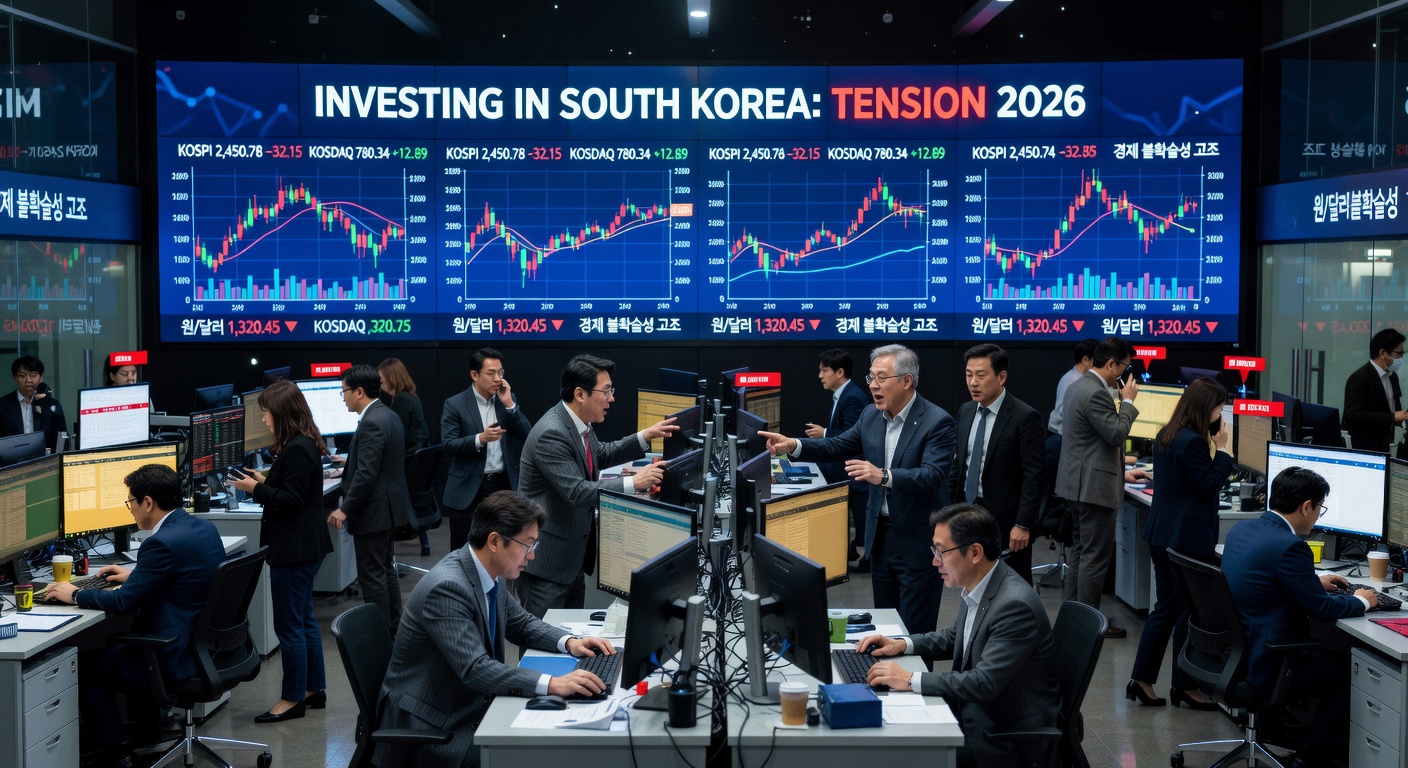
The Q1 2026 data paints a frustrating picture for the business community. Local municipal infrastructure contracts face severe delays. Foreign investors are reporting stalled approvals for public-private partnerships. The KOSPI reaction to political trial verdicts has been a rollercoaster of sudden sell-offs and cautious recoveries.
Whenever news breaks regarding the Supreme Court’s retrial phase, the market experiences immediate currency and equity fluctuations. This ongoing legal saga creates a vacuum where bold economic policymaking should be happening. Instead of passing crucial tax cuts and market reforms, lawmakers are locked in a bitter struggle over the fate of the opposition leadership.
From a conservative perspective aligned with major domestic business dailies like Chosun Ilbo and Dong-A Ilbo, this situation is highly damaging. Conservative analysts argue that the opposition’s hyper-focus on defending its leader is paralyzing the National Assembly. This gridlock threatens Korean economic freedom and prevents the conservative administration from implementing market-friendly policies.
A strong economy requires the rapid execution of corporate tax relief and deregulation. However, populist resistance and legislative stonewalling are blocking these vital steps. Swift judicial resolution is desperately needed to restore trust and get the government back to the business of economic growth.
Visual Recommendation: A timeline infographic mapping Lee Jae-myung’s legal journey from the November 2024 convictions, through the March 2025 appellate acquittal, to the May 2025 Supreme Court reversal, ending with the current Q1 2026 retrial phase. This visual should overlay KOSPI index dips corresponding to each major court date.
Supplemental Explanation
The concept of Corporate governance and political influence Korea is uniquely intertwined. Historically, the government and large conglomerates worked closely to rapidly develop the nation. Today, however, global investors demand strict separation and transparent accounting. When political leaders face trials involving corporate bribery or illegal fund transfers, it triggers alarms for international compliance officers. This historical baggage makes the current political instability particularly sensitive for foreign capital markets.

3. Global Implications: Evaluating International Investment Risks
The extended judicial uncertainty in Seoul carries massive global implications. Multinational corporate strategy is directly impacted by this instability. Foreign companies are currently revising their hiring decisions and delaying expansion timelines in Seoul. The risk of sudden policy shifts makes long-term planning incredibly difficult.
When lawmakers cannot agree on basic economic frameworks, foreign businesses bear the brunt of the confusion. The Foreign direct investment risks South Korea 2026 are rising as compliance costs increase. International stakeholders are demanding greater clarity before committing new capital to the region.
When comparing South Korea to global benchmarks like the United States, Japan, and the European Union, stark contrasts emerge. Western governance standards are monitored strictly by foreign institutional buyers. While South Korea boasts strict anti-corruption laws on paper, the enforcement often appears highly politicized.
Recent court reversals create a perception of unpredictability. In Japan or the EU, regulatory frameworks remain relatively stable regardless of which political party holds power. In South Korea, however, a shift in political dominance can entirely rewrite corporate compliance expectations. This unpredictability makes South Korea a higher-risk environment for conservative foreign capital compared to its developed peers.
For foreign stakeholders, specific risk assessment must focus on cross-border trade compliance and foreign exchange controls. The South Korean Won is highly sensitive to geopolitical and domestic political news. Furthermore, the opposition leader’s trials involve allegations of illegal dollar transfers to North Korea. This specific detail deeply concerns global security analysts.
Conservative Korean viewpoints emphasize that a strong US-Korea security alliance requires transparent leadership. A hardline stance on North Korea and strong military cooperation with the US are cornerstones of South Korea’s sovereign stability. When domestic politicians are investigated for illicit northern dealings, it undermines international confidence in the nation’s geopolitical reliability.
Table 1: Comparing Global Corporate Governance & Stability Standards (Q1 2026)
| Region | Regulatory Predictability | Anti-Corruption Enforcement | Foreign Investment Climate |
|---|---|---|---|
| United States | High – Independent agencies | Strict and largely apolitical | Highly attractive, clear rules |
| Japan | Very High – Gradual reforms | Consistent, low political drama | Stable, improving shareholder returns |
| European Union | High – Unified directives | Bureaucratic but highly transparent | Safe, focused on ESG standards |
| South Korea | Moderate – High political impact | Strict but viewed as politicized | High potential, but currently volatile |
Navigating Local Realities
The intersection of corporate governance and political influence often catches new expats and foreign businesses off guard. It is vital to understand that business decisions in Seoul cannot be separated from the political climate. The ongoing gridlock means that foreign firms must maintain aggressive legal compliance budgets. Navigating this environment requires partnering with local legal experts who understand the nuances of both global standards and local political realities.
4. Actionable Insights: Strategies for Expats and Global Investors
Given the unpredictable environment, what specific steps should global readers take right now? The most urgent action is to hedge asset portfolios against localized currency fluctuations. The KOSPI reaction to political trial verdicts often correlates with sudden dips in the South Korean Won. International investors should utilize forward contracts and currency options to protect their foreign exchange exposure.
Expats living in Seoul should consider diversifying their savings into US Dollars or Euros. Waiting for the final Supreme Court verdicts without a currency hedge is a dangerous game for international wealth management in 2026.
Beyond currency, there are specific investment avoidance strategies to implement. Global readers must conduct extremely strict due diligence before partnering with South Korean public-private development projects. Municipal contracts are currently moving at a snail’s pace due to the political gridlock. If your business relies on swift government approvals, it is wise to delay capital deployment until the legislative vacuum is resolved.
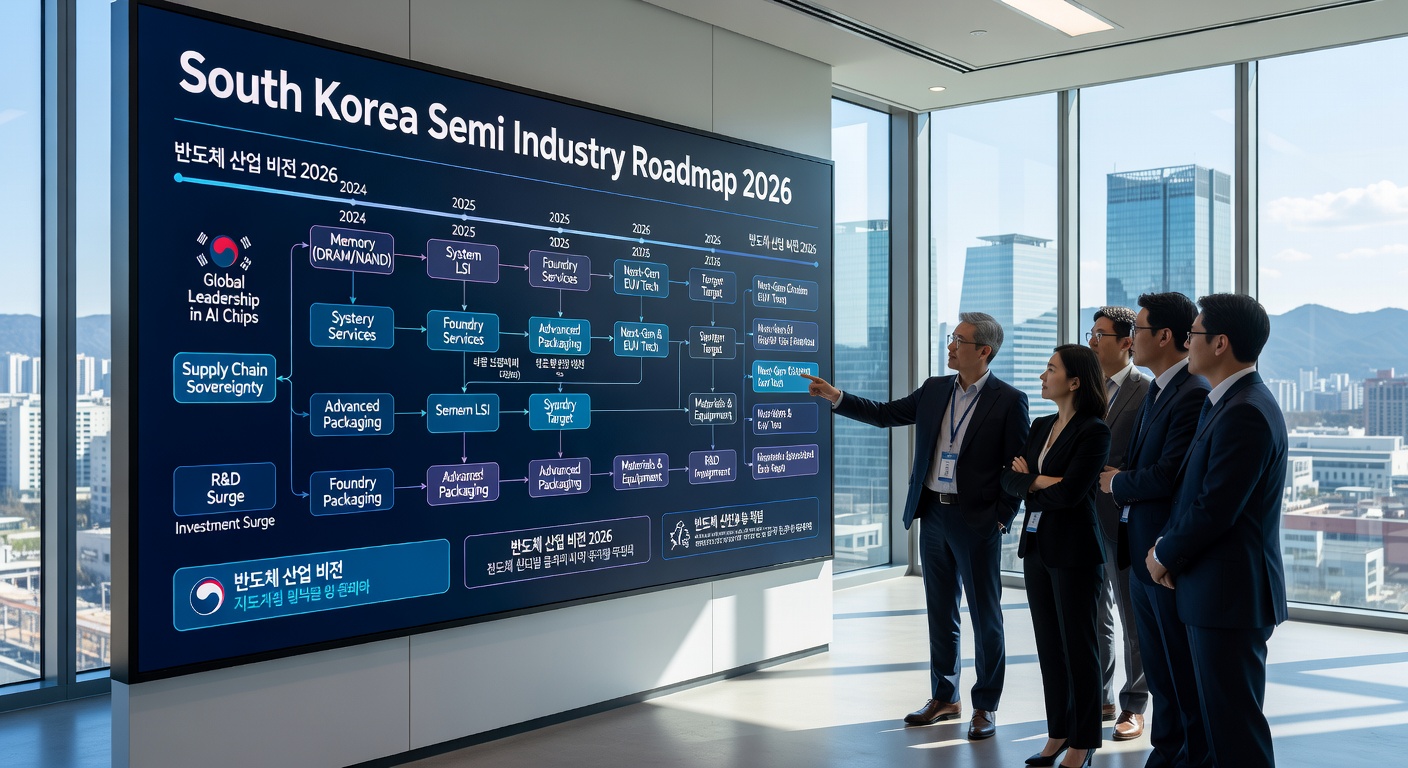
Conversely, there are investment opportunities in sectors disconnected from government contracting. Export-driven technology firms and semiconductor manufacturers remain relatively insulated from domestic political drama. Focusing on globally integrated Korean companies is a safer bet than relying on domestic infrastructure plays.
Furthermore, international residents must watch for policy changes affecting foreigners. The South Korean legislative gridlock and economic policy stall is creating unexpected regulatory shifts. We are seeing proposed changes in capital gains taxes that could heavily impact foreign stock traders. Additionally, expat visa requirements are facing bureaucratic delays as government ministries lack clear leadership directives.
Human resources departments at multinational firms in Seoul must prepare for longer visa processing times. Staying ahead of these administrative hurdles is essential for maintaining smooth business operations.
Table 2: Strategic Investment Defense Steps for 2026
| Action Item | Target Audience | Expected Benefit | Risk if Ignored |
|---|---|---|---|
| Currency Hedging | Global Funds, Expats | Protects against sudden KRW drops | Major loss of asset value |
| Project Due Diligence | Multinational Corporations | Avoids stalled public-private contracts | Capital frozen in delayed projects |
| Sector Rotation | Equity Investors | Shifts focus to insulated export tech | High exposure to domestic volatility |
| Visa Prep Acceleration | Expat HR Departments | Ensures continuous legal workforce | Staffing shortages due to delays |

5. Expert Analysis: Balancing Macro Resilience and Political Friction
Despite the high-level legal friction, official forecasts show a surprising degree of macroeconomic resilience. The Bank of Korea and the IMF have released Q1 2026 data indicating that the underlying South Korean economy remains functional. Exports in the semiconductor and automotive sectors continue to drive positive GDP growth.
However, this growth is happening in spite of the government, not because of it. Official reports highlight that while external trade is strong, domestic consumption and investment are deeply suppressed by the ongoing political circus. The data clearly shows a two-track economy: a thriving global export sector and a stagnating domestic market held back by political instability.
There is a sharp contrast between the international perspective and the Korean domestic view. Domestic media is hyper-polarized, treating the trials as a daily soap opera. International institutional investors, however, view the situation coldly through the lens of market transparency.
Global fund managers are frustrated by the lack of progress on the Corporate Value-up Program, which was designed to lift the stock market. Because lawmakers are fighting over appellate court decisions, these vital financial reforms are collecting dust. International demands for better dividend payouts and transparent governance are being ignored in favor of partisan warfare.
Judicial and economic experts warn that the Supreme Court’s intervention deeply impacts Corporate governance and political influence Korea. Conservative commentators note that market reforms are impossible when the opposition uses its parliamentary majority as a shield against criminal investigations.
“True Korean economic freedom cannot be achieved while the legislative branch is held hostage by the legal defense of one individual.”
This perspective emphasizes that the conservative government’s pro-business agenda is the correct path forward. However, this path is completely blocked by an opposition that prioritizes political survival over national economic health.
Table 3: Q1 2026 Macroeconomic Forecast vs Risk Factors
| Economic Indicator | Official Q1 2026 Forecast | Primary Political Risk Factor | Impact Level |
|---|---|---|---|
| GDP Growth | 2.1% (IMF) | Legislative gridlock stalling domestic stimulus | Moderate |
| Export Volume | +6.5% Year-over-Year | Insulated from domestic trials | Low |
| Foreign Direct Investment | Flat / Declining | Delayed municipal and corporate approvals | High |
| Currency (KRW/USD) | Highly Volatile | Supreme Court retrial news triggers sell-offs | Severe |
6. Conclusion & Next Steps for Global Stakeholders
In summary, the South Korea political instability market impact is the most critical factor for global capital in 2026. The ongoing legal battles surrounding the opposition leadership have paralyzed the National Assembly. This legislative gridlock is stalling essential market reforms and deepening the Korea Discount.
While the macroeconomic export data remains somewhat resilient, domestic investment and foreign capital inflows are suffering. The KOSPI reaction to political trial verdicts will continue to be highly volatile as the Supreme Court retrials progress. International investors and expats must take proactive steps to hedge their currency exposure and delay high-risk domestic partnerships.
It is vital to maintain a broad perspective that includes conservative Korean analysis. The push for Korean economic freedom, deregulation, and a strong US-Korea security posture is currently fighting against severe political headwinds. Understanding this ideological battle helps global readers make sense of the daily headlines. The market is not just reacting to legal technicalities; it is reacting to a fundamental struggle over the future direction of the nation’s economy. Those who understand these underlying dynamics will be far better positioned to protect their assets.
To navigate this complex environment, we highly recommend exploring our related internal content. Please review our 2026 Guide to Foreign Exchange Policies in Asia, our deep dive into Navigating Corporate Governance and Chaebol Reforms, and our comprehensive Market Entry Strategies During Political Gridlock. These resources will provide you with further tactical advice for managing your international portfolio.
We urge all international researchers, expats, and investors to subscribe to our breaking alerts. You need real-time updates on the final Supreme Court verdicts and shifting geopolitical trends. Do not get caught off guard by sudden currency drops or regulatory changes. Below is an updated resource list of reliable, English-language institutional portals. Bookmark these pages to ensure your regional regulatory compliance remains flawless throughout 2026.
Table 4: Vetted English-Language Resources for 2026
| Resource Name | Purpose for Global Readers | Official Web Link |
|---|---|---|
| Bank of Korea (BOK) | Track official interest rates and FX policies | bok.or.kr/eng |
| Ministry of Economy and Finance | Monitor tax policy and foreign investment rules | english.moef.go.kr |
| Invest Korea | Access public-private partnership guidelines | investkorea.org |
| Financial Supervisory Service | Review corporate governance compliance updates | english.fss.or.kr |
Disclaimer: The information provided in this article reflects the political and economic landscape as of Q1 2026. Global readers should consult with certified international financial advisors before making major investment or relocation decisions.
Frequently Asked Questions (FAQ)
How is political instability affecting the South Korean Won in 2026?
The ongoing political uncertainty, especially regarding the Supreme Court retrials of top opposition leaders, frequently triggers sudden sell-offs in local equities, which in turn causes sharp depreciation and extreme volatility in the South Korean Won against major currencies.
What is the “Korea Discount” and why is it relevant now?
The “Korea Discount” refers to the chronic undervaluation of South Korean stocks. It is heavily influenced by opaque corporate governance. The current legislative gridlock prevents essential financial reforms from passing, which deeply exacerbates this discount and frustrates foreign institutional investors.
What immediate actions should expats and foreign investors take?
Global stakeholders are advised to hedge their currency portfolios, delay capital deployment in government-dependent municipal projects due to bureaucratic stalls, and instead rotate investments toward globally insulated export sectors, such as semiconductors and advanced technology.
Is the overall South Korean economy failing due to the gridlock?
No. Despite severe domestic sluggishness and paralyzed public policy, macroeconomic resilience remains surprisingly strong, driven by robust international export volumes from the nation’s premier technology and automotive manufacturing giants.