

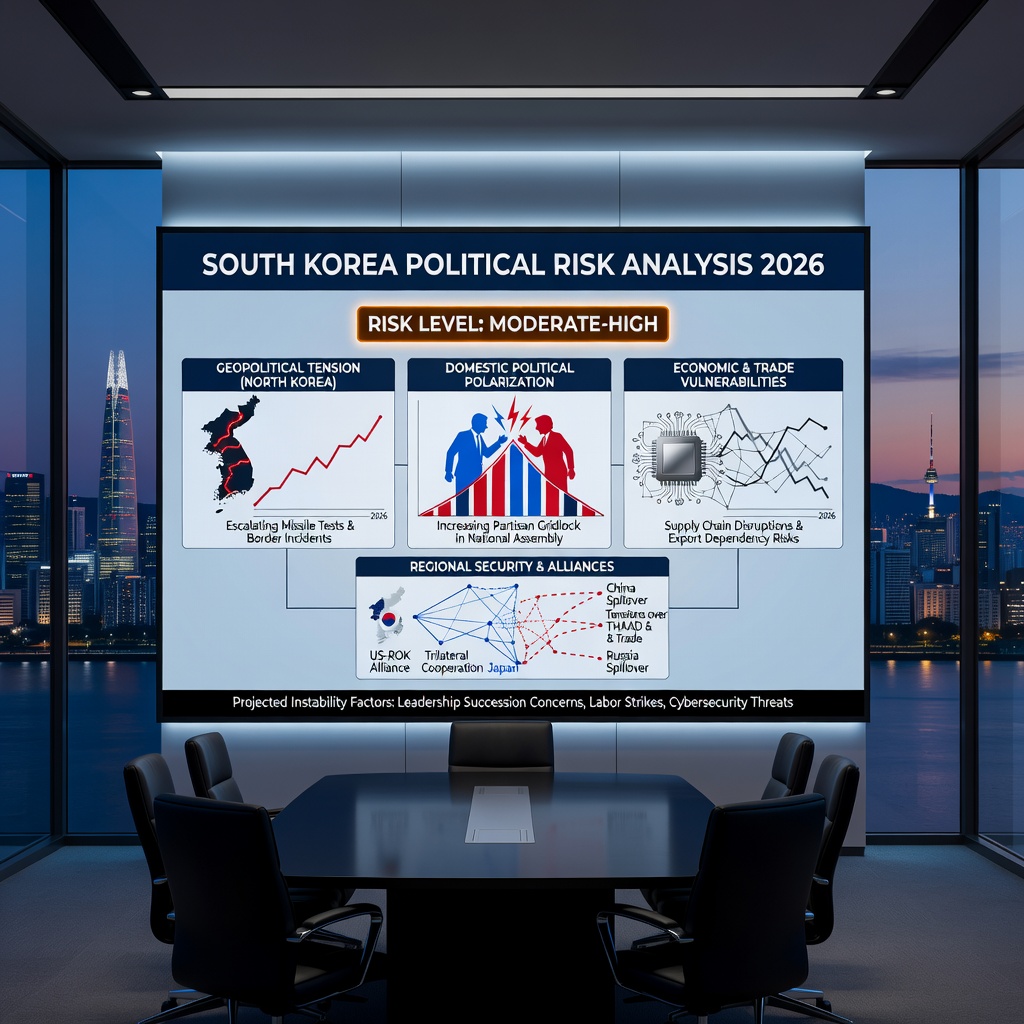
South Korea Political Risk Analysis 2026
South Korea Political Risk Analysis 2026: Foreign capital is heavily returning to the South Korean market as aggressive corporate governance reforms successfully dismantle the historical “Korea discount.” With the KOSPI index breaking 4,000 points and the IMF upgrading its growth forecast to 1.8%, global investors must carefully balance exciting new financial opportunities against underlying geopolitical risks and the economy’s heavy reliance on the technology sector.
Table of Contents
- Current Situation: Understanding the 2026 Market Boom
- Global Implications for Foreign Investors and Businesses
- Actionable Insights: What You Should Do Now
- Expert Analysis: The Official and Market Consensus
- Conclusion & Next Steps
- Frequently Asked Questions (FAQ)
A thorough South Korea political risk analysis for investors highlights exactly why international capital is flooding back into the market. The new administration is actively dismantling the historical “Korea discount” through sweeping corporate governance reforms.
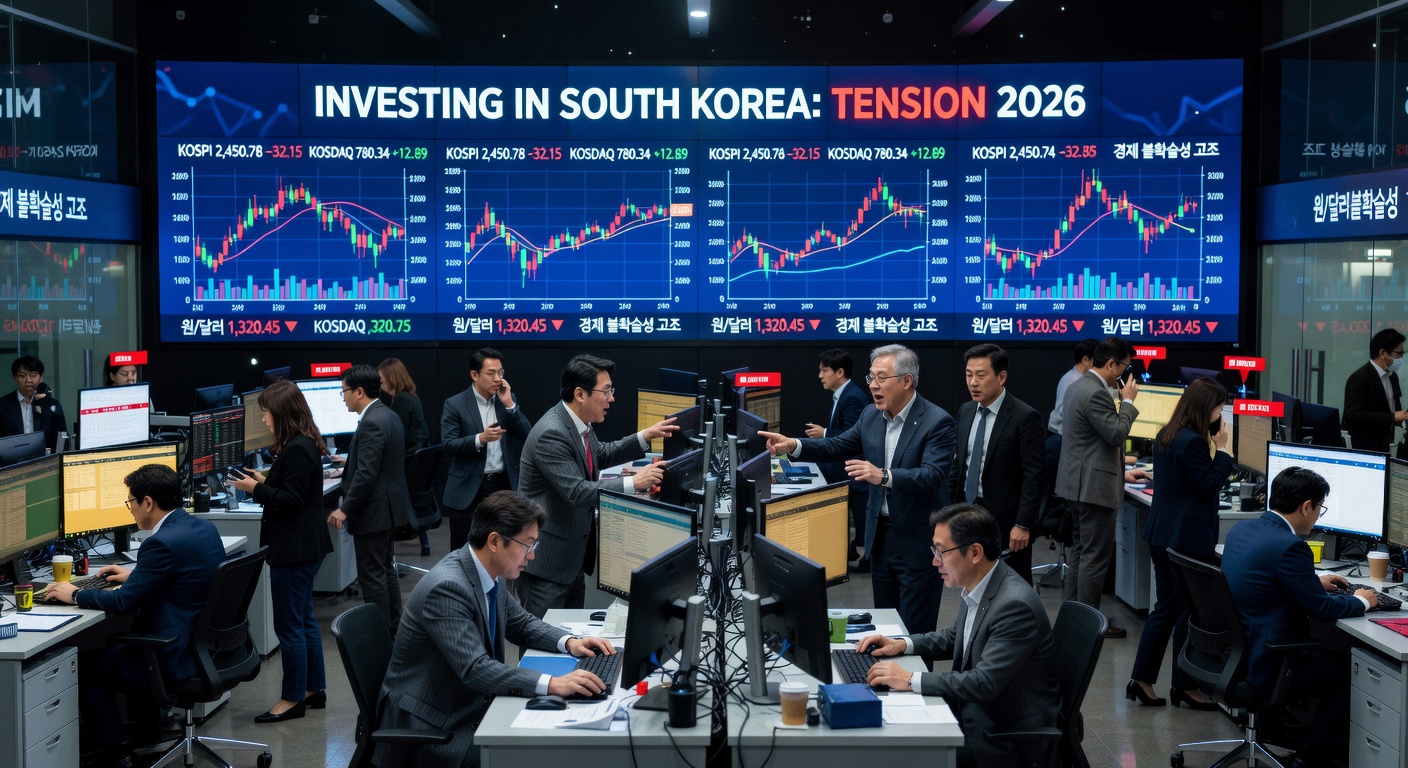
Today, in March 2026, the financial world is witnessing a historic transformation. The benchmark KOSPI index recently achieved a world-leading 30% gain. It crossed the magical 4,000-point threshold for the first time in history. This massive growth has completely changed the story around Asian stock markets.
Just two years ago, in late 2024, the market crashed due to a sudden political crisis and martial law declaration. Now, stability has returned, and foreign money is pouring in. Global readers, from big institutional fund managers to individual expatriate investors, are taking notice.
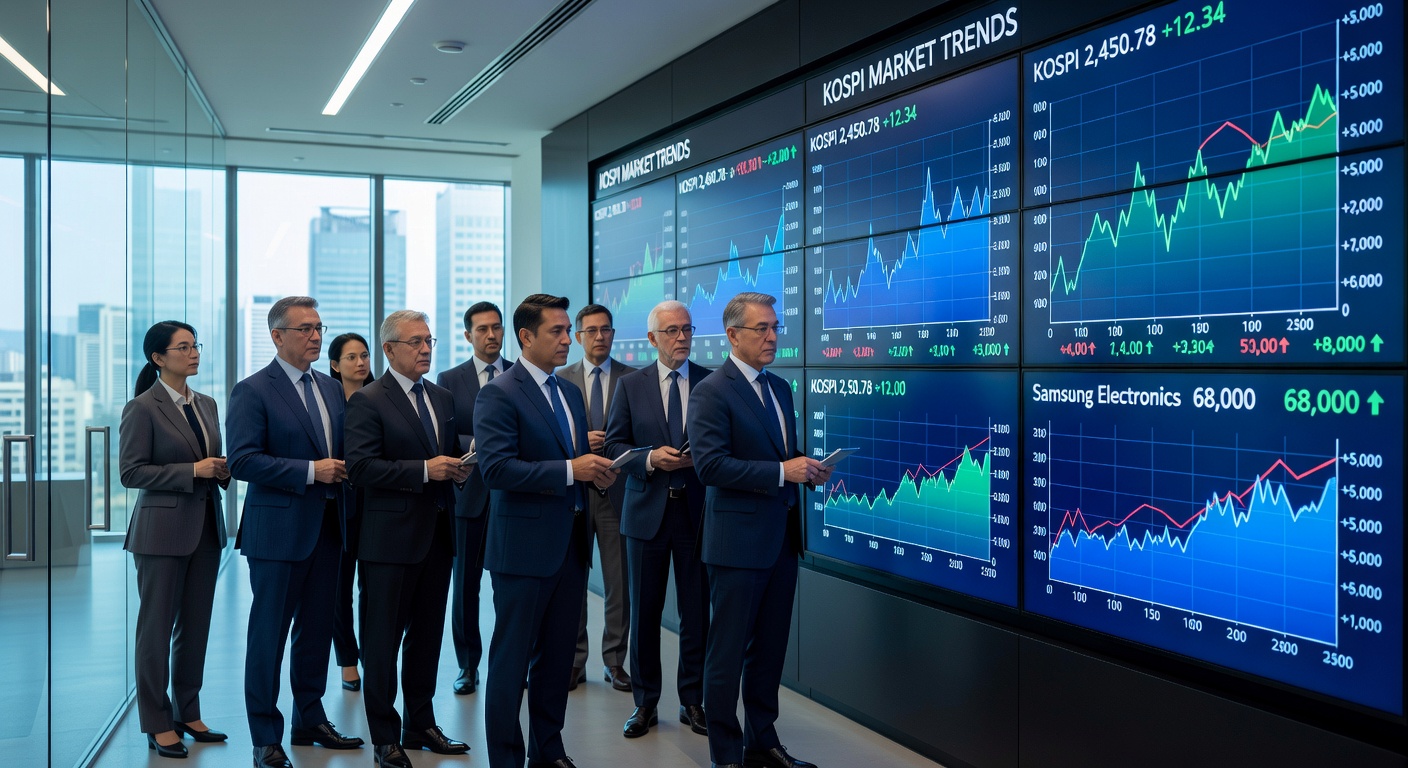
Understanding this new landscape requires looking at multiple viewpoints. The government is pushing hard for rule changes to protect everyday shareholders. At the same time, strong conservative voices in the country emphasize that true Korean economic freedom requires lowering taxes and reducing red tape for businesses. Balancing these two sides is the key to long-term wealth.
This article will break down exactly what is happening in the current market. We will explore three main takeaways that matter to your wallet:
- How new corporate rules are forcing companies to treat investors better.
- New ways to make money in sectors outside of just computer chips.
- The International Monetary Fund’s upgraded 2026 economic growth forecast of 1.8% for the domestic economy.
For more background on how this incredible market rally began, you can read expert reporting from The Korea Herald and detailed timeline analysis from The New York Times.
Current Situation: Understanding the 2026 Market Boom
To make sense of the current boom, foreign investors must first understand the “Korea discount.” For decades, South Korean stocks were much cheaper than similar stocks in other countries. This happened because large family-run business groups held all the power. They often ignored the rights of smaller, everyday investors.
However, President Lee Jae-myung has launched a new “KOSPI 5,000” era agenda. This plan aims to permanently erase the discount. The government now forces companies to cancel their treasury shares. This action reduces the total number of shares, making each remaining share more valuable. The new rules also include major commercial act reforms that finally give minority shareholders a real voice in company decisions.
The economic numbers for 2026 back up this positive feeling. The International Monetary Fund (IMF) officially projects South Korea’s real Gross Domestic Product (GDP) to expand by 1.8% to 1.9% this year. This marks a very strong recovery phase for the country. The growth is driven by smart government spending, a calming of global trade fears, and huge demand for advanced memory chips.
Conservative newspapers like the Chosun Ilbo argue that strict rules alone will not create lasting wealth. They believe that true Korean economic freedom requires keeping corporate taxes low and allowing companies to innovate without fear of government punishment.
They warn that if the government taxes wealth too heavily, foreign investors might quickly leave.
Below is a visual recommendation for a timeline chart that maps the wild ride of the stock market. It shows the dramatic V-shaped recovery from the deep crash in late 2024 to the record-breaking highs of early 2026.
| Time Period | Market Event | KOSPI Level | Investor Action |
|---|---|---|---|
| December 2024 | Martial law crisis and sudden political shock | Below 2,400 | Heavy panic selling by foreign funds |
| Mid 2025 | Presidential election brings political stability | 2,800 – 3,200 | Cautious buying and market reforms begin |
| Late 2025 | Government forces shareholder rights reforms | 3,500 – 3,800 | Massive foreign capital returns to Seoul |
| March 2026 | Global AI boom and IMF growth upgrades | Over 4,000 | Record-breaking foreign direct investment |
The recovery story is historic and unprecedented. For deeper details on the IMF’s latest economic projections, you can review the official IMF Executive Board Consultation. You can also read about how the market finished last year on a high note at The Korea Times.
Global Implications for Foreign Investors and Businesses
The return of political peace has completely changed how the world sees South Korea. Just a short time ago, international funds were selling their Korean stocks as fast as possible. Today, South Korea is a prime destination for foreign direct investment. Foreign institutional investors are buying trillions of won in benchmark shares.
They are eager to make money off the massive post-election market rally. This is very good news for expatriate workers and global businesses operating in Seoul. When foreign money flows into the country, the local currency gets stronger. This makes doing international business much easier. The new market reforms have proven to the world that South Korea is finally ready to play by global financial rules.

Comparing Global Markets
When we compare South Korea to the rest of the world, the success stands out even more. Many advanced countries in the OECD are struggling to grow their economies right now. Other emerging Asian markets are facing heavy downward pressures from slowing trade. In contrast, South Korea is enjoying a world-leading stock market performance.
However, there are still real risks that foreign stakeholders must watch. The biggest dangers include global inflation and new trade tariffs from the United States. South Korea also relies heavily on just two giant companies, Samsung Electronics and SK Hynix. If the global computer chip market slows down, the entire Korean economy feels the pain.
Conservative viewpoints offer a crucial reminder about these global risks. Leading conservative voices, such as the Dong-A Ilbo, stress that market reforms mean nothing without strong US-Korea security. They point out that the military alliance with the United States is the absolute foundation of economic safety. Without a tough stance against threats from North Korea, foreign money will not feel safe staying in Seoul. Therefore, a balanced investment strategy must look at both corporate rule changes and military stability.
| Region | Economic Growth Trend | Stock Market Vibe | Main Risk Factor |
|---|---|---|---|
| South Korea | 1.8% to 1.9% Growth | Record Highs (4,000+) | Over-reliance on tech chips |
| Advanced OECD | Slow, flat growth | Cautious / Steady | High interest rates |
| Other Asian Markets | Slowing down (4.1%) | Downward pressure | US trade tariffs |
To explore more about how foreign capital is moving into the market, read the latest insights from the Korea Economic Daily. You can also review the global fund perspective at Refinitiv Lipper Alpha.
Actionable Insights: What You Should Do Now
Global readers need specific steps to protect and grow their money in this new environment. Right now, the best strategy is to broaden your investment portfolio. You should not just buy technology stocks. In 2026, smart money is moving into new areas.
Expanding Beyond Tech
There is a massive shift toward power generation and nuclear energy. Artificial intelligence requires huge amounts of electricity, and South Korea is building the nuclear plants to provide it. You should also look at financial services and infrastructure companies. These businesses pay high dividends and are benefiting directly from the government’s push to reward shareholders. By spreading your money across these different areas, you protect yourself if one sector suddenly drops.
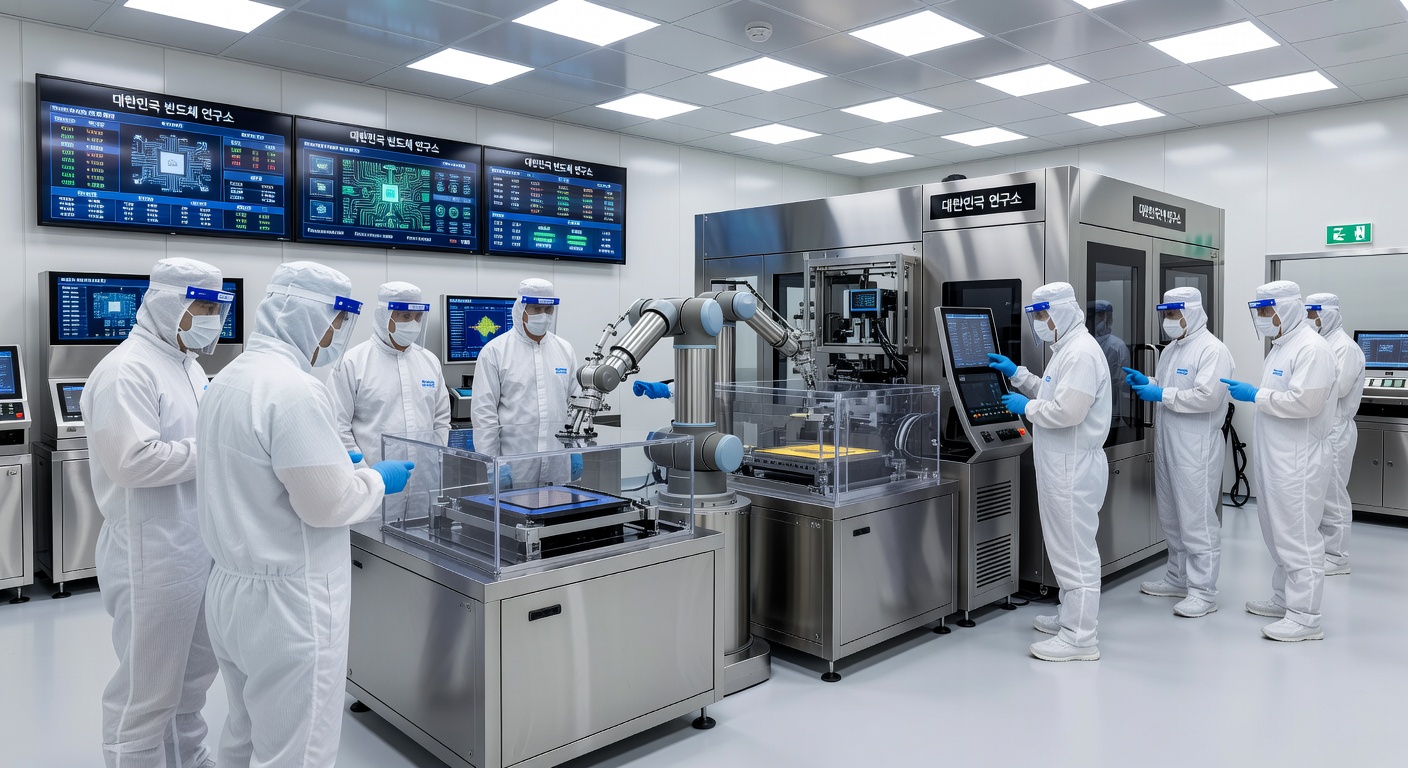
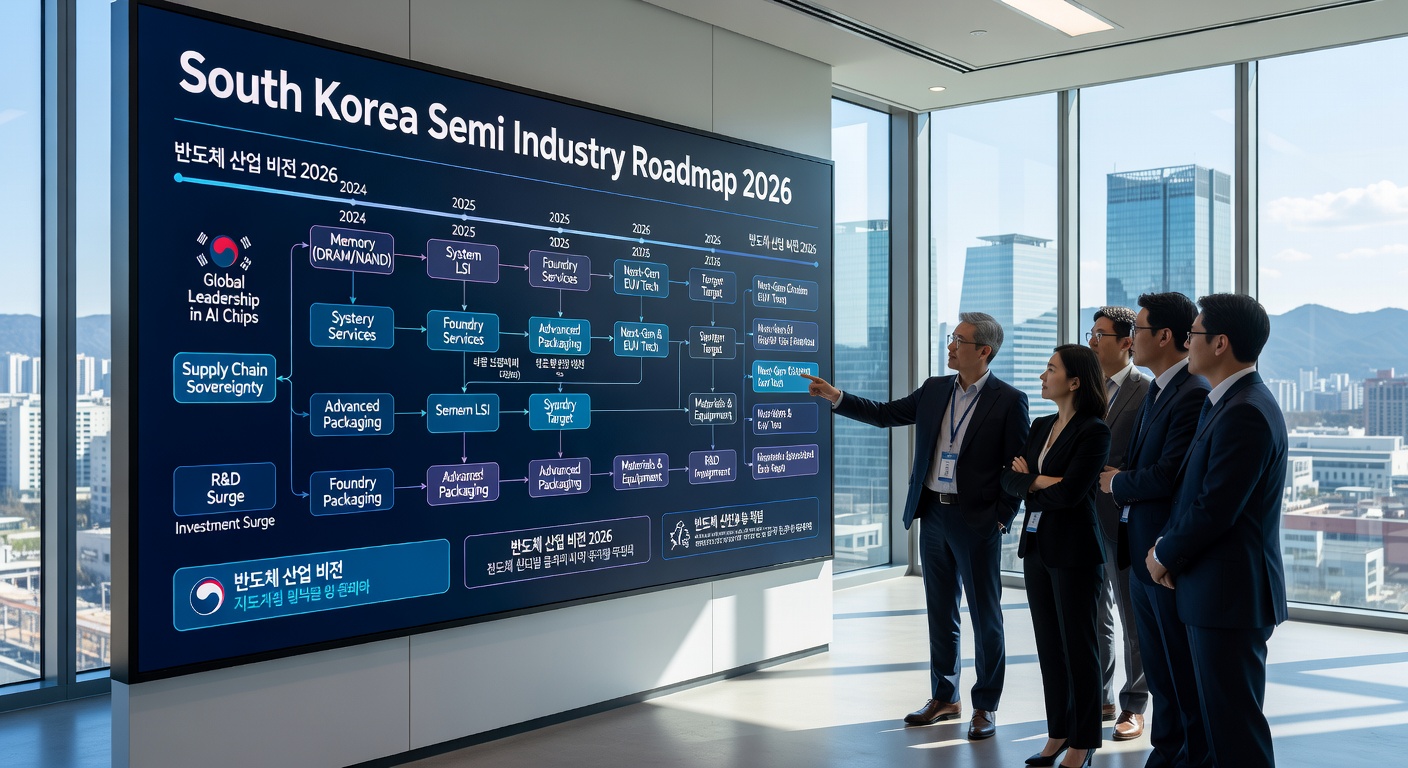
At the same time, you cannot ignore the artificial intelligence boom. The major Korean chipmakers are expected to make over 100 trillion won in combined operating profits in 2026. This is a historic amount of money. You should take advantage of this growth, but be sure to hedge your bets. Trade rules between the United States and China can change quickly, which could hurt supply chains.
Foreigners also need to understand the new tax rules. The government has created temporary tax breaks to encourage local and foreign people to invest in the stock market. However, conservative financial experts warn that investors should watch out for future wealth taxes. They argue that long-term success requires tax policies that reward risk-takers, rather than punishing them for making a profit.
Below is a simple guide to help you make the best financial choices today.
| Action Type | Focus Area | Why It Matters Now |
|---|---|---|
| Buy / Expand | Nuclear Energy & Power | AI data centers need massive electricity. |
| Buy / Expand | Financial Services | Banks are paying out higher dividends to investors. |
| Hold / Watch | AI Memory Chips | Huge profits, but sensitive to US trade tariffs. |
| Policy Strategy | Tax Break Programs | New laws offer lower taxes on your stock gains. |
To make these moves safely, you should use official English resources. You can read the Bank of Korea’s English monetary policy board decisions on their official website. You can also find foreign investor compliance guides on the Korea Exchange portal. Finally, the Ministry of Economy and Finance provides English summaries of their 2026 budgetary directives to help you understand where government money is going.
Expert Analysis: The Official and Market Consensus
The world’s top financial experts agree that South Korea is in a strong position for 2026. According to the IMF’s latest Article IV Consultation report, the country’s economy is successfully closing its “negative output gap.” In simple terms, this means the economy was running slower than it should have been, but now it has finally caught up to its full potential.
The IMF also reports that inflation is calming down. Prices are expected to stabilize near the Bank of Korea’s target rate of 2%. Furthermore, the government is using a “fiscal impulse of 0.6 percent.” This simply means the government is spending extra money to gently push the economy forward without causing prices to rise too fast.
Institutional Confidence High
Private banks are even more excited than the official government agencies. The international banking giant JPMorgan recently raised its 12-month target for the KOSPI to an incredible 5,000 points. Domestic experts agree with this positive outlook. Analysts at NH Investment & Securities believe that the artificial intelligence boom is a long-term trend that will last for years.
Sakai Ando, a highly respected economist at the IMF, noted that South Korea is rebounding strongly even while the rest of the Asian region slows down. Local Korean analysts are calling this stock market recovery a textbook case of an “ugly duckling turned into a golden swan.”

However, conservative experts add a vital piece of advice to this glowing analysis. They point out that financial rules are not enough to guarantee a golden future. Pro-business analysts insist that the government must fix outdated labor laws. They believe companies need the freedom to hire and manage workers flexibly to compete on the global stage.
If labor unions hold too much power, businesses will struggle to adapt to fast-moving tech trends. This conservative viewpoint ensures we look at the whole picture, balancing exciting stock numbers with real-world business challenges.
| Topic | Mainstream / Government View | Conservative / Pro-Business View |
|---|---|---|
| Market Rules | Strict rules protect small investors. | Too many rules scare away business owners. |
| Corporate Taxes | Higher taxes help fund social programs. | Lower taxes attract more global money. |
| Labor Market | Workers need strong union protection. | Companies need flexible hiring to compete globally. |
| Security Risk | Focus mostly on internal economic reform. | Strong US-Korea defense is the basis of all growth. |
You can explore these expert opinions deeper by reading the IMF statements via Yonhap News. You can also read the local market consensus at the Korea Economic Daily and see further economic breakdowns from Yonhap’s 2026 projections.
Conclusion & Next Steps
In summary, a proper South Korea political risk analysis for investors reveals a market full of historic opportunity. The country has bravely moved past its recent political crisis. This resolution has sparked unprecedented stock market growth and brought the KOSPI past 4,000 points. Aggressive regulatory reforms are finally fixing the old Korea discount, forcing big companies to respect all shareholders.
Furthermore, the 2026 macroeconomic outlook from the IMF is highly favorable for global capital. However, smart investors will also listen to conservative advice. To keep this growth alive, South Korea must protect its economic freedom, maintain a strong US-Korea security alliance, and ensure its taxes remain friendly to businesses.
As you plan your next financial moves, we encourage you to keep learning. You can expand your knowledge by reading our internal guide on “Asian Supply Chain Resilience 2026.” You should also check out our deep dive into “Emerging Market Corporate Governance Trends” to see how other countries are copying Korea’s success.
Call to Action: Do not miss out on the fastest-moving market in Asia. We urge all global analysts, foreign business owners, and expatriate investors to subscribe to our newsletter today. You will receive weekly English-language briefings on sovereign risk updates, regulatory shifts, and KOSPI performance alerts delivered straight to your inbox.
Updated Resource List for 2026
To stay ahead of the curve, bookmark these essential English-language resources:
- Official sovereign credit rating reports from Moody’s and Fitch regarding South Korea’s debt stability.
- The updated World Bank projections for East Asian technology exports.
- The Bank of Korea’s English portal for monthly interest rate decisions.
- Institutional equity research portals from major brokerages like NH Investment & Securities and Mirae Asset.
Frequently Asked Questions (FAQ)
What is the “Korea discount” and how is it being resolved?
The Korea discount refers to the historically low valuation of South Korean stocks compared to global peers, mostly due to poor corporate governance by family-run conglomerates. It is currently being resolved through the government’s aggressive new reforms that force companies to cancel treasury shares and grant greater voting power to minority shareholders.
What are the best investment sectors in South Korea for 2026?
While AI and memory chips remain highly profitable, financial experts recommend diversifying into nuclear energy, power infrastructure, and financial services. These areas are benefiting heavily from the expanding AI data center grid and the government’s push for increased shareholder dividends.
What are the main risks foreign investors face in the South Korean market?
The primary risks include the country’s over-reliance on the technology and semiconductor sectors, potential shifts in US trade tariffs, global inflation pressures, and the geopolitical necessity of maintaining a strong US-Korea military alliance against regional threats.
Is the South Korean economy expected to grow this year?
Yes, the International Monetary Fund (IMF) projects South Korea’s real GDP to grow by 1.8% to 1.9% in 2026. This growth is supported by stabilizing inflation rates and a strong recovery phase led by tech exports and smart fiscal management.