



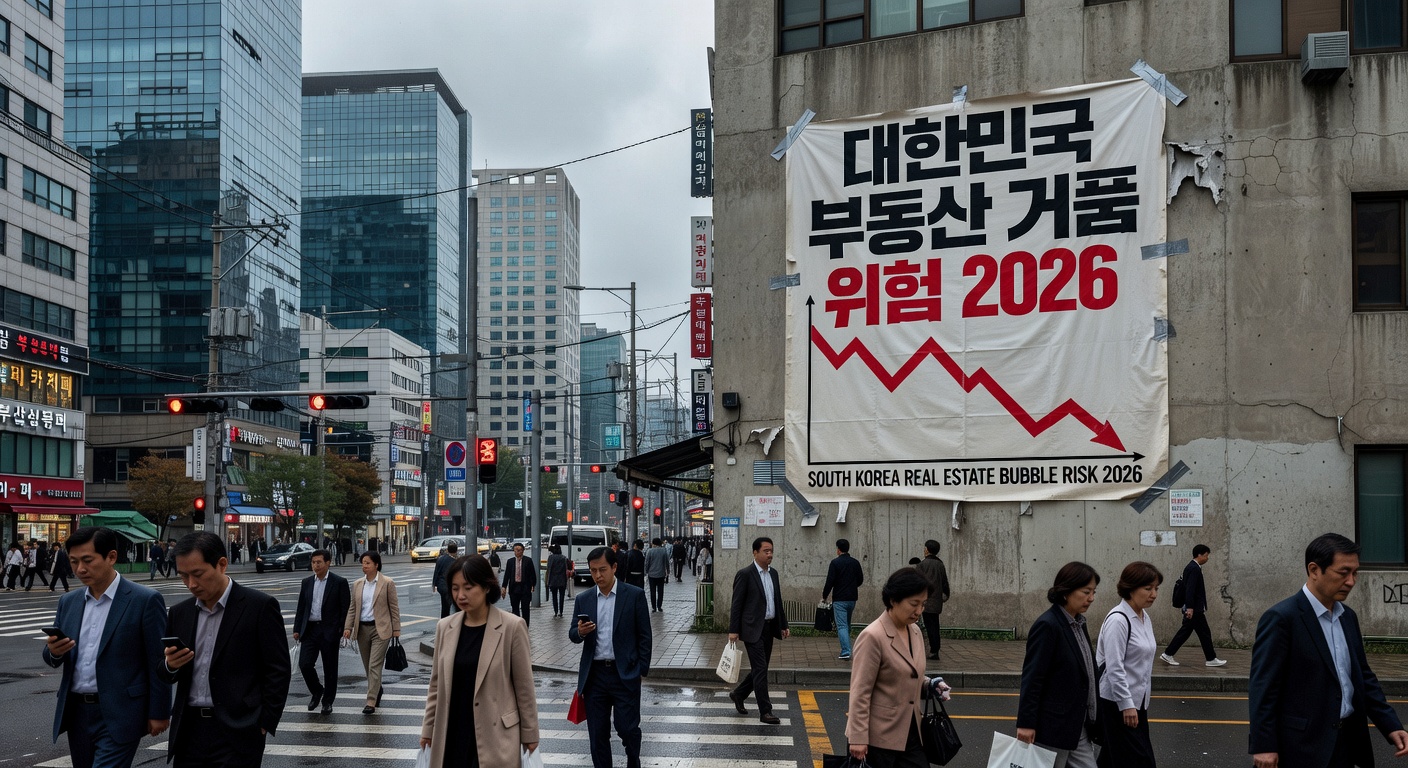
South Korea Real Estate Bubble Risk 2026
Key Summary: The South Korea real estate bubble risk in 2026 presents a critical turning point for global capital, driven by over $145 billion in heavily leveraged project financing. As domestic financial institutions face a rising tide of non-performing loans, foreign investors must aggressively recalibrate their portfolios. By pivoting away from vulnerable provincial residential developers and actively targeting premium tech hubs, infrastructure REITs, and safe-haven commercial assets in Seoul, global investors can securely navigate these structural reforms while leveraging a newly emerging, market-driven economic landscape.
Table of Contents
- 1. Introduction: The Tipping Point for Foreign Capital
- 2. Current Situation: The “Galapagos Syndrome” Unpacked
- 3. Global Implications: Navigating a Hyper-Polarized Market
- 4. Actionable Insights: Strategic Allocation in 2026
- 5. Expert Analysis: Mainstream vs. Market-Friendly Perspectives
- 6. Conclusion & Next Steps: Capitalizing on Structural Shifts
- 7. Frequently Asked Questions (FAQ)
1. Introduction: The Tipping Point for Foreign Capital
The South Korea real estate bubble risk 2026 represents a critical inflection point for global investors, as domestic financial institutions and construction firms navigate over $145 billion in vulnerable project financing exposure. Understanding this volatile dynamic is absolutely essential, as the escalating Korean property developer debt crisis threatens to trigger sudden liquidity events that could potentially trap foreign capital in distressed secondary markets.
Global readers looking into South Korea housing market analyses will quickly uncover the structural flaws of domestic developer financing. It is vital to learn strategies to monitor the rapidly growing volume of Non-performing mortgage loans South Korea banks hold, and to implement methods to safely allocate investments into highly resilient alternative assets.
Leading conservative voices in Seoul, notably aligned with editorial perspectives from major domestic business dailies, emphasize that resolving this massive debt overhang through free-market principles is fundamentally a matter of national security. A robust, dynamic, and market-driven economy remains necessary to maintain a strong US-Korea security posture against North Korean hostility. Therefore, structural market reforms that promote sweeping Korean economic freedom over endless state bailouts are widely viewed as the optimal path forward for long-term national stability.
Executive Breakdown of Core Investor Themes
| Strategic Focus Area | Immediate Market Impact | Actionable Global Investor Response |
|---|---|---|
| Project Financing Vulnerability | $145 billion at risk across domestic developers. | Shift capital away from highly leveraged regional developers. |
| Rising Non-Performing Loans | Increased banking sector stress and tighter liquidity. | Monitor Tier-1 bank balance sheets and stress test models. |
| Safe Haven Reallocation | Capital flight from residential to prime commercial. | Target premium tech hubs and infrastructure REITs. |
Supplemental Analysis: The Macro Context of 2026
The current investment climate in South Korea calls for a nuanced understanding of both global macroeconomic pressures and highly localized policy responses. As foreign investors systematically evaluate the peninsula’s overall risk profile, the delicate interplay between state intervention and free-market capitalism becomes increasingly visible.
Conservative policymakers consistently advocate for deep deregulation to unlock trapped capital. They argue that the heavy-handed anti-speculation policies established by previous progressive administrations fundamentally distorted natural supply and demand dynamics across major urban centers. By taking steps to restore Korean economic freedom and permanently removing punitive tax frameworks on multiple-home owners, the current administration aims to genuinely stabilize the housing sector without relying solely on artificial state subsidies.
However, the staggering volume of maturing project financing loans in 2026 has temporarily forced the government’s hand into providing vast liquidity backstops. For keen international analysts, making the clear distinction between short-term stabilization funds and long-term structural reform is absolutely vital. Recognizing which distressed assets are artificially propped up versus those possessing undeniable intrinsic market value will heavily define the success of major foreign institutional investments over the next decade.
2. Current Situation: The “Galapagos Syndrome” Unpacked
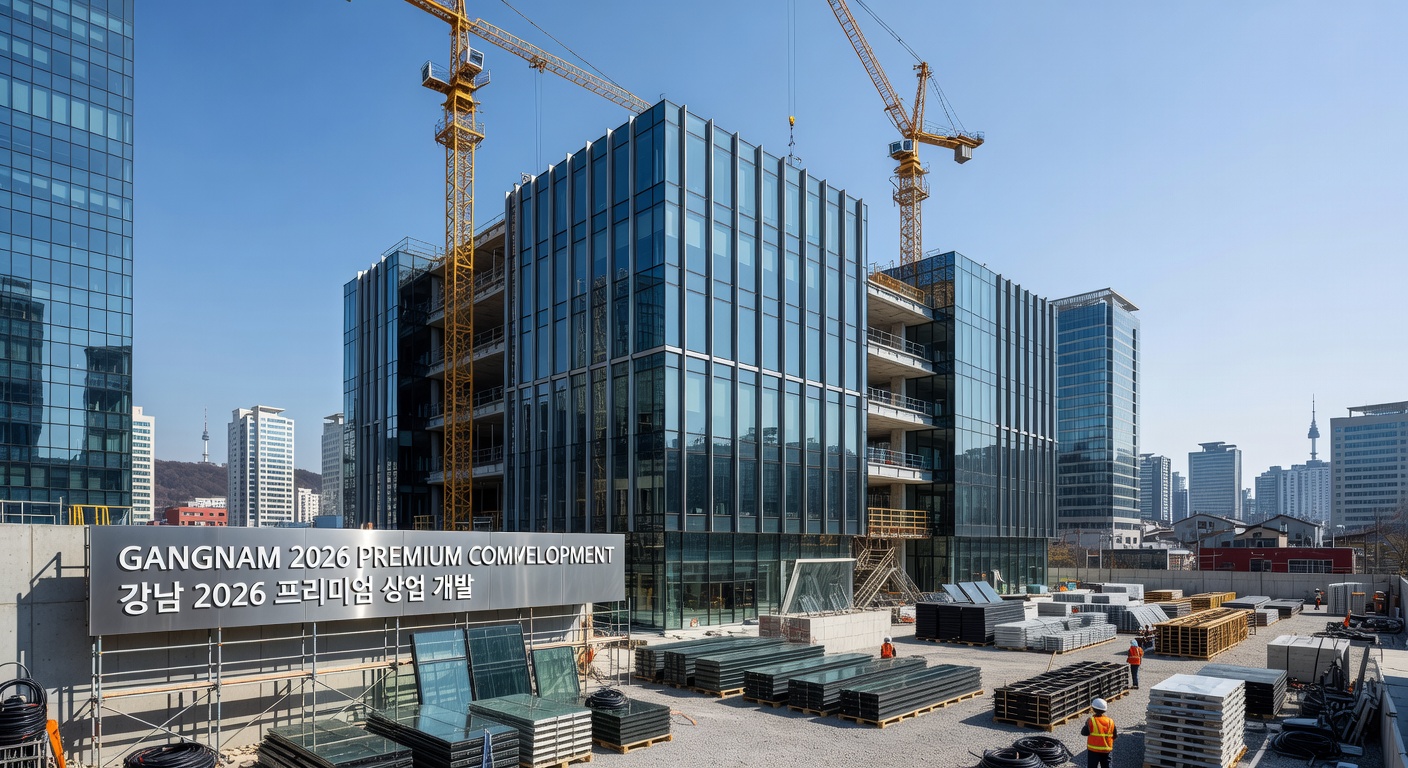
The strictly Korean real estate “Project Financing” (PF) structure relies heavily on a deeply entrenched model, prominently detailed in a Korea Development Institute (KDI) report on the Galapagos Syndrome. Under this system, developers frequently invest merely 3% of their own equity, shifting almost all substantial risk to constructor payment guarantees and dangerously high-interest bridge loans.
This highly leveraged and unusual framework differs drastically from Western norms, creating extremely unique vulnerabilities when domestic interest rates remain elevated. Current alarming data indicates that real estate loans now account for an unprecedented 65.7% of the nation’s GDP, inevitably placing immense pressure on the broader Korean economy. Furthermore, early 2026 commercial transaction volumes slumped a staggering 34% year-over-year to $4.6 billion amid ongoing capital flight and tightening credit conditions.
Tracking Seoul commercial real estate trends effectively reveals a stark and growing divergence between highly sought-after prime office spaces and rapidly depreciating secondary assets. These critical vulnerabilities, discussed extensively in studies on real estate sustainability in 2026 and the evaluation of housing market cooling measures, act as primary South Korea economic recession risk factors. They are dangerously compounded by peak household debt-to-GDP ratios and severe demographic decline.
Conservative analysts argue that transitioning immediately to a robust Western-style, equity-heavy financing model is essential to restore market discipline. Strengthening private-sector independence from state-mandated guarantees will ultimately fortify the domestic economy against massive external shocks.
2026 Economic Indicators & PF Structural Data
| Economic Indicator | 2026 Current Status | Implication for Foreign Investors |
|---|---|---|
| Real Estate Loans to GDP | 65.7% (Record High) | Signals severe macroeconomic vulnerability and limited local liquidity. |
| Developer Equity Ratio | Approx. 3% | High default probability on bridge loans without constructor guarantees. |
| Q1 Commercial Volume | $4.6 Billion (Down 34% YoY) | Decreased market liquidity; longer exit timelines for secondary assets. |
Supplemental Analysis: Assessing the Structural Deficits
The entrenched “Galapagos Syndrome” of South Korean project financing fundamentally disconnects traditional domestic real estate development from established global risk management standards. In traditional Western markets, developers are legally required to commit substantial upfront equity—often between 20% and 30%—to securely secure construction loans, thereby perfectly aligning the developer’s financial survival with the actual project’s success.
In striking contrast, the Korean model broadly allows developers to launch massive, high-risk projects with almost no real skin in the game. They rely entirely on the vast balance sheets of the construction firms and short-term, high-interest bridge loans sourced from secondary financial institutions like savings banks and brokerages. This immediately creates a highly dangerous domino effect.
If a single large provincial project dramatically stalls due to a critical lack of pre-sales, the construction company’s guarantee is automatically triggered. This suddenly threatens their core liquidity and subsequently endangers the entire lending institution. The conservative perspective correctly identifies this ongoing disaster as a classic moral hazard, born from decades of excessive regulatory coddling and historical over-reliance on state-backed growth. Transitioning rapidly away from this exceedingly fragile ecosystem requires painful but absolutely necessary market reforms to permanently weed out undercapitalized zombie developers.
3. Global Implications: Navigating a Hyper-Polarized Market
The unfolding domestic crisis profoundly impacts international investors, regional expats, and multinational businesses actively operating on the peninsula. Institutional funds currently face a fiercely hyper-polarized market where deeply distressed provincial assets carry historically high contagion risks, while prime urban properties in the capital continue to demand exceptionally steep premiums alongside complex local underwriting.
Unlike the stable, equity-heavy property markets of the US or EU, the deeply entrenched Korean property developer debt crisis heavily relies on debt-takeover financing completely unique to the region, rendering standard international risk models alarmingly inaccurate. As banking regulators systematically raise domestic mortgage risk weights to 20% in 2026, foreign analysts must urgently track the rapidly rising tide of Non-performing mortgage loans South Korea banks are essentially forced to absorb, as outlined in the latest IMF Article IV Consultation for 2025/2026.
This massive accumulation of toxic debt acts as a major, undeniable catalyst for broader South Korea economic recession risk factors, potentially suppressing vital consumer spending and completely stalling planned corporate expansions, a trend reflected in Statista’s projections on commercial real estate.
Mainstream financial observers too often focus purely on immediate cash liquidity, but elite conservative economic commentators consistently highlight the longer-term structural necessity of these localized bankruptcies. By deliberately allowing over-leveraged provincial projects to naturally fail, the broader market can finally, efficiently reallocate trapped capital toward highly productive, tech-driven sectors that visibly reinforce national competitiveness.
Global vs. Korean Real Estate Risk Profiles
| Risk Assessment Metric | Western Markets (US/EU) | South Korean Market (2026) |
|---|---|---|
| Primary Risk Bearer | Original Developer (High Equity) | Construction Firm & Secondary Lenders |
| Default Contagion Risk | Contained to specific project/fund | Systemic risk via cross-guarantees |
| Market Polarization | Gradual regional yield spreads | Hyper-polarized (Prime Urban vs Distressed Provincial) |
Supplemental Analysis: Re-calibrating Foreign Risk Models
For proactive international stakeholders, the incredibly unique mechanics of the Korean real estate market necessitate a complete, total recalibration of standard underwriting and global risk assessment models. Foreign analysts stubbornly utilizing traditional discounted cash flow analyses or basic, standard loan-to-value metrics will entirely fail to capture the massive, hidden liabilities deeply embedded in traditional constructor payment guarantees.
The severely rising volume of toxic non-performing loans concentrated in secondary financial institutions—such as savings banks and mutual credit cooperatives—serves as the absolute primary early warning system for broader, nationwide economic distress. When these vulnerable institutions aggressively restrict credit just to shore up their deteriorating balance sheets, it completely disproportionately impacts domestic small and medium-sized enterprises.
From a firm policy standpoint, conservative thought leaders emphasize that foreign capital should correctly view the current distress not as a systemic collapse, but as a desperately needed market correction. Stripping away the artificial state safety nets that historically protected reckless, zombie developers completely opens the door for exceptionally transparent, market-driven foreign direct investment.

4. Actionable Insights: Strategic Allocation in 2026
To successfully and profitably navigate this complex, shifting environment, active global readers must take decisive and immediate action today. Major institutional investors must rapidly pivot toward reliable safe-haven Seoul commercial real estate trends, specifically identifying and targeting premium tech hubs like Pangyo Techno Valley or advanced mixed-use developments that continually remain totally insulated from the worsening residential slump.
Vulnerable capital must be fully divested immediately from provincial residential markets heavily, directly exposed to the overarching South Korea real estate bubble risk 2026. Instead, proactive, forward-thinking fund managers should consistently allocate capital into high-growth, structurally secure physical assets like cutting-edge data centers, logistics real estate networks, and government-backed infrastructure REITs.
Furthermore, investors must critically factor in the immediate, massive extension of the Ministry of Economy and Finance backed $25.5 billion bond market stabilization funds and the complex $44 billion real estate PF support programs running through the end of 2026, alongside tracking the Bank of Korea’s monetary policy decisions. These highly specific state interventions may provide incredibly narrow, lucrative windows to acquire state-subsidized distressed assets at a significant, historic discount.
2026 Sector Allocation Strategy Matrix
| Asset Class / Sector | 2026 Investment Stance | Rationale & Market Drivers |
|---|---|---|
| Provincial Residential PF | Strong Sell / Avoid | Extreme exposure to developer debt crisis and low pre-sale rates. |
| Prime Seoul Commercial (Tech Hubs) | Strong Buy | High corporate demand, flight to quality, insulated from retail housing. |
| Data Centers & Logistics | Buy / Hold | Structural digital growth, e-commerce resilience, strong institutional backing. |
Supplemental Analysis: Tactical Maneuvers for Expats and Institutions
The stark, actionable reality for late 2026 is clearly defined by a strict, undeniable bifurcation of asset quality. For the international expat or foreign corporate executive permanently stationed in Seoul, completely avoiding the highly volatile lump-sum deposit residential market (Jeonse) in favor of a standard monthly rent is a critical, absolutely essential defensive maneuver against widespread landlord defaults.
On the heavy institutional side, the Financial Services Commission’s various stabilization funds undoubtedly offer a fascinating, complex tactical opportunity. While conservative purists fiercely argue these endless funds merely delay inevitable, healthy market corrections, strictly pragmatic investors immediately recognize them as a temporary, solid floor securely placed under the domestic bond market.
The strategic transition toward acquiring data centers and modern logistics hubs firmly represents a much broader shift away from highly volatile, consumer-reliant real estate toward stable, infrastructure-critical assets. By rapidly targeting these robust sectors, aggressive foreign investors tightly align their core portfolios with South Korea’s overarching, long-term strategic goals of permanently maintaining global technological supremacy.
5. Expert Analysis: Mainstream vs. Market-Friendly Perspectives
Official macroeconomic forecasts paint a highly sobering, undeniably stark picture for the immediate future. The Korea Development Institute (KDI) and the International Monetary Fund (IMF) jointly project a sluggish, disappointing economic growth rate of just 1.8% for 2026, primarily citing rapid population aging and the bitterly lingering Korean property developer debt crisis as the primary, heavy anchors stalling domestic demand.
While prominent domestic policymakers often stubbornly insist on localized supply-side restrictions and strict household debt containment, premier international institutions like the IMF heavily emphasize that direct, aggressive interventions to permanently clear the true, massive scale of Non-performing mortgage loans South Korea banks hold are absolutely vital to avert total systemic failure.
Leading global asset management firms clearly observe that the country’s commercial property market is deeply entering a phase of hyper-polarization of the 2026 real estate market, a sentiment echoed by Cushman & Wakefield’s market outlook. This dynamic rapidly reinforces the brutal divide between highly sought-after, high-yield safe havens and deeply toxic regional debt.
“Conservative domestic outlets… strongly argue that prolonged state intervention aggressively stifles Korean economic freedom and totally traps critical capital in unproductive zombie companies. Instead, they loudly advocate for aggressive tax cuts, sweeping deregulation of urban redevelopment, and simply letting the free market swiftly liquidate totally insolvent developers.”
Comparing Economic Prognoses
| Source of Analysis | Primary Diagnostic Focus | Proposed 2026 Policy Solution |
|---|---|---|
| IMF / Global Institutions | Systemic banking risk from non-performing loans. | Rapid clearing of bad debt, strict enforcement of higher risk weights. |
| Mainstream Domestic Planners | Household debt-to-GDP and demographic decline. | Continued stabilization funds and targeted supply-side housing restrictions. |
| Conservative Media / Free-Market Analysts | Distortion of capital due to state overreach. | Deregulation, tax reform, and allowing market-driven bankruptcies. |
Supplemental Analysis: The Ideological Battle Over Restructuring
The incredibly stark divergence in expert analysis starkly reveals a much deeper, underlying ideological battle over South Korea’s true economic identity heading deep into 2026. On one distinct side, progressive-leaning domestic planners heavily prioritize immediate social stability, utilizing absolutely massive government funds to desperately prevent cascading construction bankruptcies that could quickly lead to widespread, devastating job losses.
On the directly opposing side, prominent conservative economists and elite international observers completely align in their fundamental belief that the sharp pain of massive restructuring is undeniably unavoidable and, ultimately, incredibly beneficial. By persistently keeping deeply insolvent developers alive through endless, rolling loan extensions, the government is inadvertently, significantly raising the overall cost of capital for perfectly healthy, highly innovative enterprises across the nation.
The conservative argument forcefully links this ongoing domestic economic inefficiency directly to much broader, critical geopolitical vulnerabilities. To continually maintain a formidable, heavily armed US-Korea security alliance and forcefully project immense strength against an increasingly aggressive North Korea, Seoul must firmly possess a highly dynamic, hyper-competitive free-market economy capable of absolutely rapid technological innovation.
6. Conclusion & Next Steps: Capitalizing on Structural Shifts
As of late March 2026, successfully navigating the deep complexities of the fundamentally evolving Korean property market absolutely requires strict, unwavering investment discipline: permanently avoiding highly leveraged residential PF projects and exclusively targeting entirely secure, highly prime commercial assets backed by undeniably strong structural demand.
The massive, looming South Korea real estate bubble risk 2026 is not necessarily a dark harbinger of total, unavoidable macroeconomic collapse, but rather a profoundly necessary, deep structural realignment. By fully understanding the highly complex intricacies of the escalating Korean property developer debt crisis and actively monitoring the exact trajectory of Non-performing mortgage loans South Korea banks must aggressively offload, global investors can successfully position themselves highly advantageously.
Embrace the incredibly localized, powerful shift toward premium, elite Seoul commercial real estate trends to thoroughly shield deployed capital from the absolute worst of the ongoing regional volatility. A highly robust, deeply economically free South Korea firmly remains a vital, unshakeable cornerstone of absolute Asian stability.
- Read our upcoming 2026 briefings: “Asian Market Contagion: Evaluating Regional Exposure”
- Explore our deep dive: “Safe Harbor Assets in High-Risk Asian Democracies”
Essential 2026 Resources for Global Investors
| Resource Name | Utility for Foreign Analysts | Access Link |
|---|---|---|
| Global Property Guide 2026 Analysis | Historical price tracking and yield comparison. | Global Property Guide |
| Next Move Strategy Consulting | Market size reports and sector growth forecasts. | Next Move Strategy Report |
| Bank of Korea Economic Statistics | Real-time monitoring of NPL ratios and interest rates. | BOK ECOS System |
Supplemental Analysis: Final Strategic Posture
For the elite global analyst, permanent expat, or highly aggressive fund manager, 2026 visibly marks the absolute end of South Korea’s long era of incredibly easy credit and wild speculative real estate expansion. The domestic market is rapidly maturing, albeit extremely painfully, toward a much more deeply transparent and heavily institutionalized modern framework.
The highly proactive deployment of vast capital into sprawling logistics networks, massive data centers, and undeniably prime tech hubs like Pangyo is not merely a basic defensive tactic against the ongoing housing slump; it is a highly aggressive offensive strategy to massively capture the total upside of South Korea’s rapid digital transition. Conservative free-market advocates heavily champion this vital transition, as it fundamentally shifts the entire economic engine completely away from dangerous debt-fueled brick-and-mortar speculation.
By maintaining a highly strict, uncompromising focus on absolute asset quality, continually demanding highly transparent financing structures, and securely aligning massive investments with the nation’s much broader, long-term industrial and strict security goals, foreign capital can reliably generate entirely exceptional risk-adjusted returns while directly contributing to the economic revitalization of a crucial, indispensable global ally.
Frequently Asked Questions (FAQ)
Q. What is the South Korea real estate bubble risk in 2026?
A. The 2026 bubble risk revolves around a massive $145 billion in deeply vulnerable project financing exposure held by heavily over-leveraged domestic developers. With high interest rates and falling pre-sale demand, there is a severe risk of defaults leading to wider banking sector distress.
Q. How does the “Galapagos Syndrome” affect the Korean property market?
A. The “Galapagos Syndrome” describes South Korea’s entirely unique, high-risk real estate financing model where developers initiate massive projects with only about 3% of their own equity. They rely almost completely on constructor guarantees and expensive bridge loans, drastically increasing the chances of systemic contagion if a single major project fails.
Q. Which real estate sectors currently offer the safest investment opportunities in South Korea?
A. While provincial residential markets pose extreme risks, foreign investors are heavily advised to rapidly pivot toward prime commercial spaces in elite tech hubs (like Pangyo Techno Valley), large-scale data centers, logistics infrastructure, and structurally secure, government-backed infrastructure REITs.
Q. What is the conservative viewpoint on resolving the ongoing developer debt crisis?
A. Prominent conservative voices and free-market analysts strongly argue that the government must immediately cease utilizing endless stabilization funds to prop up totally insolvent developers. They firmly advocate for sweeping deregulation, aggressive tax cuts, and allowing painful but necessary market-driven bankruptcies to finally restore total economic freedom and long-term national competitiveness.