
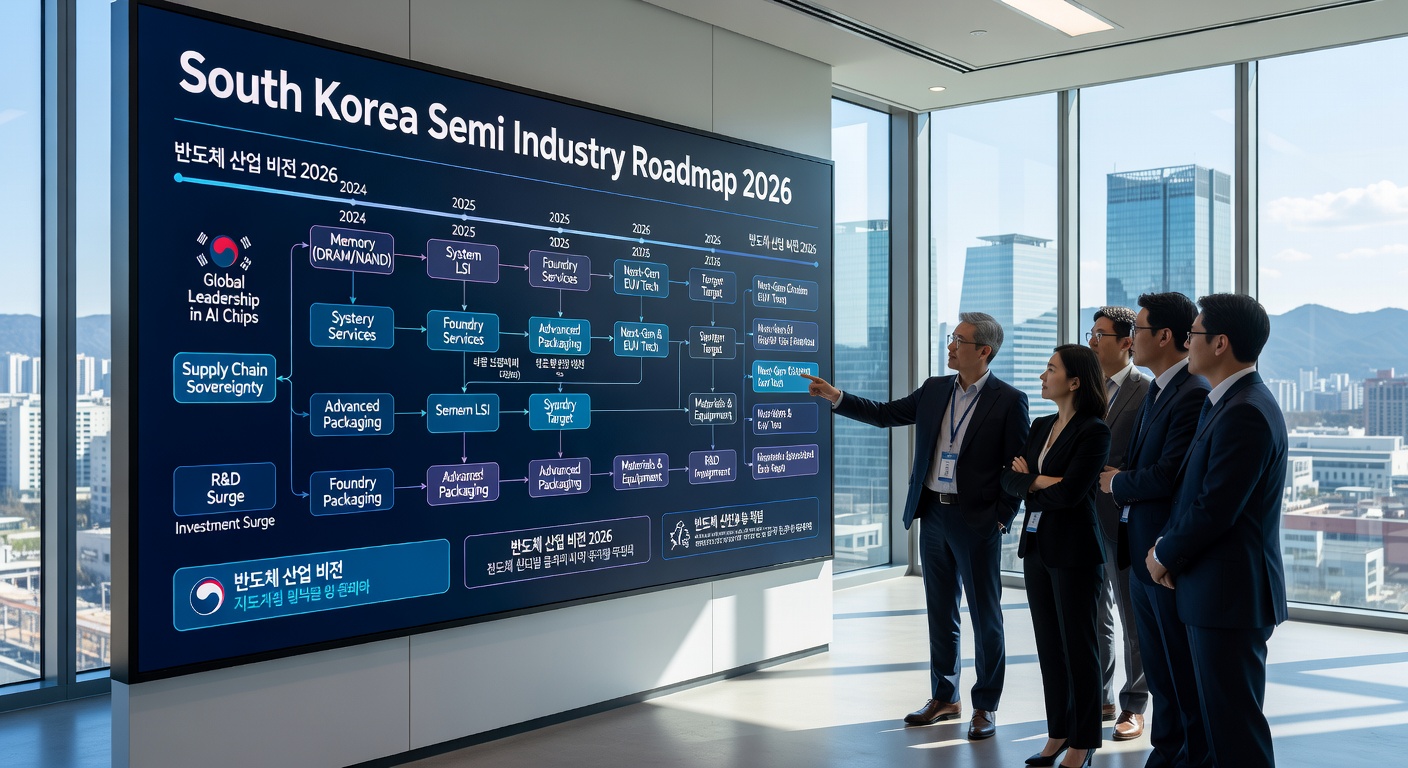

South Korea Semi Industry Roadmap 2026
Key Summary: The South Korea Semiconductor Industry Roadmap 2026 reveals a transformative shift towards free-market deregulation, creating a highly lucrative safe harbor for global capital. By dramatically expanding FDI incentives, accelerating private credit investments for green energy infrastructure, and fiercely protecting intellectual property, the nation is positioned as the premier Western-aligned tech hub. International investors stand to capture exceptional yields by navigating away from constrained local markets and strategically backing South Korea’s booming export-driven AI and sub-2nm chip manufacturing sectors.
Table of Contents
- 1. Introduction: Navigating the Global Tech Shift
- 2. Current Situation: Market Data and Energy Infrastructure
- 3. Global Implications: Western Alliances and Supply Chain Security
- 4. Actionable Insights: Hedging Risks and Exploiting Incentives
- 5. Expert Analysis: Free-Market Forecasts vs. Domestic Populism
- 6. Conclusion & Next Steps: Securing Your Global Portfolio
- 7. Frequently Asked Questions (FAQ)

1. Introduction: Navigating the Global Tech Shift
Analyzing the South Korea semiconductor industry roadmap 2026 is an absolute necessity for global investors aiming to capture high-yield opportunities in an advanced US-allied market rapidly shifting away from excessive domestic regulation. Global semiconductor equipment spending is projected to hit a massive $133 billion this year. Because of this, international capital is aggressively seeking stable, pro-business jurisdictions. Investors want countries with strong tech ecosystems and respect for property rights. South Korea is stepping up to meet this demand. The nation is learning that free enterprise works better than state control.
By cutting red tape, South Korea is attracting major global players. The shift is clear when you look at the new focus on advanced chip manufacturing. The government is stepping back to let the free market lead the way. This creates a safe harbor for money that is fleeing heavily taxed and over-regulated regions. Smart investors are watching this transformation closely. They see the value in markets that align with Western security interests. By embracing free market policies, South Korea is setting a gold standard for tech investment in the Indo-Pacific.
To help you navigate this landscape, we have outlined the core strategies for 2026. These takeaways are designed for international stakeholders who want to maximize their returns.
| Strategic Action | Focus Area | Expected Free-Market Benefit |
|---|---|---|
| Navigate FDI Incentives | Foreign Direct Investment (FDI) incentives in Korea. | Capitalize on tax breaks and cash grants for advanced sub-2nm and AI chip manufacturing. |
| Maximize Private Credit | Seoul venture capital trends for international firms. | Use alternative funding to invest in deep-tech hardware, bypassing slow traditional banks. |
| Hedge Domestic Risk | Export-driven tech mega-caps. | Protect wealth from domestic household debt limits by focusing purely on global exports. |
Supplemental Explanation: The Free-Market Drive Behind 2026 Tech Growth
The push for the South Korea semiconductor industry roadmap 2026 shows a clear turn toward economic freedom. For years, heavy domestic regulations stifled local growth. Now, leaders realize that market reforms are the only way to compete globally. By expanding Foreign Direct Investment (FDI) incentives in Korea, the country rewards risk-takers and innovators. This creates a fertile ground for wealth creation. Furthermore, tracking Seoul venture capital trends for international firms reveals a massive pivot toward deep-tech hardware. Private investors are stepping in where state planners failed. This dynamic shift proves that lowering taxes and cutting red tape attracts serious global capital. International expats and institutional analysts can use this momentum to secure high yields while supporting US-aligned supply chains.
Research Source: SEMICON Korea 2026 Bolsters Keynotes | South Korea to Pour KRW 700 Trillion in Future Chip Industry
2. Current Situation: Market Data and Energy Infrastructure
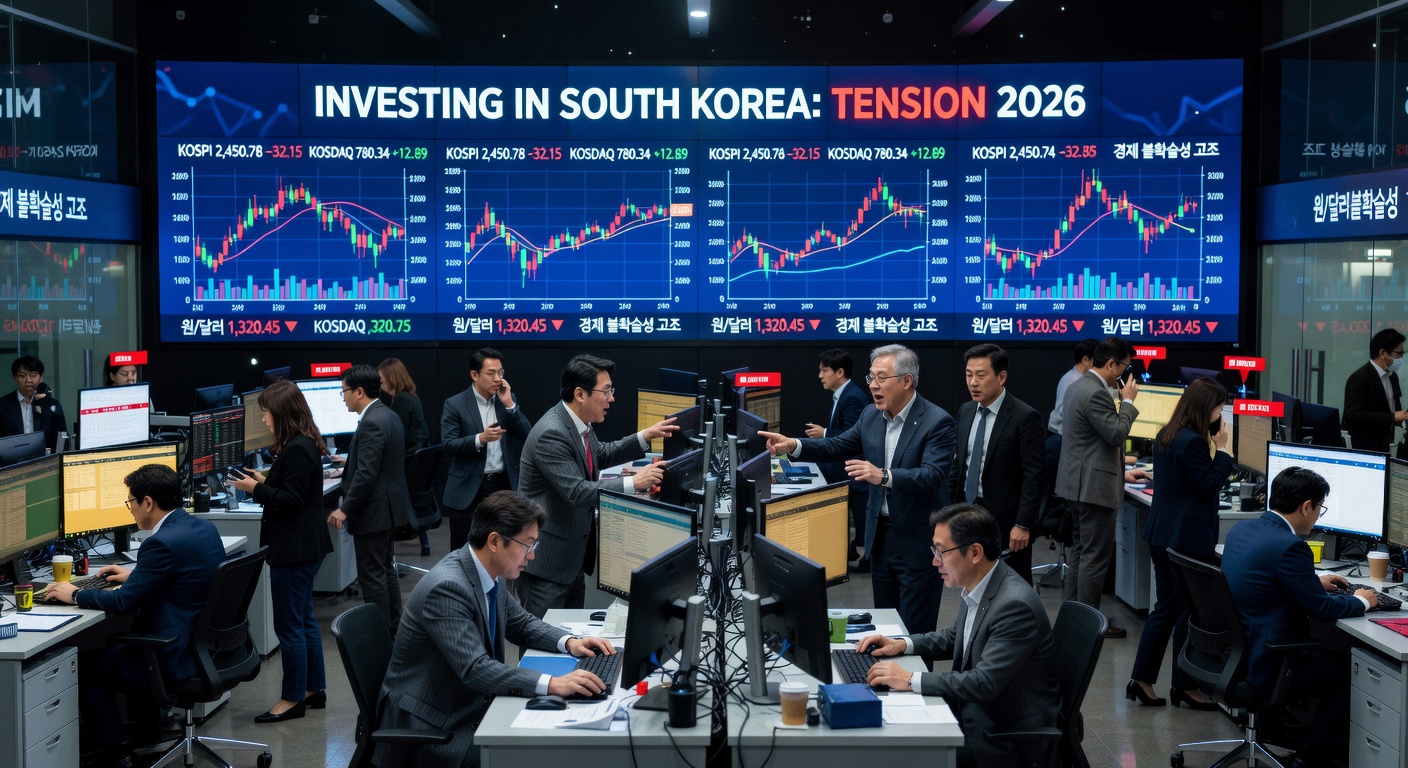
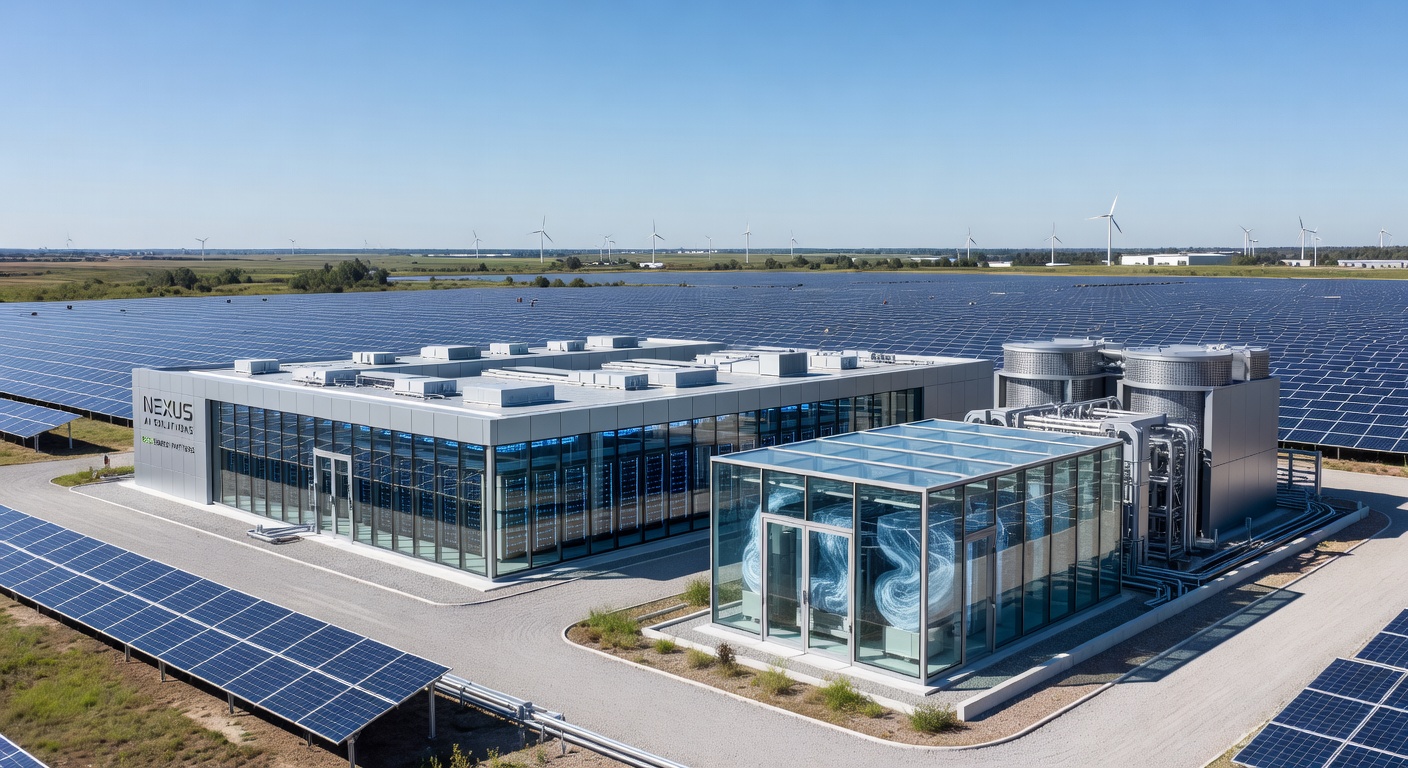
A rigorous KOSPI 200 index performance analysis serves as the primary gauge for institutional tech exposure today. The index tracks the top companies driving the region’s wealth. In 2026, the data shows strong growth in export-heavy tech firms. At the same time, South Korea green energy transition investment represents a critical need. Massive AI data centers require huge amounts of power. Without strong private investment in green energy, grid failures could happen.
“The free market is responding to this demand by funding new power projects. Private capital is solving the energy problem faster than government mandates ever could.”
As of April 2026, national capital expenditure in semiconductor equipment has surged to $29.66 billion. This massive spending reclaims the global number two spot for the nation. This growth is heavily supported by the newly enacted National Growth Fund. This fund broadens Foreign Direct Investment (FDI) incentives in Korea for international entities. By reducing the tax burden on foreign businesses, the state is inviting a flood of capital. Deregulation is proving to be the ultimate growth engine.
Investors must look at the data visuals to understand the trend fully. We recommend tracking specific metrics that highlight the success of these market reforms.
| Visual Type | Data Focus | Free-Market Insight |
|---|---|---|
| Bar Chart | 2025 vs. 2026 tech manufacturing equipment investments in Asia. | Shows how tax cuts drive capital faster than neighboring high-tax nations. |
| Line Graph | KOSPI 200 volatility vs. global peer indices. | Highlights market stability achieved following recent capital market deregulations. |
| Comparison Table | Energy transition funding: Private Credit vs. State Funding. | Proves private capital is more efficient at building critical AI power grids. |
Supplemental Explanation: Tracking KOSPI 200 and Economic Freedom
Performing a KOSPI 200 index performance analysis in 2026 reveals the stark contrast between free enterprise and state control. Tech giants thriving on the index are those benefiting from recent deregulation. Meanwhile, domestic retail sectors remain crushed by state-mandated household debt curbs. The surge in South Korea green energy transition investment further highlights this divide. Private investors are rushing to build power infrastructure for AI, proving that free markets solve complex problems efficiently. Coupled with expanded Foreign Direct Investment (FDI) incentives in Korea, these trends elevate the nation on the global economic freedom index. For the conservative investor, this means capital is safer here than in regions plagued by heavy government intervention. The data clearly shows that lowering barriers to entry creates lasting prosperity.
Research Source: 36Kr Global Asian Tech Reports | Chambers Practice Guides: Investing in 2026 South Korea

3. Global Implications: Western Alliances and Supply Chain Security
The aggressive execution of the South Korea semiconductor industry roadmap 2026 offers huge benefits to multinational businesses. It provides supply chains with a high-security, US-aligned alternative to unpredictable regulatory environments. Neighboring authoritarian regimes constantly threaten global trade with state control and IP theft. South Korea offers a clear contrast by protecting private property and encouraging free trade. This alignment with Western alliances makes it a prime target for conservative wealth preservation. Investors want safety, rule of law, and low taxes. South Korea is increasingly checking all these boxes for the tech sector.
Unlike the stagnation seen in heavily taxed European tech sectors, the recent KOSPI 200 index performance analysis demonstrates highly resilient growth. This growth is directly driven by corporate tax cuts and deregulation. It mirrors the economic freedom successes of US states like Texas and Florida. When you cut taxes, businesses grow. When you remove red tape, innovation thrives. Europe’s heavy-handed regulations have killed its tech edge. South Korea is smartly avoiding that path by looking to successful free-market models.
However, foreign stakeholders must remain vigilant. Despite very bullish Seoul venture capital trends for international firms, there are compliance hurdles. Stakeholders must navigate the 2026 amendments to the Foreign Investment Promotion Act. This act enforces stricter national security screening on critical hardware intellectual property to keep technology safe from hostile nations.
| Region | Regulatory Environment | Market Growth Potential | Investor Risk Level |
|---|---|---|---|
| South Korea (Tech) | Deregulated, pro-business reforms. | High (Driven by $29.66B capex). | Low-Medium (Strong Western alliances). |
| US States (TX/FL) | Free market, low tax, high freedom. | Very High (Economic freedom index leaders). | Low (Robust property rights). |
| European Union | Heavily taxed, over-regulated. | Stagnant (Crushed by state mandates). | High (Capital flight risk). |
| Authoritarian Asia | State-controlled, weak IP laws. | Unpredictable (Command economy flaws). | Very High (Asset seizure risk). |
Supplemental Explanation: Supply Chains and Western Alliances
The global implications of the South Korea semiconductor industry roadmap 2026 extend far beyond simple tech upgrades. It is a critical victory for Western alliances. By shifting supply chains away from command economies, global capital is securing the future of free trade. A positive KOSPI 200 index performance analysis validates this strategy. It shows that investors reward nations that adopt market reforms and respect the rule of law. Furthermore, the rising Seoul venture capital trends for international firms prove that private money prefers safe, US-aligned harbors. Protecting intellectual property from state-sponsored theft is a top priority. The 2026 security screenings help ensure that sensitive AI and semiconductor tech remains in the hands of free nations. This approach guarantees long-term growth and stability for global investors.
Research Source: White & Case FDI Reviews 2026 | State Department 2025 Investment Climate
4. Actionable Insights: Hedging Risks and Exploiting Incentives
Institutional investors must take specific steps to protect their wealth right now. You must pivot portfolios toward export-heavy tech conglomerates. At the same time, you must avoid domestic retail banking sectors. These local sectors are artificially constrained by state-mandated debt service ratio (DSR) limits. Government overreach in the domestic housing and debt markets has stifled local lending. This is a classic example of how heavy regulation hurts the working class and slows growth. Therefore, smart global money should ignore the local debt traps and focus entirely on the booming export tech market.
To secure high yields, channel capital into private credit vehicles. These vehicles are currently funding massive South Korea green energy transition investment projects. Private credit allows you to bypass the over-regulated local commercial lending networks entirely. You get better returns without dealing with slow government bureaucracy. Private capital is essential to building the power grids needed for future tech. This is a highly profitable, free-market solution to an infrastructure problem.
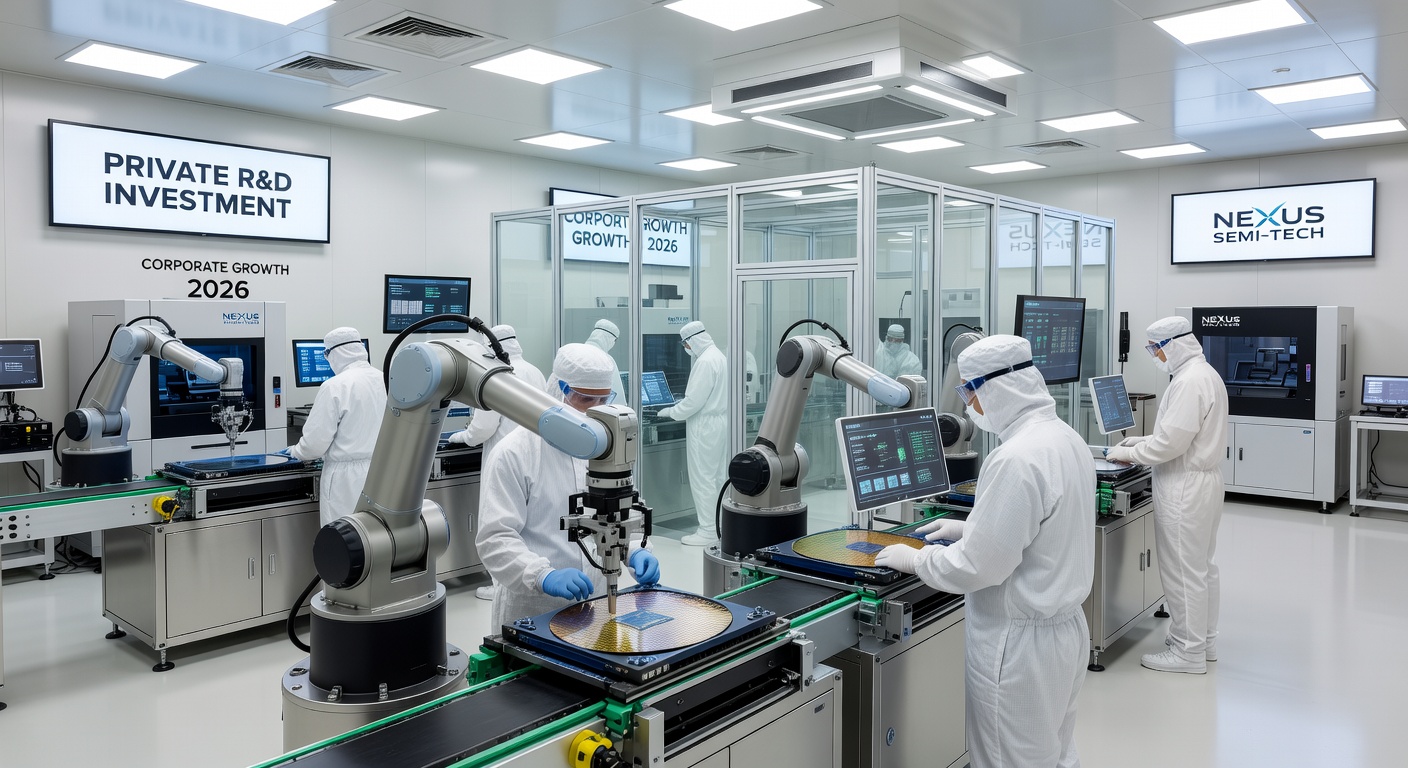
Furthermore, investors should exploit the latest expanded Foreign Direct Investment (FDI) incentives in Korea. These new rules offer extended land lease durations and massive cash grants. You can use these incentives to set up advanced R&D facilities within newly designated free economic zones. Free economic zones are bastions of capitalism that prove deregulation creates jobs and wealth.
| Action Step | Target Sector | Expected Free-Market Result |
|---|---|---|
| Avoid Domestic Retail Banks | Local lending, real estate trusts. | Sidestep government-mandated DSR loan caps and regulatory stagnation. |
| Fund Private Credit | South Korea green energy transition investment. | Earn high yields by bypassing over-regulated local commercial banks. |
| Exploit Free Economic Zones | Advanced R&D, sub-2nm chip facilities. | Maximize Foreign Direct Investment (FDI) incentives in Korea via tax cuts. |
Supplemental Explanation: Escaping State-Mandated Debt Limits
To thrive in 2026, global investors must separate the heavily regulated domestic market from the booming tech export sector. Channeling funds into South Korea green energy transition investment via private credit is a brilliant free-market play. It avoids the disastrous local banking rules. The domestic market is choked by state-mandated debt service ratio limits, which distort market signals. By contrast, the export sector is thriving due to market reforms. Taking advantage of Foreign Direct Investment (FDI) incentives in Korea allows expats and multinationals to operate in free economic zones. These zones respect property rights and minimize tax burdens. Capital always flows to where it is treated best. By utilizing international corporate law advisory networks, investors can safely structure their assets to maximize freedom and minimize state interference.
Practical Resources: Ministry of Trade investment portals, White & Case 2026 FDI guides, conservative legal advisory networks.

5. Expert Analysis: Free-Market Forecasts vs. Domestic Populism
Early 2026 forecasts project global semiconductor sales reaching an incredible $975 billion. This massive number fundamentally underpins the long-term upward trajectory observed in recent KOSPI 200 index performance analysis. The data is clear: tech hardware is the future of the global economy. Institutions like the IMF and World Bank confirm this massive capital inflow. Western analysts recognize that this growth is powered by private innovation, not state planning.
“The free market is delivering faster chips and better AI solutions than any government program ever could.”
There is a sharp contrast between the international perspective and the local domestic view. Domestic media often fixates on high household debt and demands populist price controls. They push for more regulation, ignoring that regulation caused the debt crisis in the first place. On the other hand, free-market analysts view the current Seoul venture capital trends for international firms as a massive opportunity. They see a chance to acquire heavily subsidized, cutting-edge hardware startups at deeply discounted valuations. Global capital is smart; it ignores the noise of local populism and focuses on hard data.
Industry monitors clearly note that regional chip equipment spending is “reaching approximately $29.66 billion.” This is a massive 27.2% increase from the estimated $23.32 billion in 2025. This confirms a massive influx of global institutional confidence.
| Viewpoint Source | Primary Focus | Economic Assessment |
|---|---|---|
| Global Free-Market Analysts | Seoul venture capital trends for international firms. | Massive opportunity for wealth creation via deregulation and tax cuts. |
| Local Populist Media | Household debt, wealth inequality. | Demands harmful price controls and tighter lending regulations. |
| Institutional Investors | KOSPI 200 index performance analysis. | High confidence driven by a $29.66B surge in private equipment spending. |
Supplemental Explanation: The Power of Unapologetic Capitalism
The numbers do not lie. When we look at the positive KOSPI 200 index performance analysis, we see the undeniable power of unapologetic capitalism. Early 2026 forecasts showing $975 billion in global semiconductor sales prove that innovation drives prosperity. While local left-leaning politicians argue for more market interventions and price controls, global investors know better. They track the bullish Seoul venture capital trends for international firms to find true value. Free-market analysts understand that the domestic household debt crisis is a symptom of too much regulation, not too little. By ignoring the populist noise, international expats can focus on the real growth drivers. Strong property rights, lower taxes, and respect for private enterprise are what actually build wealth. Capitalizing on these deregulated tech sectors is the smartest move for 2026.
Research Source: Deloitte Semiconductor Industry Outlook | World Bank FDI Data
6. Conclusion & Next Steps: Securing Your Global Portfolio
The intersection of rapid tech industrialization and free-market deregulation proves a vital point. Relying on Western-aligned, economically free jurisdictions is the ultimate strategy for wealth preservation and growth in 2026. The South Korea semiconductor industry roadmap 2026 is not just a plan for building computer chips. It is a testament to the power of free enterprise. When a government steps back, cuts taxes, and protects property rights, the market flourishes. We have seen how expanded FDI incentives are drawing billions in foreign capital. We have seen how private credit is solving infrastructure problems without government delays.
Investors must remain disciplined. Avoid the heavily regulated domestic retail sectors. Focus your capital entirely on the export-driven tech giants and the venture capital networks funding them. Align your portfolio with the principles of the economic freedom index. Choose markets that respect the rule of law and stand strong with Western alliances. By doing so, you protect your assets from the whims of authoritarian regimes and interventionist policies.
Take action today to secure your financial future. Use the resources provided to navigate the latest FDI rules. Restructure your investments to take advantage of these new free-market realities.
| Resource Category | Recommended Tool / Platform | Free-Market Purpose |
|---|---|---|
| Economic Freedom Data | Heritage Foundation Economic Freedom Index. | Identify markets with low taxes and strong property rights. |
| Investment Tracking | OECD Foreign Investment Statistics. | Monitor global capital flight from high-tax regimes to free markets. |
| Private Capital | Exclusive Venture Capital Tracking Platforms. | Bypass regulated banks to fund high-yield deep-tech hardware. |
Supplemental Explanation: Your Free-Market Blueprint
The success of the South Korea semiconductor industry roadmap 2026 serves as a beacon for global investors. It proves that free market policies will always outpace command economies. By reading this guide, you now have the tools to protect and grow your wealth. You know to avoid domestic regulatory traps and focus on the deregulated export market. You understand the importance of Western alliances in securing global supply chains. Wealth preservation requires constant vigilance against government overreach. By focusing on nations that embrace market reforms, you align your portfolio with freedom and prosperity.
Internal Links to Expand Your Strategy:
- Why Property Rights Drive Growth in Emerging Asian Markets
- The 2026 Guide to Indo-Pacific Tech Investments: A Conservative Blueprint
Call-to-Action: Subscribe to our premium newsletter today. We provide unapologetic, free-market analysis on global capital flows, regulatory reform updates, and wealth-preservation strategies tailored specifically for international expats and institutional investors. Don’t let state intervention eat your profits—invest in freedom.
7. Frequently Asked Questions (FAQ)
Q. How does the South Korea Semiconductor Industry Roadmap 2026 benefit international investors?
The 2026 roadmap creates highly lucrative opportunities by implementing massive deregulation, reducing corporate taxes, and extending Foreign Direct Investment (FDI) incentives. This allows global capital to bypass traditional domestic barriers, capture significant yields in advanced AI hardware manufacturing, and establish safe footholds within a strong, US-aligned supply chain.
Q. Why is private credit recommended over domestic retail banking in South Korea?
Domestic retail banks in South Korea are currently heavily restricted by state-mandated debt service ratio (DSR) limits and burdensome local regulations. In contrast, utilizing private credit vehicles allows international investors to directly fund highly profitable, high-demand sectors like green energy infrastructure for data centers, entirely sidestepping slow government bureaucracy.
Q. What are the key FDI incentives available in South Korea’s free economic zones?
Within these designated bastions of free enterprise, international entities can take advantage of extended land lease durations, deep corporate tax exemptions, and substantial cash grants for establishing advanced R&D and sub-2nm chip facilities. These zones are specifically designed to respect property rights and minimize state interference to foster unchecked growth.