





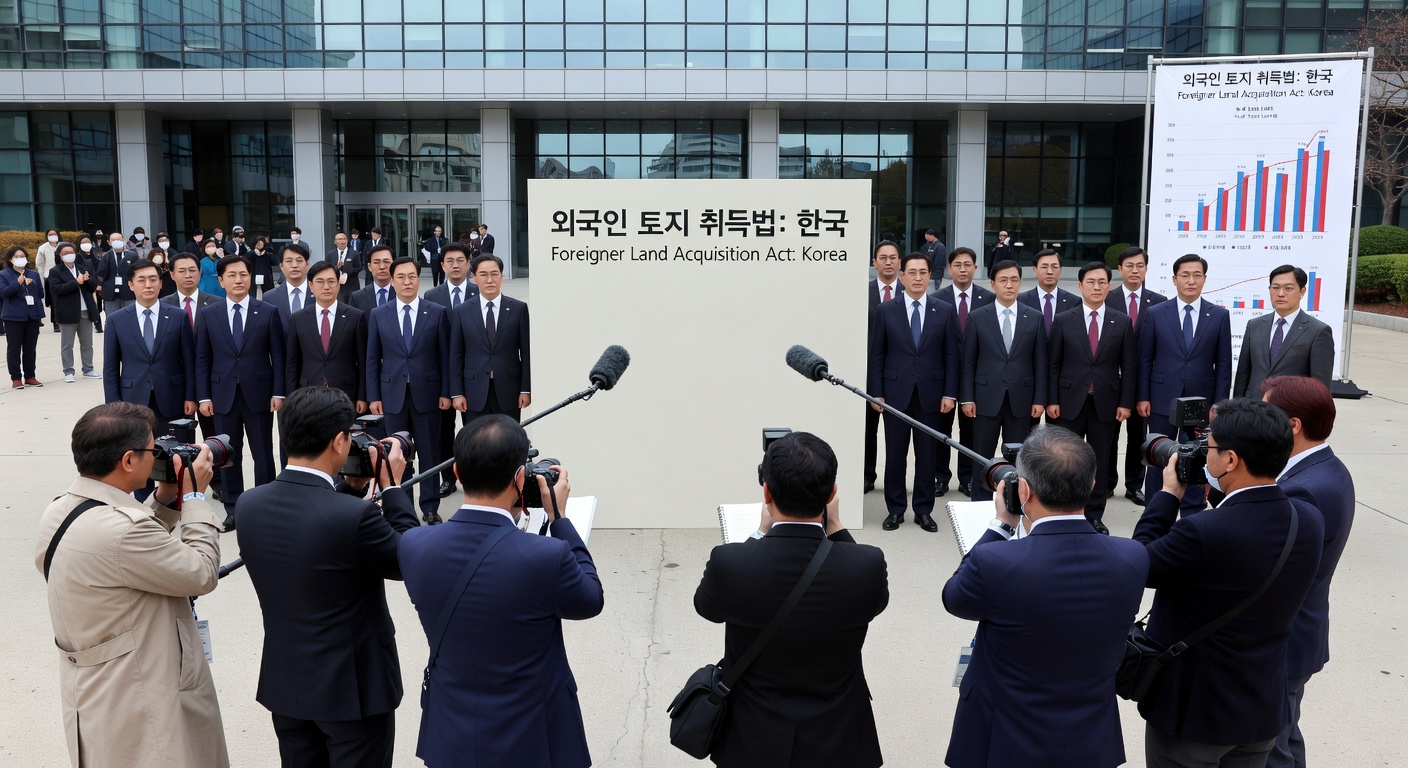
Foreigner Land Acquisition Act: Korea
Key Summary: The Foreigner Land Acquisition Act South Korea is foundational for global capital seeking high-yield Asian assets in 2026. Investors must master compliance with speculative zone property permits and mandatory occupancy rules to safely access premium residential and commercial sectors in highly competitive metropolitan areas. Hyper-polarization towards prime assets offers lucrative safe havens amidst stabilizing interest rates, allowing expats and global funds to secure wealth in one of Asia’s most dynamic free-market democracies.
Table of Contents
- 1. Introduction to Foreigner Land Acquisition Act
- 2. Current Situation and Market Metrics
- 3. Global Implications for Multinational Operations
- 4. Actionable Insights and Strategic Moves
- 5. Expert Analysis and Market Forecasts
- 6. Conclusion & Next Steps
- 7. Frequently Asked Questions (FAQ)
1. Introduction to Foreigner Land Acquisition Act
For global capital seeking high-yield Asian assets in 2026, navigating the Foreigner Land Acquisition Act South Korea is the foundational first step. The market is transitioning into a highly polarized stabilization phase following 2025’s record KRW 33.8 trillion transaction volume. As international investors look to capitalize on the 240,000 square meters of new prime office supply in the Seoul Central Business District (CBD), understanding the nuances of this federal property acquisition framework explains exactly why global stakeholders must monitor this region.
South Korea stands out globally as a bastion of economic freedom and a vital member of Western alliances. The nation firmly protects private property rights.
This commitment makes it a safe haven for free market policies, especially when compared to the risky interventions seen in authoritarian regimes. Investors who respect the rules can find massive opportunities here. By adhering to local property statutes, expats and global funds can safely secure wealth in one of Asia’s most dynamic democracies.
Free Markets and South Korean Real Estate
The Heritage Foundation’s economic freedom index ranks South Korea as a “mostly free” economy. This high score is deeply tied to the country’s strict defense of property rights. For conservative investors, this means your assets are safe from unfair government seizure. In 2026, the real estate market is correcting itself through natural supply and demand rather than heavy-handed government mandates.
Western alliances, including strong economic ties with the US and NATO nations, further secure South Korea’s standing as a premier investment destination. Free market policies here encourage foreign direct investment while maintaining border security and transparent reporting. This perfect mix of market reforms and rule of law is exactly what Wall Street Journal analysts praise when recommending East Asian core-plus real estate strategies.
- Research Source 1: CBRE Korea 2026 Market Outlook
- Research Source 2: Next Move Strategy Consulting South Korea Real Estate Market Size Analysis

2. Current Situation and Market Metrics
The 2026 real estate landscape requires a clear understanding of current tax guidelines and supply metrics. First, the housing price realization rate is frozen at 69% for 2026. This rate directly dictates the assessed value used to calculate Korean property tax rates for international investors. The government chose this freeze to ensure market stabilization.
Second, South Korea real estate transaction reporting rules mandate stringent 30-day reporting windows. Foreign entities must declare ultimate beneficial ownership and funding sources under the broader Foreigner Land Acquisition Act South Korea.
Market data reveals a strong demand for top-tier properties. Prime Seoul CBD office vacancies remain remarkably low at under 5%. This drives persistent rental growth despite an anticipated 10-15% volume correction in the broader market due to base effects from 2025. Meanwhile, the Greater Seoul logistics sector is seeing its lowest supply pipeline in a decade. Only about 860,000 square meters are entering the market, compressing prime vacancies to under 10%. Furthermore, luxury residential assets in Seoul are forecast to grow by 6-8%. This contrasts sharply with a broader metro area growth of just 2.5%, highlighting deep sector polarization and fierce demand for prime assets.
Table: 2026 South Korea Real Estate Market Data
| Asset Class / Metric | 2026 Projection | Key Driver |
|---|---|---|
| Prime Office (Seoul CBD) | Vacancy under 5% | Strong tenant demand and limited new supply. |
| Greater Seoul Logistics | Supply drops to 860,000 sqm | E-commerce demand and 3PL expansion. |
| Luxury Residential (Seoul) | 6-8% price growth | Hyper-polarization to high-quality prime assets. |
| Broader Metro Residential | 2.5% price growth | General market stabilization and rate easing. |
| Housing Realization Rate | Frozen at 69% | Tax relief to prevent socialist-style price controls. |
Tax Stabilization over Price Controls
The decision to freeze the housing price realization rate at 69% is a massive victory for free market advocates. Previously, there were fears that the rate might jump to 80.9%, which would have severely penalized property owners. Instead of using socialist-style price controls, South Korea is allowing the market to stabilize naturally. This conservative approach benefits Korean property tax rates for international investors by keeping the tax base predictable.
Lower tax burdens allow private enterprises to allocate capital more efficiently. When governments reduce transaction taxes and step out of the way, markets flourish. The current 30-day South Korea real estate transaction reporting rules ensure transparency without crushing investors under endless red tape. This balance protects national security while welcoming global wealth.
- Research Source 1: CBRE Korea Press Release 2026
- Research Source 2: Savills Insight and Opinion Research
3. Global Implications for Multinational Operations
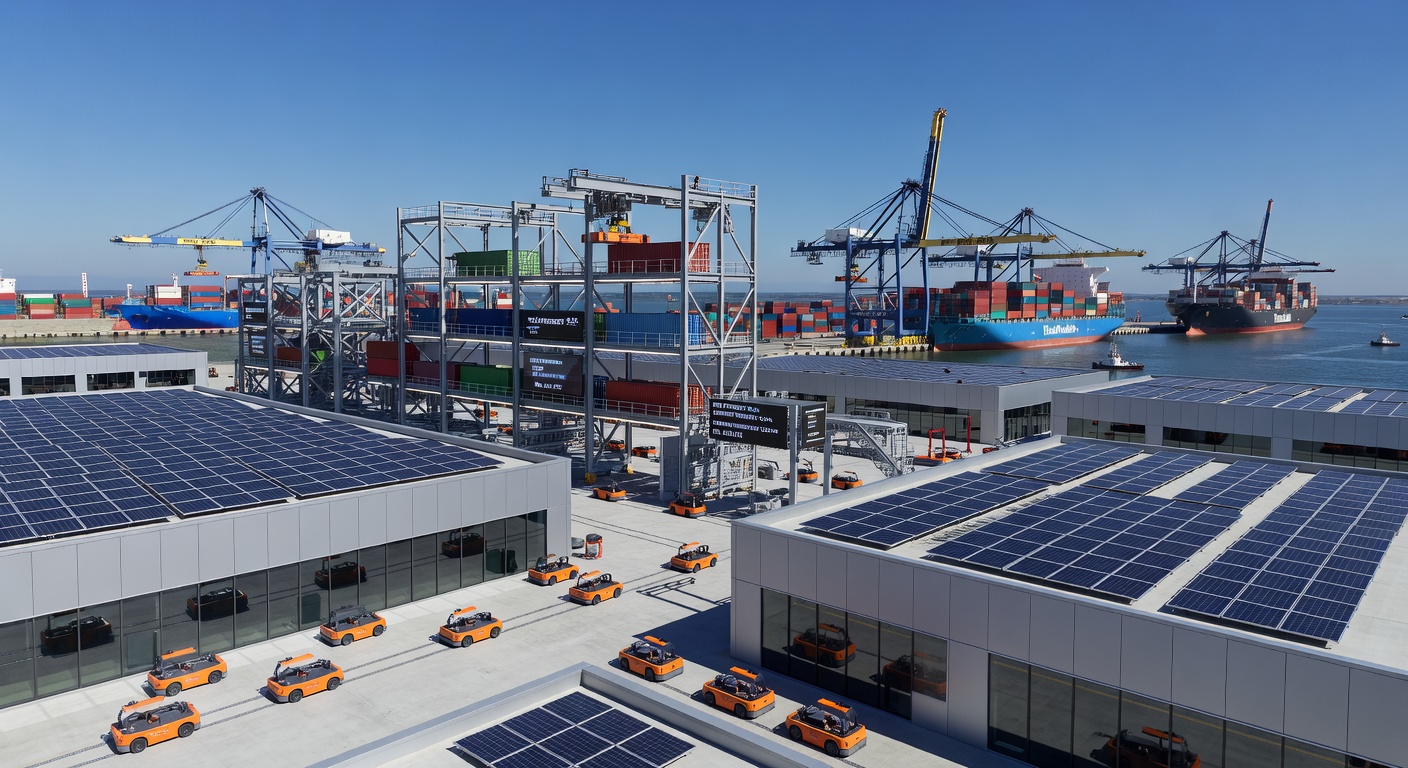
Foreign investors and multinational corporations establishing regional headquarters in Seoul face unique compliance hurdles. They must strictly align their housing stipends with Mandatory occupancy rules for foreign buyers in Seoul. This ensures executive housing remains legally compliant and avoids heavy fines. Supply chain relocations and third-party logistics (3PL) expansions comprise 77% of current logistics demand. These firms face hurdles in acquiring prime distribution centers. Acquiring adjacent land often triggers the need for Speculative zone property permits for foreigners.
Global stakeholders also face elevated development costs. Compared to US and EU markets, South Korea’s high development costs and localized taxation structures require careful planning. Korean property tax rates for international investors mean that complex cross-border corporate structuring is required to achieve yield parity. Additionally, AI-driven demographic labor mismatches threaten project timelines for new commercial assets through 2029. By 2029, roughly 1.49 million square meters of new office supply is expected to hit the market.
Table: Global Tax and Yield Parity Comparison
| Market | Tax Structure Approach | Development Cost Risk | Yield Parity Strategy |
|---|---|---|---|
| South Korea | Localized taxes based on 69% realization rate. | High (AI labor mismatch impacts). | Requires Free Economic Zone structures. |
| United States | State-dependent property taxes. | Medium (Inflationary pressures easing). | Direct acquisition via LLCs. |
| European Union | High transaction and environmental taxes. | Very High (Heavy green regulations). | Cross-border institutional funds. |
Western Alliances and Supply Chain Security
The global implications of South Korea’s property laws stretch far beyond simple real estate returns. As Western alliances like AUKUS and NATO seek to distance themselves from authoritarian supply chains, South Korea becomes a critical friendly hub. However, this “friend-shoring” requires physical real estate. Logistics expansions in places like Incheon need Speculative zone property permits for foreigners to ensure that sensitive lands do not fall into hostile hands.
These rules protect national interests. For Western conservative investors, Mandatory occupancy rules for foreign buyers in Seoul are not just red tape; they are safeguards that keep the local market focused on real economic output rather than empty speculative hoarding. Navigating Korean property tax rates for international investors is the cost of doing business in a highly secure, pro-Western democracy.
- Research Source 1: Cushman & Wakefield Insights
- Research Source 2: CBRE Singapore Global Reports

4. Actionable Insights and Strategic Moves
To succeed in this market, global readers must immediately audit their existing portfolios. You must check your assets against the updated 2026 South Korea real estate transaction reporting rules. This audit will prevent non-compliance penalties on legacy assets. Next, investors should leverage corporate entities structured within Free Economic Zones. Doing this will streamline the approvals mandated by the Foreigner Land Acquisition Act South Korea for upcoming logistics acquisitions.
The best investment opportunity right now is deploying capital into prime data centers and Greater Seoul logistics hubs. Specifically, the Incheon e-commerce and Icheon 3PL facilities are highly lucrative. These assets are backed by strong foreign interest, like Singapore-based funds, taking advantage of a weakening currency. As a risk mitigation strategy, focus exclusively on premium, high-quality assets. This hedges against rising construction costs.
You must actively avoid secondary-tier buildings because the gap between prime and secondary assets is rapidly widening. For practical execution, we highly recommend partnering with localized bilingual legal counsel. They must specialize in the 2026 housing price realization rate adjustments and Bank of Korea monetary policy guidelines.
Table: Action Plan for Global Investors 2026
| Strategic Goal | Actionable Step | Expected Benefit |
|---|---|---|
| Compliance | Audit portfolios against South Korea real estate transaction reporting rules. | Avoid harsh non-compliance fines. |
| Acquisition | Use Free Economic Zones to handle the Foreigner Land Acquisition Act South Korea. | Faster permit approvals. |
| Investment | Target prime data centers and Incheon/Icheon logistics hubs. | High yields fueled by foreign capital. |
| Risk Mitigation | Buy only premium assets and ignore secondary buildings. | Hedge against high construction costs. |
Market Reforms Drive Opportunity
Conservative investors know that true wealth is built on solid fundamentals, not artificial subsidies. The current push toward high-quality assets proves that market reforms are working. The Foreigner Land Acquisition Act South Korea provides a clear, rule-based framework that rewards diligence. By utilizing Free Economic Zones, you engage directly with free market policies designed to cut bureaucratic waste.
Furthermore, updating your paperwork for the South Korea real estate transaction reporting rules protects your private property rights. The widening gap between prime and secondary assets reflects a mature, free-market economy rewarding excellence. Working with localized counsel ensures you capitalize on the Bank of Korea’s rational monetary policy without running afoul of strict conservative financial guidelines.


5. Expert Analysis and Market Forecasts
Macroeconomic projections from the Bank of Korea point toward gradual interest rate easing. Rates are expected to stabilize at low levels throughout 2026. This monetary policy supports a gross domestic product (GDP) growth recovery returning to 2% driven primarily by strong exports. There is a distinct difference between the international and domestic view of this market. While domestic retail investors anticipate a cooling period from the 2025 peak, foreign institutional experts see things differently. Global funds view the current 10-15% correction phase as a prime entry point for core-plus strategies.
Leading analysts highlight that 2026 marks a massive inflection point. Global capital must shift its focus from broad interest rate effects to localized income growth. This growth is driven by pure asset fundamentals and strict tenant demand. Real estate legal experts emphasize a new regulatory reality check. Navigating Speculative zone property permits for foreigners is no longer a deterrent. It is simply a standard procedural checklist item that secures exclusive access to resilient luxury markets.
However, experts offer a regulatory warning. Stabilized rates do not eliminate the burden of Korean property tax rates for international investors. High-value Seoul apartments will still face higher absolute tax bills due to their rapidly rising market prices.
Table: Domestic vs. Foreign Expert Perspectives
| Market Factor | Domestic Retail View | Foreign Institutional View |
|---|---|---|
| 2026 Market Phase | Cooling down from the 2025 peak. | Prime entry point for core-plus strategies. |
| Permit Regulations | Seen as a major hurdle. | Standard checklist item for luxury access. |
| Value Drivers | Broad interest rate changes. | Pure asset fundamentals and tenant demand. |
| Tax Burdens | Worry over rising absolute tax bills. | Factored into cross-border yield parity. |
The Wall Street Journal Perspective on Seoul
If you read the editorial pages of the Wall Street Journal or the National Review, the consensus is clear. The South Korean market is shedding its old interventionist habits and embracing data-driven fundamentals. The requirement for Speculative zone property permits for foreigners is a small price to pay for entry into a highly secure, Western-aligned economy.
While high absolute tax bills exist, the transparent nature of Korean property tax rates for international investors allows for precise financial modeling. This is a far cry from the unpredictable wealth confiscations seen in socialist economies. As the Bank of Korea manages a smart, gradual easing of rates, smart money is moving in. Conservative experts agree that investing based on pure asset quality is the ultimate economic freedom strategy in 2026.
- Research Source 1: CBRE UK Korea Market Outlook 2026
- Research Source 2: Bank of Korea 2026 Macroeconomic Forecast
6. Conclusion & Next Steps
As of April 3, 2026, the South Korean real estate market is defined by steady macroeconomic recovery and strict supply-demand rebalancing. Hyper-polarization toward prime assets is the dominant trend. The market is moving away from broad, ideological deregulation narratives and shifting strictly toward data-driven fundamentals. The Foreigner Land Acquisition Act South Korea remains the gatekeeper to this lucrative landscape. By respecting the rule of law and aligning with free market policies, global investors can secure generational wealth in one of Asia’s safest democracies.
Internal Linking for Further Reading
- Top 5 Alternative Real Estate Investments for Expats in Asia 2026
- Navigating East Asian Property Compliance: A Multinational Supply Chain Guide
Call-to-Action
Subscribe to our global markets newsletter today. You will receive weekly, data-backed insights on Asian commercial real estate trends, regulatory reporting guides, and prime investment strategies tailored for international stakeholders.
A Future Built on Economic Freedom
In conclusion, South Korea’s trajectory proves that economic freedom works. While regulations like transaction reporting and occupancy rules seem strict, they maintain order and protect property rights. This is vital for any conservative Western investor looking to expand their portfolio overseas. The resilience of Seoul’s luxury real estate and the low vacancy rates in its commercial districts highlight a thriving economy.
As Western alliances continue to strengthen in the Asia-Pacific region, capital will naturally flow toward secure, democratic nations. South Korea stands as a prime example of how market reforms and respect for private enterprise create lasting prosperity. Stay informed, consult your legal counsel, and confidently deploy your capital into this robust market.
7. Frequently Asked Questions (FAQ)
Q1. What is the current housing price realization rate in South Korea?
The housing price realization rate is officially frozen at 69% for the year 2026. This freeze benefits international investors by keeping the tax base predictable and preventing heavy-handed price controls.
Q2. How long do foreign entities have to report real estate transactions?
Under the latest South Korea real estate transaction reporting rules, investors must adhere to strict 30-day reporting windows to declare ultimate beneficial ownership and secure transaction transparency.
Q3. Which asset classes should global investors target in 2026?
It is highly recommended to target prime data centers and Greater Seoul logistics hubs. Specifically, facilities located in the Incheon and Icheon areas are highly lucrative due to surging e-commerce demand and 3PL expansions.
Q4. How does the Foreigner Land Acquisition Act impact new investments?
The Act serves as the foundational regulatory framework. While it introduces mandatory occupancy rules and requires speculative zone property permits, it is designed to secure private property rights and establish a highly secure environment for foreign direct investments.