






Impact: US-China Chip War on Korea 2026
Key Summary: The US-China chip war is forcing a historic reshaping of global supply chains, driving immense capital towards South Korea by 2026. Empowered by a massive 4.2 trillion won national fund and profound integration with Western alliances, Seoul offers an unparalleled, secure environment for highly profitable fabless design and AI manufacturing. To safeguard their assets and capitalize on a market racing towards $975 billion, global investors must immediately audit their silicon dependencies, rotate assets into secure South Korean infrastructure, and strictly align with pro-business, free-market tech policies.
Table of Contents
- 1. Introduction
- 2. Current Situation
- 3. Global Implications
- 4. Actionable Insights
- 5. Expert Analysis
- 6. Conclusion & Next Steps
- Frequently Asked Questions (FAQ)
1. Introduction
Understanding the impact of the US-China chip war on South Korea in 2026 is critical for global investors. Seoul’s strategic choices dictate the stability and profits of the world’s most essential technology supply chains. The global semiconductor market is racing toward a historic $975 billion valuation in 2026.
This incredible growth is driven by a massive demand for AI data center infrastructure and deep changes in global politics. Global investors care about these changes because secure supply chains protect their money. The push away from authoritarian regimes and toward free-market democracies is reshaping the world economy, and investors must pay close attention to how South Korea manages these shifts.
South Korea is actively launching a huge 4.2 trillion won ($3.1 billion) national fund. The goal is to rapidly grow their domestic chip design skills. At the same time, multinational firms are moving their supply networks out of areas controlled by Beijing, seeking safer homes in democratic nations. Deep integrations with Western alliances are creating highly profitable enterprise opportunities.
Key Takeaways for Global Stakeholders
- National Funding: A 4.2 trillion won ($3.1 billion) fund guarantees rapid growth in high-tech chip design profits.
- Supply Chain Pivot: Moving networks away from Beijing control ensures the absolute protection of private property and assets.
- Western Alliances: Deep integration with the US and democratic partners results in secure, long-term trade agreements and stable growth.
Supplemental Insight: The changing global tech map highlights the vital importance of economic freedom. Depending on state-controlled markets presents extreme risks to private capital, as true innovation requires strong protections for intellectual property. The launch of South Korea’s tech fund is a direct answer to this threat, aligning perfectly with free market policies. Read more about these shifts in the Deloitte 2026 Semiconductor Outlook and Asia E News.
2. Current Situation
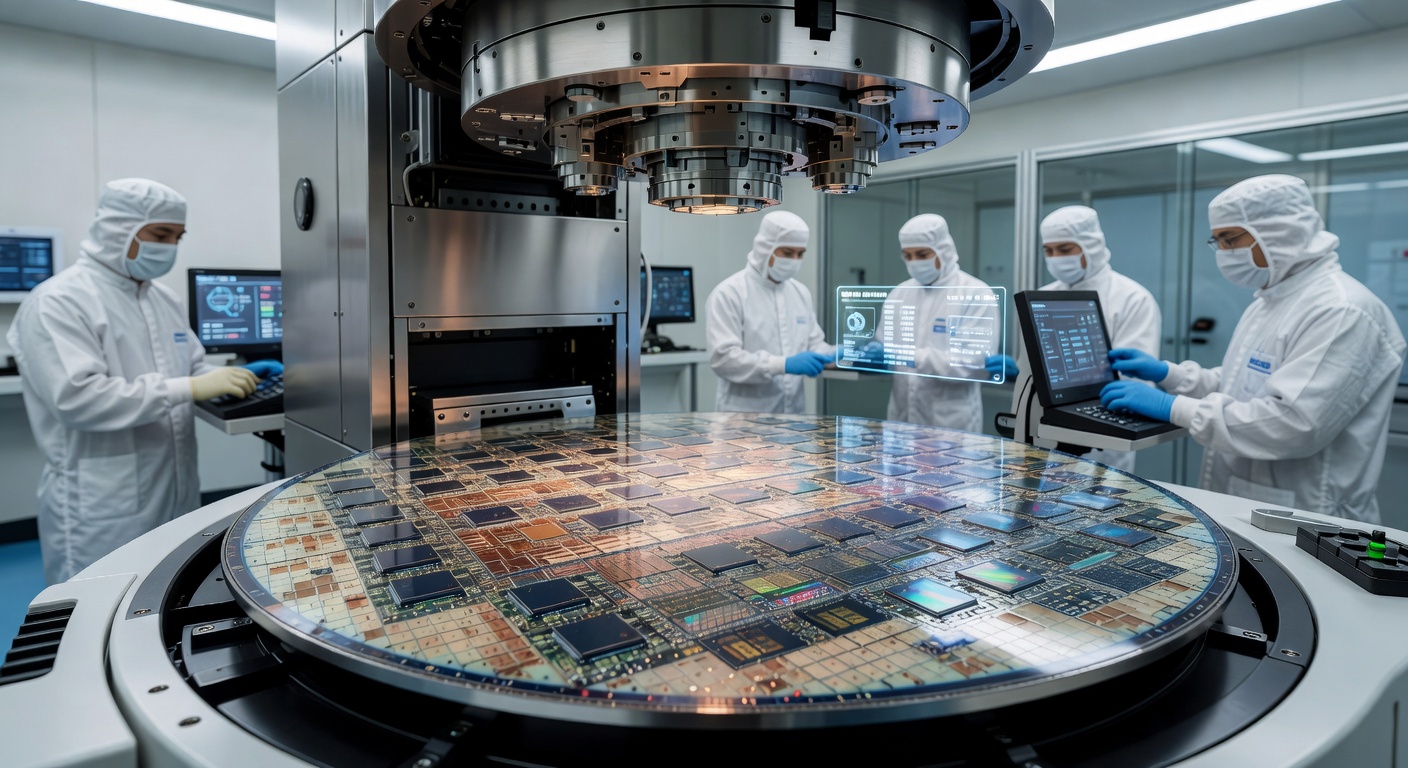
To properly navigate the market, international readers need to understand a few core concepts. “Fabless” companies design smart chips but hire others to manufacture them. “Foundries” are the huge factories that make the physical chips. “HBM” stands for High-Bandwidth Memory—premium hardware that is absolutely necessary for powering modern AI computers.
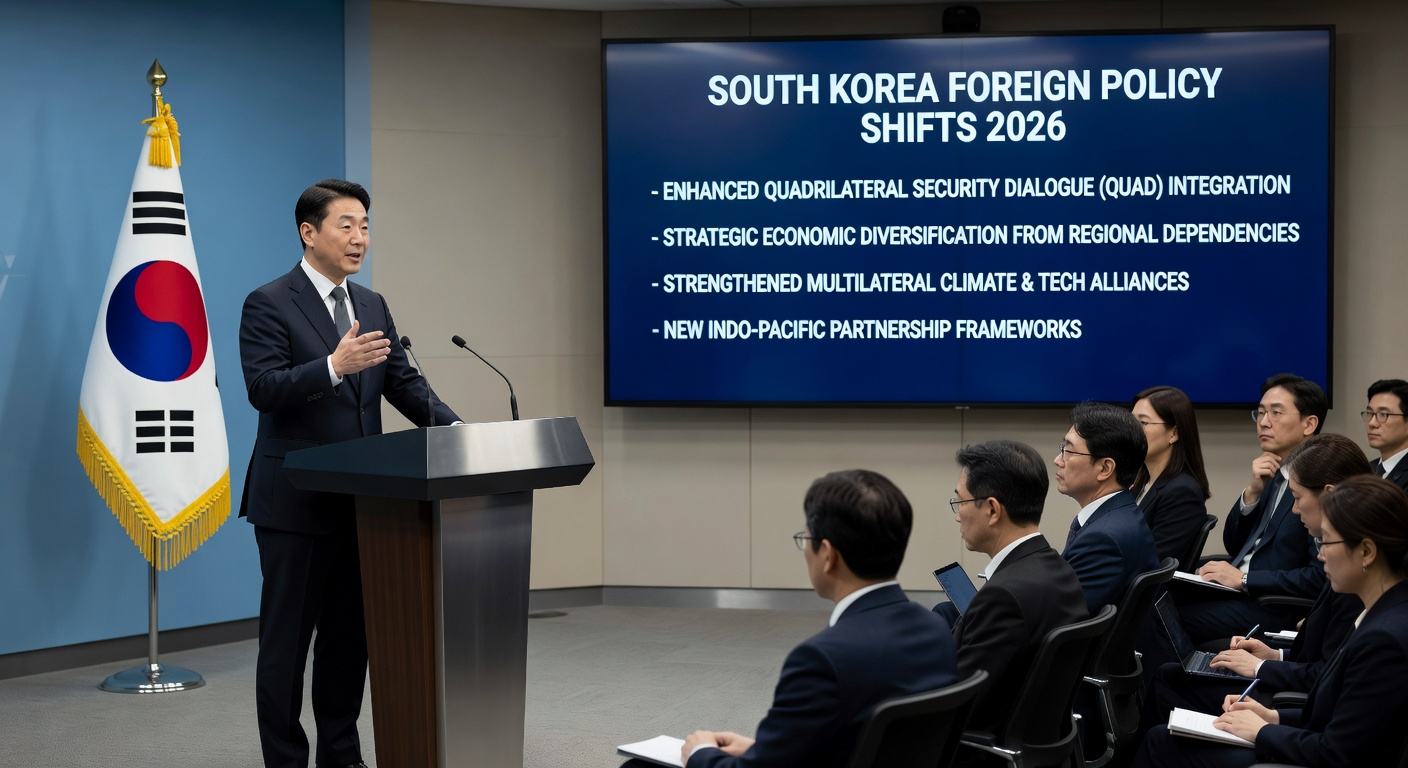
South Korean tech giants heavily dominate the HBM sector. In early 2026, the South Korean Ministry of Economy and Finance initiated the “2026 Economic Growth Strategy.” This aggressive plan injects massive capital to multiply the South Korean fabless industry by ten times its current size.
Following the June 2025 snap election, left-leaning President Lee Jae-myung took office. However, undeniable market realities have forced his administration to embrace pro-business tech strategies. A failure to support free enterprise would completely crash their tech economy. Therefore, the country is pushing hard to maintain a high economic freedom index ranking. Capital flowing out of mainland China is actively moving into these secure, democratic zones in the Indo-Pacific region.
Visual Data Recommendations: 2026 Market Shifts
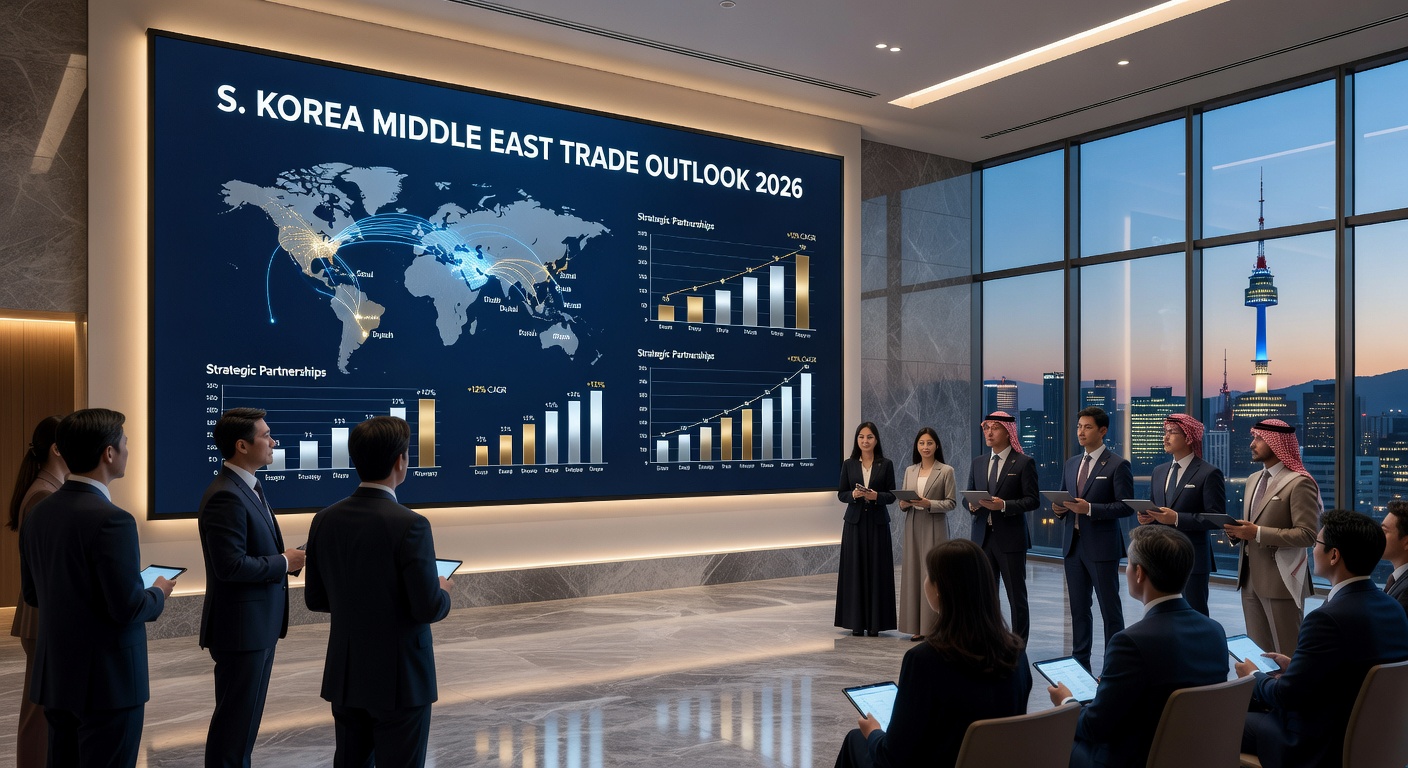
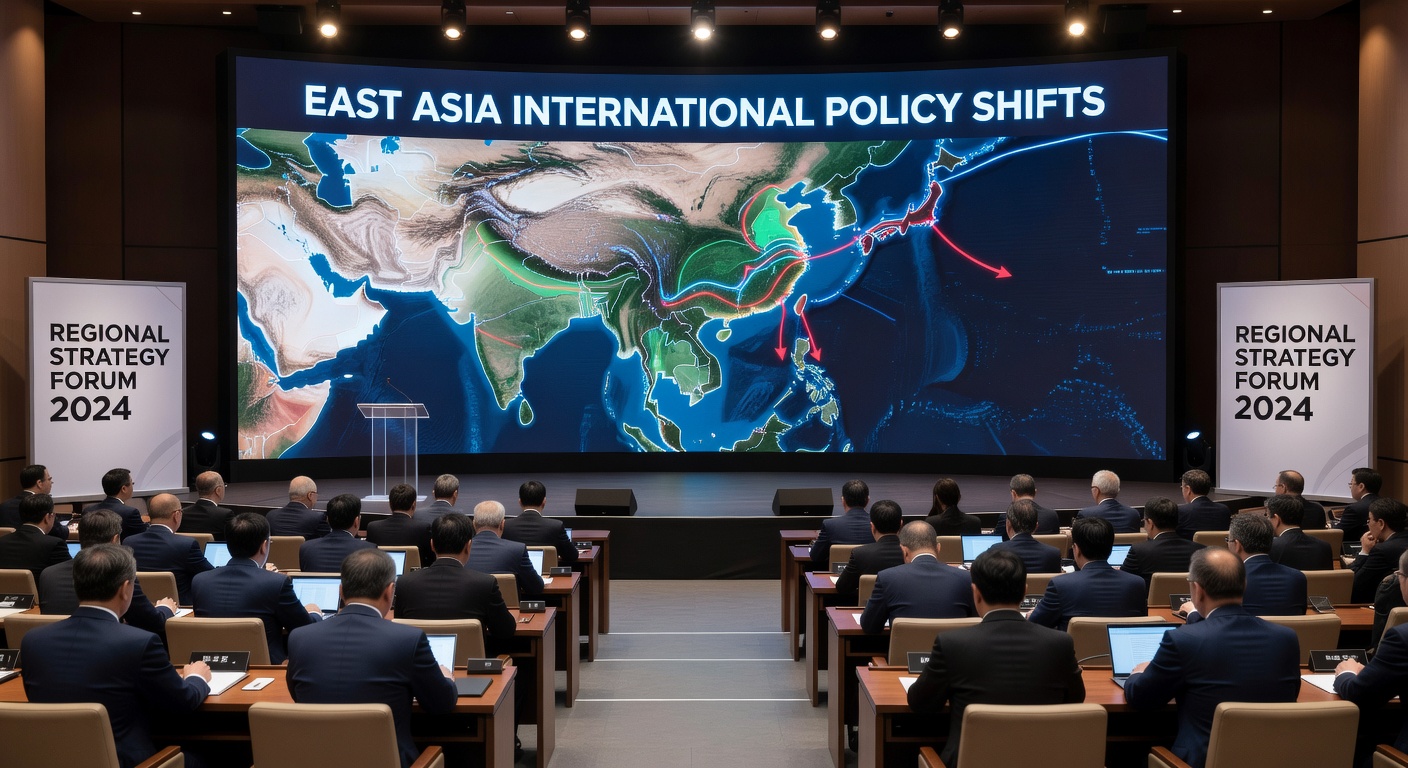
- Heat Map Focus: Shows manufacturing moving from China to secure Indo-Pacific zones, visibly demonstrating where institutional capital is safest.
- Bar Chart Focus: Tracks South Korea’s 2026 revenue growth (Legacy vs AI Fabless chips), highlighting the most explosive high-growth tech sectors.
Supplemental Insight: The new “2026 Economic Growth Strategy” is largely a response to pressure from Western alliances. South Korea must prove it is a reliable partner to the United States. Strong private property rights and low tax burdens are the best ways to attract global funds. Further details can be explored at the Mordor Intelligence Korea Market and the Korea Plus Survival Strategy.
3. Global Implications
Multinational companies are being forced to aggressively diversify their supply chains. They must protect Korean tech exports from regional authoritarian threats. Consequently, businesses are relocating high-value manufacturing and regional headquarters toward secure zones in Seoul and Gyeonggi Province.
This mass migration is dramatically boosting local commercial real estate and creating an unprecedented boom in expat talent acquisition. In stark contrast, the European Union is currently struggling with heavy regulatory friction in its local CHIPS Act rollout. Over-regulation severely harms market growth.
South Korea is playing it smart by swiftly aligning its tax codes with Washington. They introduced a “Domestic Production Promotion Tax System,” incentivizing foreign direct investment much like the US Inflation Reduction Act. Lower taxes and fewer rules create the best environment for free-market policies to thrive, making South Korea the premier destination for tech capital.
Global Benchmark Comparison: Semiconductor Policies
- South Korea: Employs the Domestic Production Promotion Tax System, offering high tax incentives and fast setup. Free Market Alignment: Very Strong.
- United States: Leverages the CHIPS and Science Act / IRA for massive subsidies and strong IP protection. Free Market Alignment: Strong.
- European Union: Uses the EU CHIPS Act, which suffers from heavy regulatory friction and a slow rollout. Free Market Alignment: Weak.
- China: Relies on state-controlled tech funds carrying severe compliance risks and IP theft dangers. Free Market Alignment: None.
Supplemental Insight: Lowering the tax burden invites massive foreign direct investment and creates a firewall against authoritarian economic tactics used by Beijing. Adhering to US export controls is not just a legal duty; it is a vital strategy for protecting Western tech dominance. Review the latest structural data at the Reuters Foundry Report and Coherent Market Insights.

4. Actionable Insights
Global readers must take specific, calculated steps right now to protect their money. Institutional portfolio managers must immediately audit their silicon dependencies and aggressively rotate assets into South Korean outsourced semiconductor assembly and test (OSAT) firms.
Investors must target memory producers well before AI capacity constraints peak in Q3 2026. Waiting too long will mean missing out on massive, unprecedented profits. Foreign industrial and materials suppliers should establish local subsidiaries in South Korea today to capitalize on the highly lucrative Korea-Japan semiconductor cluster collaboration.
Global enterprise compliance officers must strictly monitor updates to the US-South Korea AI alliance. Expanding export control lists will perfectly dictate which next-generation logic chips can be safely traded across Asian borders. Smart money will always follow the clear path of recognized property rights and secure, democratic borders.
Investor Action Plan 2026
- Audit Supply Chains: Analyze all hardware dependencies immediately to avoid strict Chinese compliance penalties.
- Rotate Assets: Shift capital into South Korean OSAT firms before Q3 2026 to capitalize on AI hardware limits.
- Open Local Branches: Target the Korea-Japan tech corridor by mid-2026 to gain access to huge bilateral tax credits.
- Monitor Export Rules: Keep a constant watch on Advanced AI accelerators to protect complex cross-border trade deals.

5. Expert Analysis
Global economic intelligence models forecast that the worldwide semiconductor market will undergo explosive growth, easily exceeding USD 637 billion in highly specific sub-sectors by late 2026. South Korea is uniquely positioned to capture a sweeping majority share of the high-bandwidth memory market required for advanced AI functionality.
“Korean firms must focus on irreplaceable, high-value nodes to survive decoupling pressures.”
This direct acceleration means state-backed competition will heavily impact every single tier of the semiconductor supply chain. Furthermore, Deloitte’s 2026 semiconductor outlook observes that “despite soaring sales, the chip industry may focus on managing risks, building integrated systems, and balancing investments.” Avoiding unpredictable authoritarian regimes is ultimately the greatest risk management tool available to international investors today.
Expert Forecasts & Market Quotes
- Global Intelligence: Predicts market sub-sectors will exceed USD 637 billion, signaling high growth in free-market AI sectors.
- Deloitte 2026 Outlook: Suggests balancing investments and managing risks, perfectly promoting sensible, private risk management over state reliance.
- Western Analysts: Conclude that US integration is the only viable survival strategy, relying heavily on the unshakeable strength of Western alliances.
Supplemental Insight: Despite a change in leadership, the undeniable demands of the global market have forced South Korea into continued alignment with the United States. South Korea’s dominance in high-bandwidth memory is a direct result of embracing Western standards of commerce. Global investors should consume the expert analysis at the Korea Plus Survival Strategy and the Deloitte 2026 Semiconductor Outlook to fully grasp these lucrative dynamics.

6. Conclusion & Next Steps
The intensifying tech war has successfully catalyzed a massive structural transformation in South Korea. The financial impact of the US-China chip war on South Korea in 2026 is impossible to ignore. Foreign capital is rapidly shifting away from mainland supply chains, triggering an unprecedented boom in pro-Western fabless design and specialized AI manufacturing hubs.
Smart investors are voting with their wallets. They are proactively choosing the safety of free market policies over the tremendous dangers of state control. The global economy consistently rewards nations that protect private property and respect Western alliances.
Institutional clients and expats must act quickly to secure their place in this booming market. South Korea’s market reforms have created a golden window for long-term investment. Protect your portfolio by staying informed, making calculated asset rotations, and championing the fight for global economic freedom.
Internal Links & Resources
- Read Next: Navigating the AI Cold War: Portfolio Risk Mitigation in Emerging Asian Markets (Learn to avoid authoritarian market traps).
- Read Next: How the 2026 US CHIPS Act Amendments Are Reshaping Global Foundry Capacities (Understand US-led supply chain shifts).
- Read Next: An Expat’s Guide to Corporate Tax Incentives in the Indo-Pacific Tech Corridor (Maximize returns using conservative tax rules).
- External Resource: Deloitte 2026 TMT Predictions (Deep dive into semiconductor numbers).
- External Resource: Coherent Market Insights: Fabless Share 2026-2033 (Track the growth of fabless design).

Frequently Asked Questions (FAQ)
Q: Why are global semiconductor supply chains relocating heavily to South Korea in 2026?
A: Global supply chains are pivoting to South Korea to escape authoritarian state control and permanently secure valuable intellectual property. South Korea’s deep alignment with Western democracies, combined with aggressive domestic tax incentives, makes it a highly profitable and safe harbor for global capital.
Q: What is the significance of South Korea’s 2026 Economic Growth Strategy?
A: The strategy is a sweeping, pro-business national plan fueled by a 4.2 trillion won tech fund. It aims to rapidly expand the domestic fabless industry tenfold while attracting massive foreign direct investment through lower taxes and strict market reforms.
Q: What specific actions should global investors take right now?
A: Investors must immediately audit their silicon dependencies and transition away from high-risk Chinese networks. They should aggressively rotate assets into secure South Korean manufacturing hubs (like OSAT firms) and ensure total compliance with US-aligned export control frameworks.