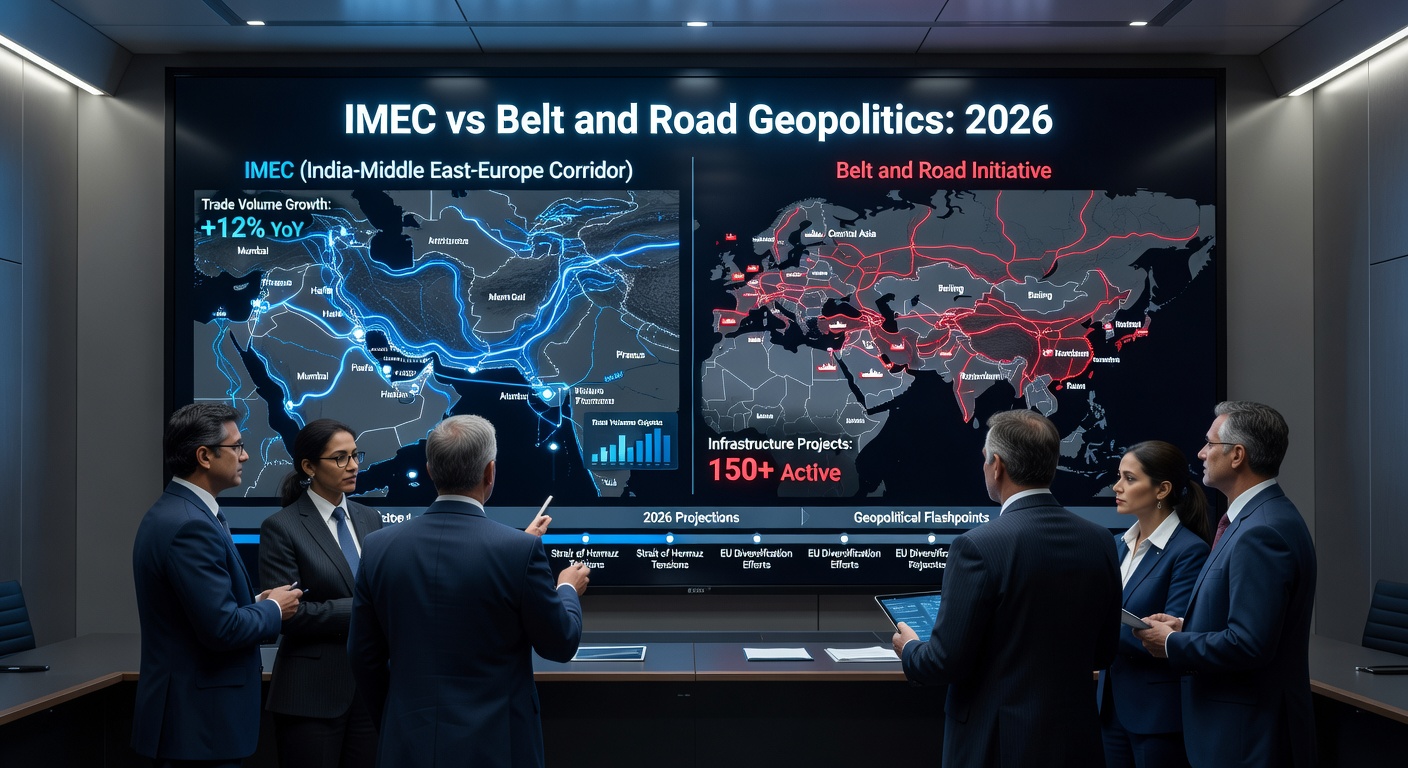
IMEC vs Belt and Road Geopolitics: 2026
Key Summary: The historic 2026 EU-India Free Trade Agreement and the advancement of the IMEC corridor mark a monumental shift in global geopolitics, directly challenging China’s Belt and Road Initiative. Driven by free-market policies and backed by Western alliances, this new trade route prioritizes supply chain resilience and private capital. Global investors and multinational businesses are rapidly pivoting to capitalize on secure, long-term infrastructure opportunities across the Middle East and India, abandoning state-run debt traps for robust economic freedom.
Table of Contents
- 1. Introduction
- 2. Current Situation
- 3. Global Implications
- 4. Actionable Insights
- 5. Expert Analysis
- 6. Conclusion & Next Steps
1. Introduction
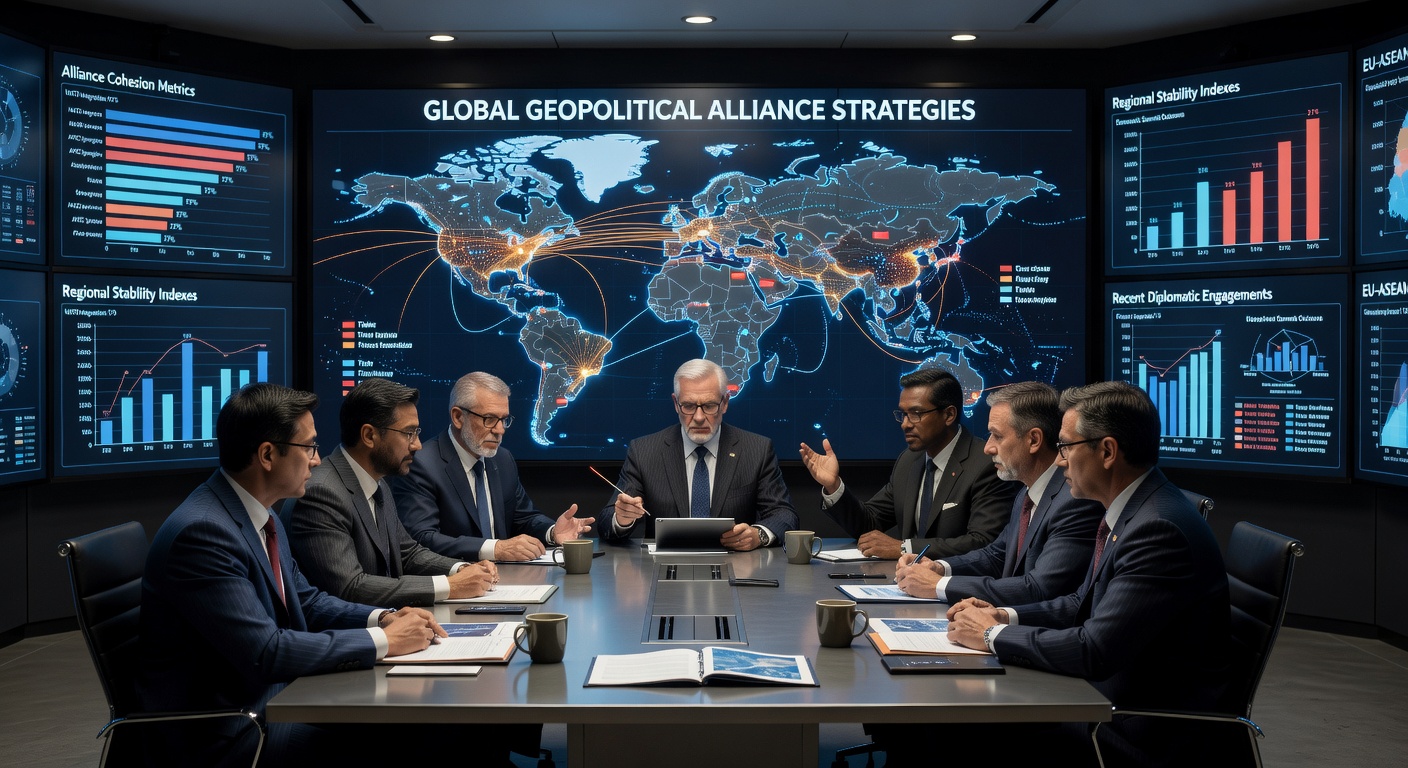
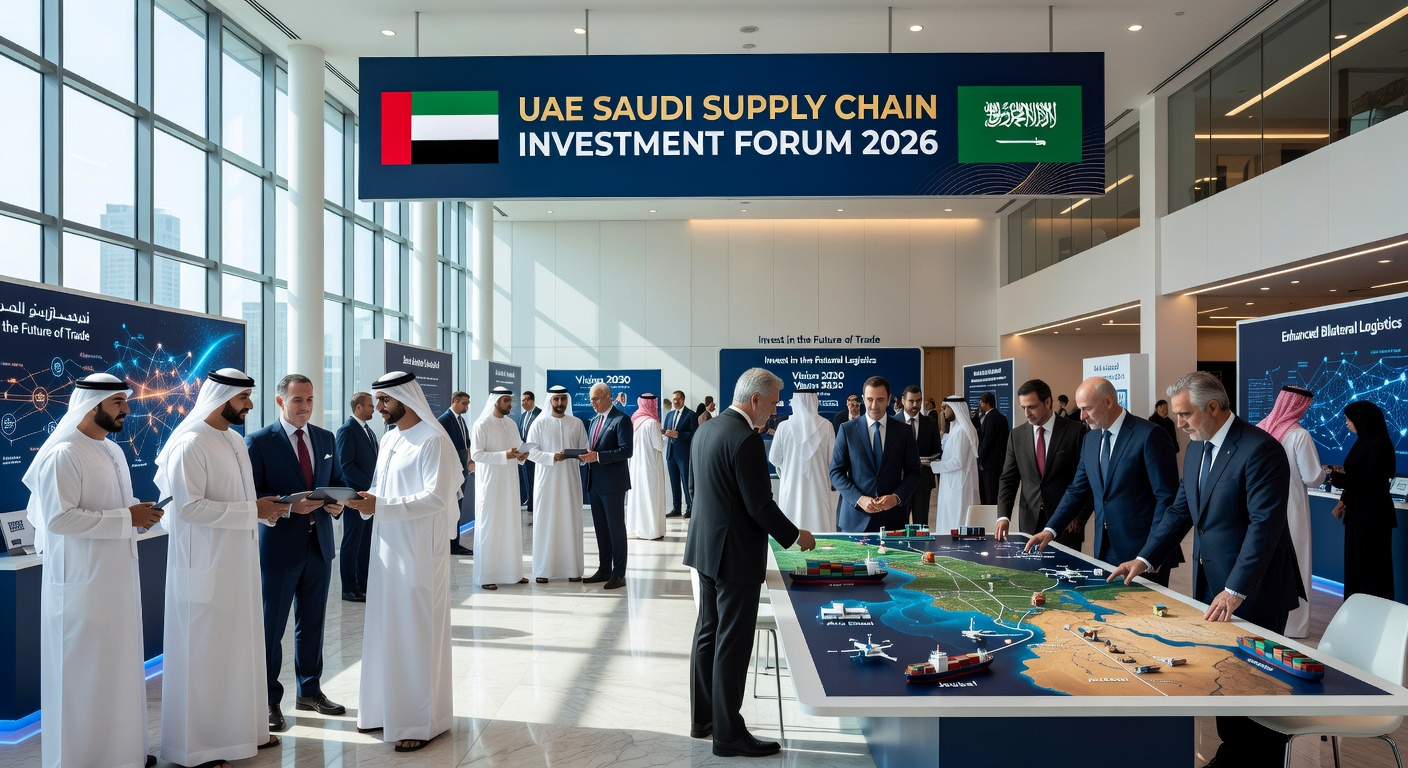
Understanding IMEC vs Belt and Road Initiative geopolitics is critical for global investors as the US and European-backed corridor seeks to bypass traditional chokepoints and challenge China’s dominance in global infrastructure.
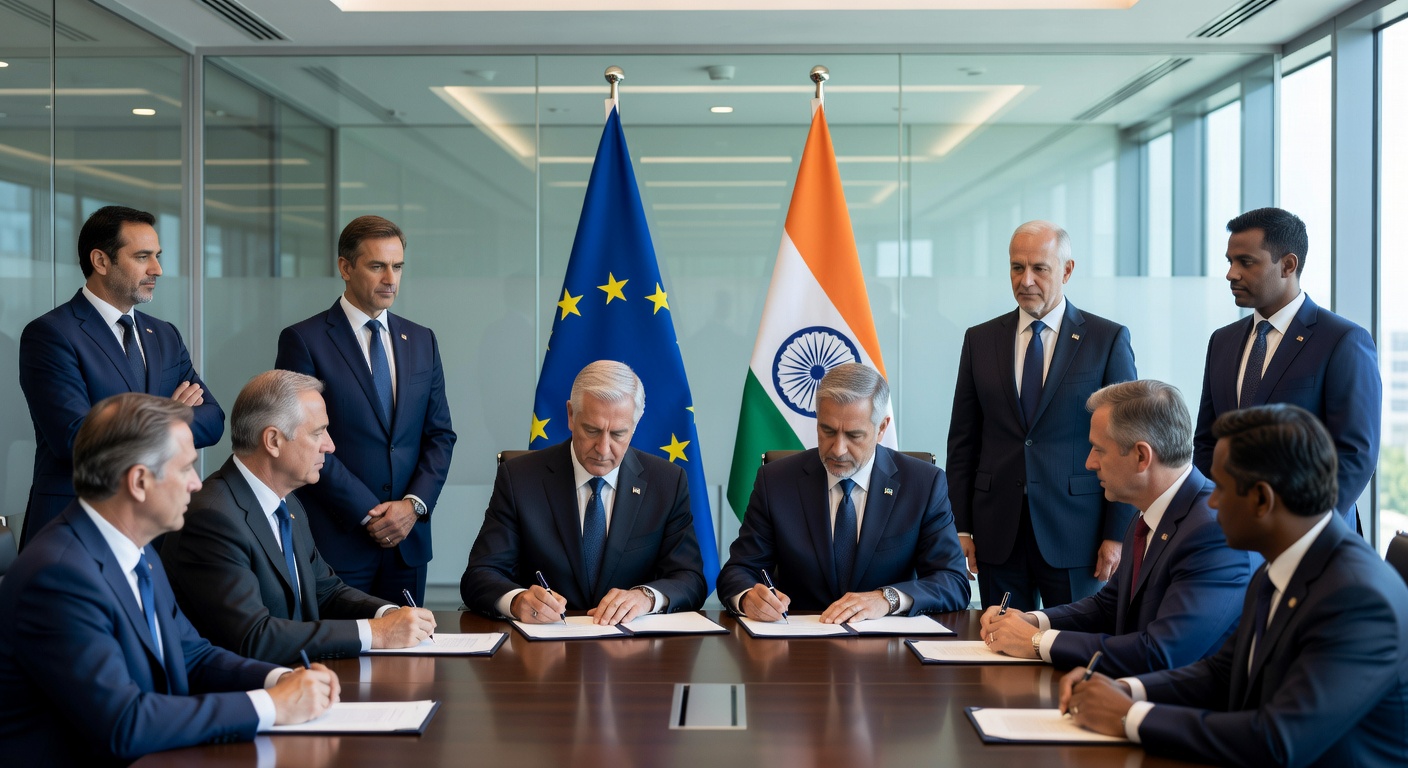
The historic signing of the EU-India Free Trade Agreement on January 27, 2026, has completely changed the game. This massive deal creates a free market of two billion people. It has fundamentally accelerated the strategic rivalry over international supply chains. For years, China used heavy state control to build its global network. Now, Western allies are fighting back using free market policies and private capital.
There are three key takeaways for international stakeholders reading this today:
- First, we are seeing a major structural shift in 2026 from the Chinese-led BRI to the Western-backed IMEC.
- Second, the new India-EU free trade pact redefines supply chain resilience by bringing trade back to trusted partners.
- Third, there is major strategic positioning right now for Middle East infrastructure foreign investment.
Investors who want safe, long-term growth must understand this new map. Strong Western alliances are proving that rule of law and economic freedom offer better returns than state-run debt traps. For more background on this historic shift, you can review the EU-India FTA analysis and the official India-European Union Free Trade Agreement details.
Supplemental Explanation
The clash between the India-Middle East-Europe Economic Corridor (IMEC) and China’s Belt and Road Initiative (BRI) is the defining economic battle of 2026. From a conservative economic viewpoint, the Belt and Road Initiative has long been criticized for its “debt-trap diplomacy.”
China lends massive amounts of money to developing nations for infrastructure, often taking control of critical ports and rails when those countries cannot pay. In stark contrast, IMEC is built on the principles of free enterprise, private capital, and mutual respect among sovereign nations.
By relying on the economic freedom index as a guide, Western investors can see that countries protecting property rights and promoting open markets make much safer long-term partners. The newly signed EU-India Free Trade Agreement serves as the legal and financial backbone for this massive physical corridor. It ensures that goods moving from Mumbai through Dubai and into Greece are protected by transparent laws, not the whims of authoritarian regimes.
2. Current Situation
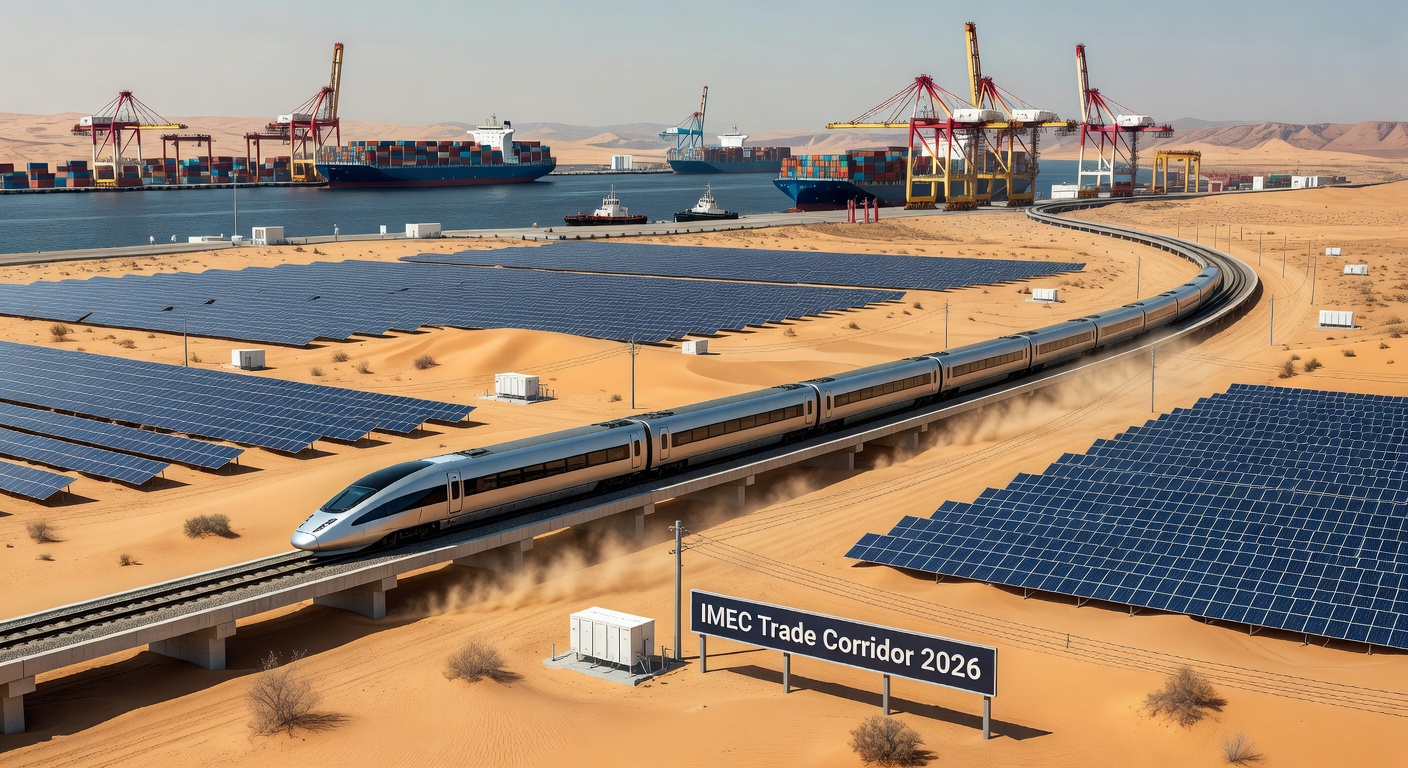
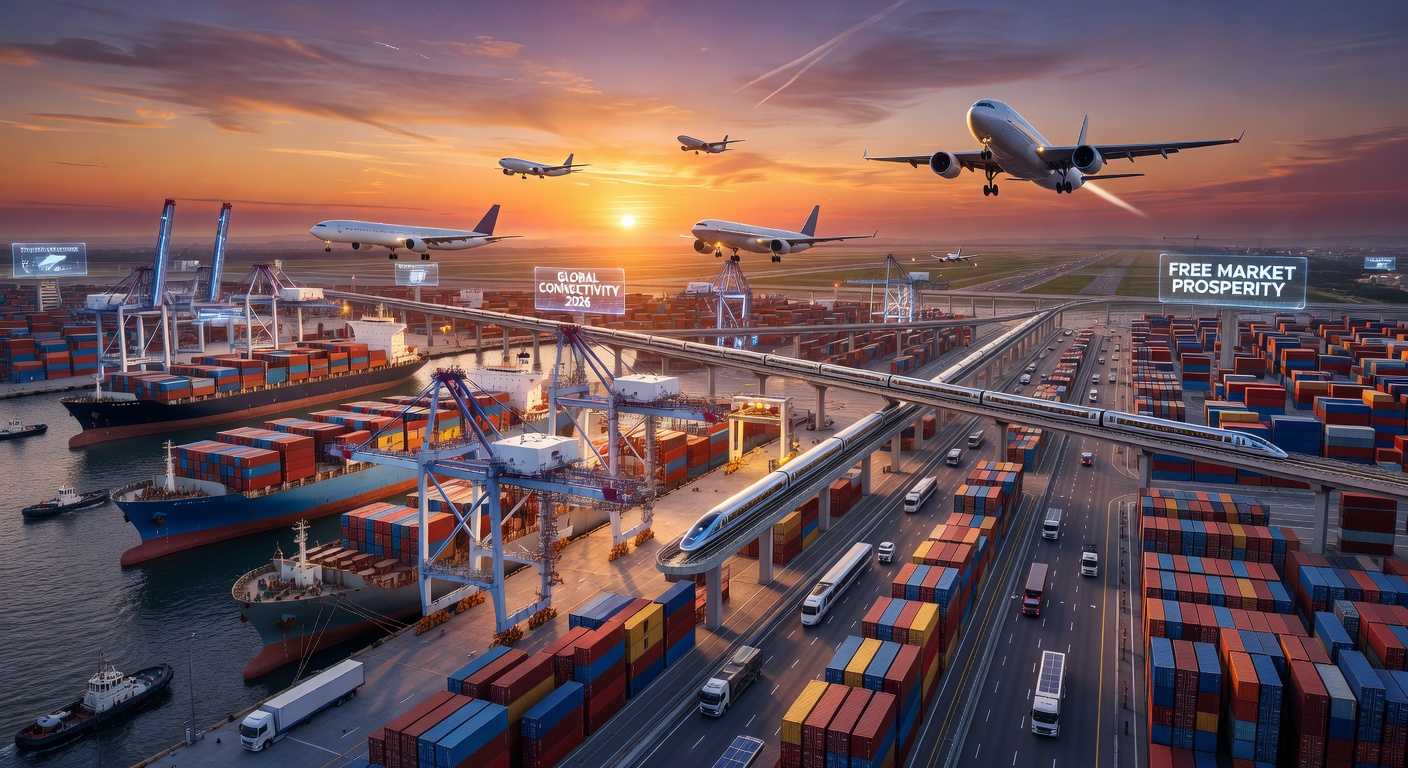
The India-Middle East-Europe Economic Corridor (IMEC) is a massive project designed to connect India, the Arabian Gulf, and Europe. It uses a modern network of railways and shipping lanes. This smart route bypasses the crowded Suez Canal. It is the main driver of the Global trade route shifts 2026.
On January 27, 2026, the EU and India successfully signed what experts call the “mother of all deals.” This historic free trade agreement slashes taxes on goods. It boosts bilateral trade projections well past the €180 billion mark. This creates a very strong foundation for IMEC’s western and eastern nodes.
We can clearly see how free market policies drive better results. Unlike China’s state-directed BRI, IMEC relies on private companies working together. Western alliances, including strong security guarantees from the US Navy and NATO partners, protect these new shipping lanes. This makes the route safe for business. Global investors are quickly moving money to support these new ports and rails. You can read more about why this deal was signed in this geopolitical trade report and explore the future of global connectivity.
| Feature | IMEC (Western-Backed) | Belt and Road Initiative (China) |
|---|---|---|
| Primary Funding | Private capital, market investments | State-owned banks, government debt |
| Political Style | Free market policies, rule of law | Authoritarian control, state mandates |
| Key Regions | India, Middle East, Europe | Asia, Africa, South America |
| Strategic Goal | Supply chain resilience, friend-shoring | Global resource control, debt traps |
| Security Backing | US, NATO, Western alliances | Chinese military expansion |
Supplemental Explanation
The current situation in 2026 shows a rapid divergence in global trade philosophies. The conservative perspective heavily favors IMEC because it fundamentally aligns with market reforms and capitalist enterprise. When the EU and India finalized their massive trade pact in January 2026, they did more than just lower tariffs.
They created a massive, legally binding framework that protects private property and corporate assets across continents. China’s BRI, on the other hand, is increasingly seen as a geopolitical weapon rather than a pure economic project. Beijing uses its infrastructure projects to export its authoritarian governance model.
By bypassing the Suez Canal, IMEC not only avoids a major geographical chokepoint that has caused billions in shipping delays, but it also physically routes global wealth away from nations hostile to Western interests. This is a profound victory for economic freedom, providing multinational companies with a stable, profitable, and secure corridor protected by allied forces.
3. Global Implications
For multinational businesses and international investors, these new trade agreements signal a monumental shift. The world is moving rapidly toward friend-shoring. This means countries are decoupling their supply chains from Chinese manufacturing dependencies. They are moving factories to allied nations.
Compared to the US and other major emerging markets, the EU-India pact creates a sheltered, low-tariff environment. This new zone spans nearly 25% of global GDP. Because of these market reforms, European capital is heavily incentivized to relocate from East Asia to South Asia.
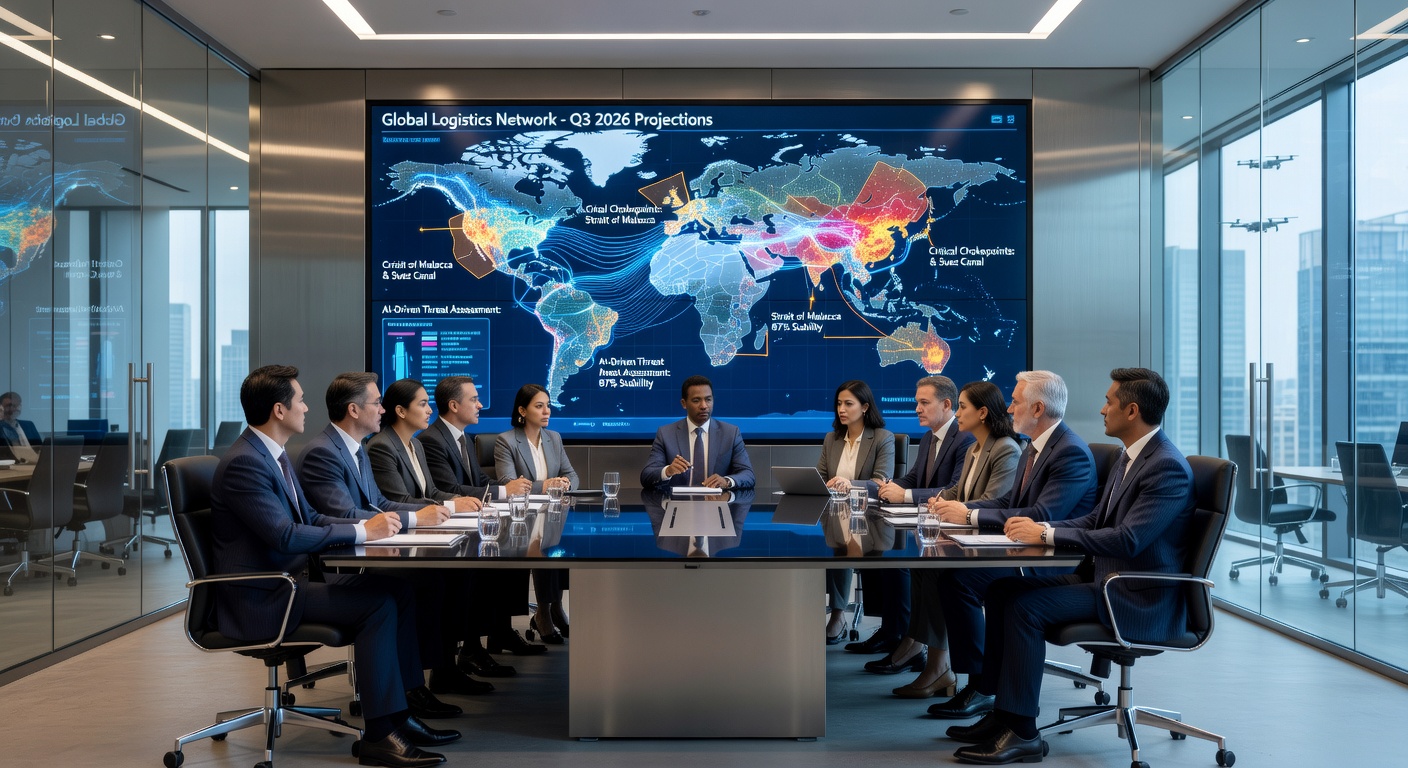
However, smart investors must perform a core risk assessment. IMEC is heavily reliant on political stability in the Middle Gulf region. It also requires consistent US backing through the 2026 G20 coordination process. Infrastructure assets in this corridor pose 30-to-50-year payback horizons. This means long-term security is required.
Conservative analysts argue that strong military deterrence from Western alliances is the only way to protect these investments. Without American leadership and secure waterways, free trade cannot survive. Read the full risk analysis on whether IMEC is worth the cost and details on the mother of all trade deals.
| Implication Factor | Impact on Global Markets | Conservative Viewpoint |
|---|---|---|
| Friend-Shoring | High shift of capital to India | Rewards nations with high economic freedom index scores. |
| Decoupling | Less reliance on China | Protects Western intellectual property from state theft. |
| Middle East Stability | Creates safe transit hubs | Requires strong US military presence to deter bad actors. |
| Tariff Reductions | Boosts corporate profits | Low taxes drive innovation and private sector growth. |
Supplemental Explanation
The global implications of the IMEC and the EU-India Free Trade Agreement extend far beyond simple shipping logistics. This is a structural realignment of the free world’s economy. Friend-shoring is a direct response to the vulnerabilities exposed when Western nations relied too heavily on China during past global crises.
From a libertarian and conservative standpoint, decoupling from China is necessary to protect intellectual property, prevent forced labor, and maintain national security. The creation of a low-tariff environment covering a quarter of global GDP is a massive win for free market policies. It allows private businesses to allocate capital efficiently without heavy government taxation or interference.
However, the 30-to-50-year lifespan of these infrastructure projects means that physical security is paramount. The Middle East remains volatile. Therefore, robust Western alliances, including strong American naval support, are absolute prerequisites for ensuring that these new trade routes remain open, safe, and profitable for decades to come.
4. Actionable Insights
Global readers must take action right now. You need to re-evaluate your 2026 supply chain dependencies on the Suez Canal and Chinese infrastructure. Smart companies are already pivoting their logistics contracts toward the emerging IMEC intermodal routes.
There are massive investment opportunities available today. Investors should capitalize on Middle East infrastructure foreign investment. You can do this by targeting Gulf state diversification projects in rail, digital fiber optics, and clean hydrogen pipelines.
You also need to watch for regulatory changes. Monitor the implementation phases of the India-EU FTA very closely. Specifically, look at the $590 million Brussels pledge. This money helps international exporters navigate the EU’s Carbon Border Adjustment Mechanism (CBAM), which takes full effect in 2026. For practical resources, leverage platforms tracking the Indo-Mediterranean Initiative (IMI). You should also utilize the EU Access2Markets portal for updated international tariff schedules.
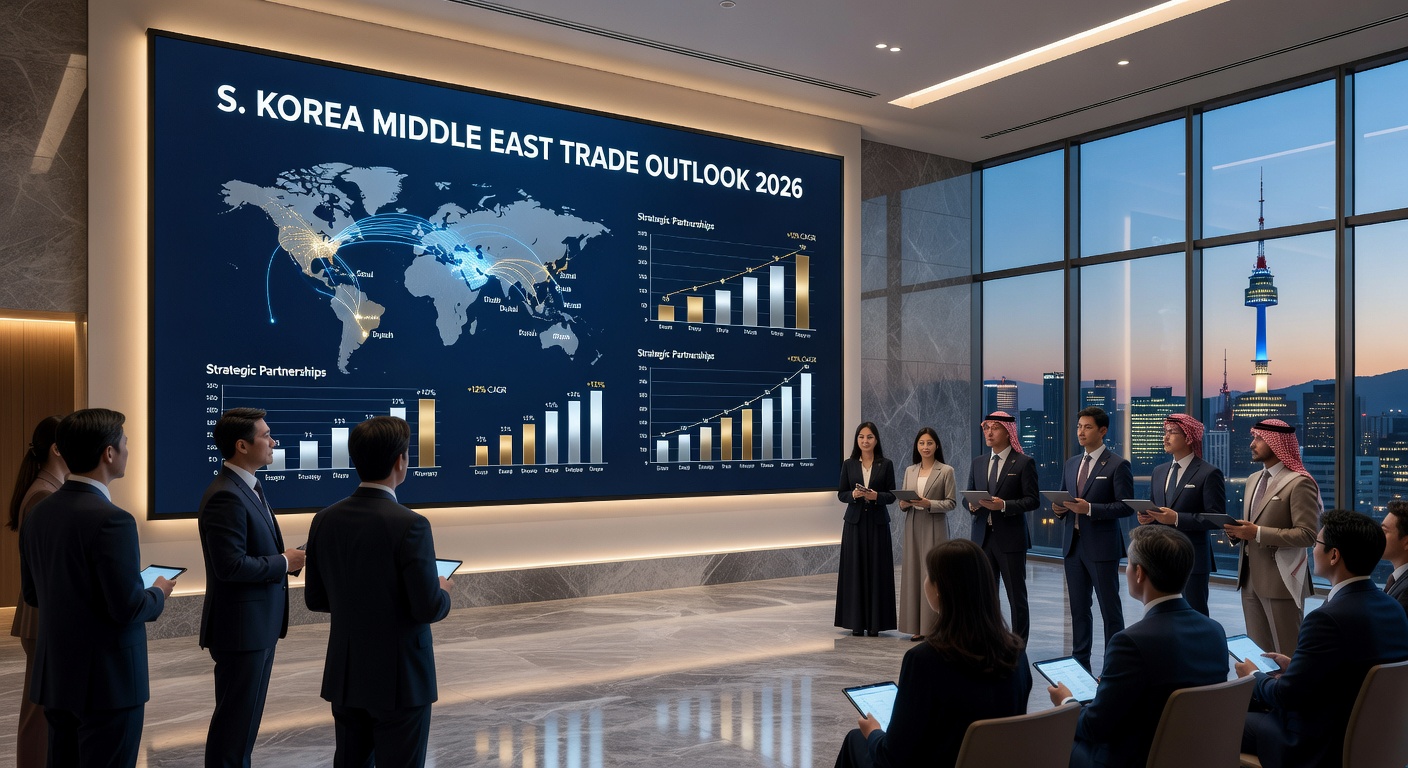
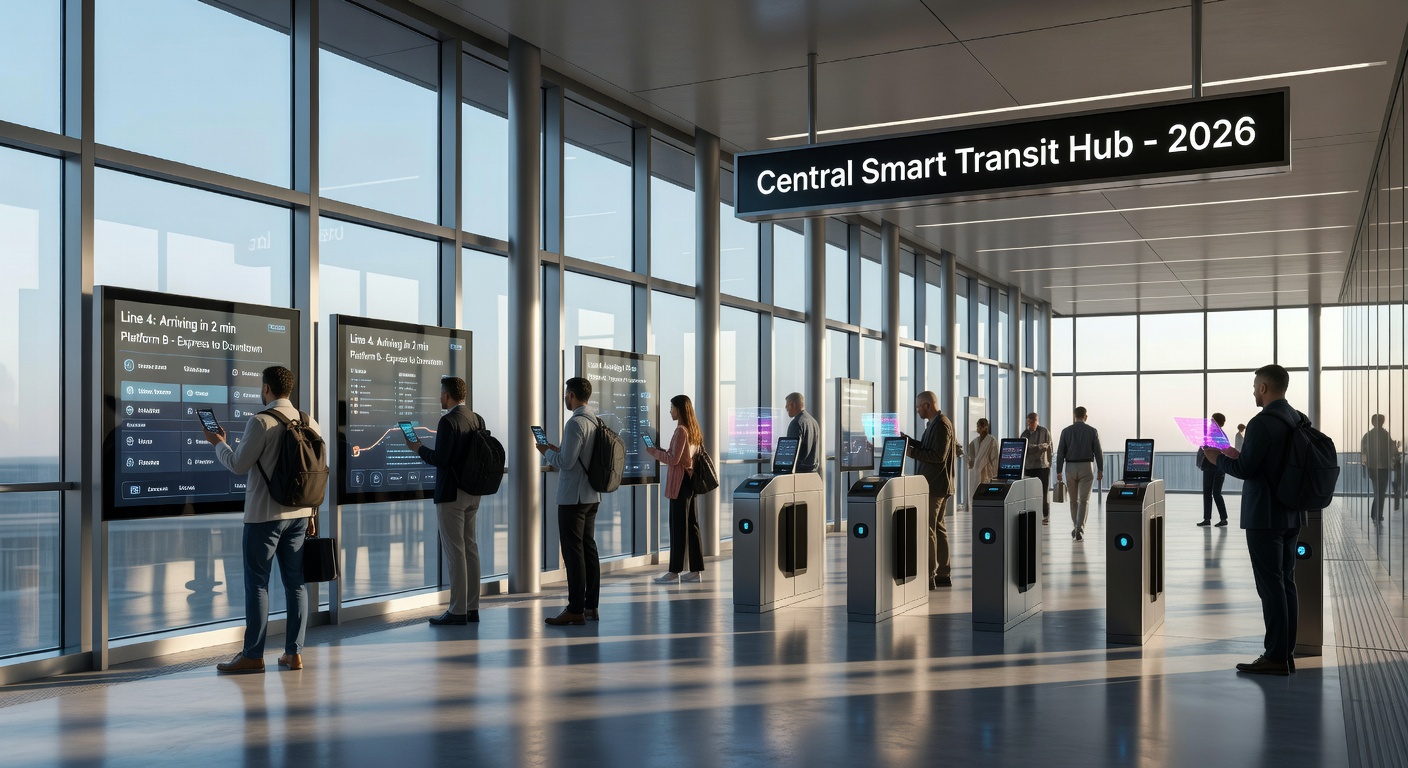
To understand how global infrastructure shifts impact daily business, we must also look at local expat environments. While IMEC handles macro-trade, local hubs are competing for foreign talent through smart market reforms. For example, South Korea just introduced the enhanced K-Pass and Climate Card in 2026. This limits monthly transit costs for expats without raising base taxes on the middle class.
| 2026 Transit Pass (Seoul) | Price (KRW) | Coverage | Best For Expats |
|---|---|---|---|
| Climate Basic | 62,000 | Unlimited Seoul subway/bus | Daily commuters avoiding traffic |
| Climate Combined | 65,000 | + Public bikes | Multi-modal business users |
| K-Pass Standard | 62,000 | Free to 200k cap (refundable) | Frequent nationwide travelers |
| K-Pass GTX | 100,000 | + High-speed/intercity | Long-distance regional analysts |
Supplemental Explanation
Actionable insights in 2026 require a blend of macro-geopolitical strategy and micro-economic planning. At the macro level, pivoting away from Chinese-controlled infrastructure is essential for long-term corporate survival. The Middle East is rapidly modernizing, and Gulf states are actively seeking Western private capital to fund their rail and digital infrastructure.
This provides a lucrative alternative to the authoritarian Belt and Road Initiative. Meanwhile, navigating European regulations like CBAM requires sharp corporate agility, ensuring that new taxes do not eat into profit margins.
At the micro level, international professionals and expats must navigate the local infrastructure of these vital trade hubs. As an example of smart, localized free-market policy, South Korea’s 2026 transit overhaul demonstrates how nations can attract foreign talent without heavy government overreach or massive tax hikes.
The new K-Pass and Climate Card subsidize heavy users efficiently, keeping base single fares stable at around 1,400 KRW. Expats can easily access these discounts using their Alien Registration Cards. This localized efficiency in East Asia serves as a benchmark for the developing transit hubs along the new IMEC route in the Middle East and India.
5. Expert Analysis
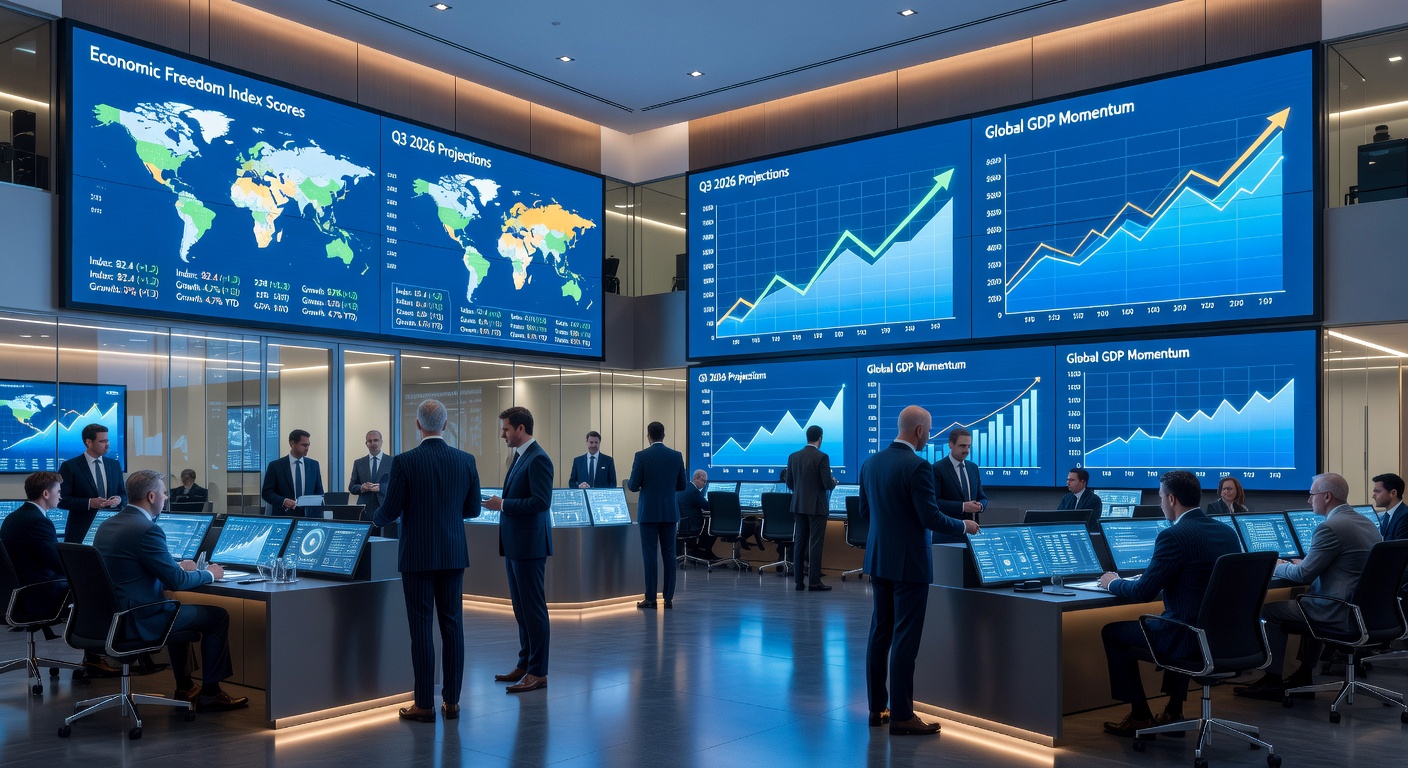
Current 2026 data forecasts indicate that the EU-India trade deal is a massive success. Experts expect it to double European exports to India by the year 2032. This fundamentally alters the calculus of Global trade route shifts 2026. International perspectives view IMEC not merely as an economic transit route. It is a vital strategic geopolitical tool to balance China’s BRI.
Meanwhile, local Gulf states are adopting a smart multi-alignment strategy. They want to maximize their regional hub status without closing their open markets. Market-friendly think tanks, like the Heritage Foundation, closely watch the economic freedom index. They note that countries opening their borders to free trade always outperform state-planned economies.
“For India, IMEC represents not a geopolitical provocation, but a strategy for economic risk management through diversification of trade routes.”
This highlights resilience over mere confrontation. Western allies agree that open competition is the best way to defeat authoritarian control. You can read deeper research on this in the Atlantic Council’s connectivity report and the Observer Research Foundation’s FTA analysis.
| Expert Viewpoint | Assessment of IMEC | Assessment of BRI |
|---|---|---|
| Wall Street Journal | A necessary free-market counterweight. | A risky, debt-heavy geopolitical trap. |
| Heritage Foundation | Boosts global economic freedom index. | Spreads authoritarian state control. |
| National Review | Secures vital Western alliances. | Threatens global maritime security. |
Supplemental Explanation
Expert analysis from leading conservative and free-market institutions in 2026 paints a very clear picture. The synergy between the EU-India Free Trade Agreement and IMEC is the ultimate triumph of market capitalism over state socialism. Publications like the Wall Street Journal and analysts at the Heritage Foundation have long argued that economic freedom is the primary driver of human prosperity.
The economic freedom index clearly shows that nations participating in transparent, private-sector-led trade networks grow faster and remain politically stable. China’s Belt and Road Initiative represents the opposite approach. It relies on opaque government loans, forced labor practices, and the strategic seizure of sovereign assets when poor nations default on their debts.
By contrast, IMEC empowers nations like India and the UAE to act as equal partners in a free-market ecosystem. Gulf states are wisely using this opportunity to diversify their economies away from state-run oil monopolies toward private tech and transit sectors. For global investors, the expert consensus is undeniable: capital is safest when deployed in regions protected by Western alliances, the rule of law, and a shared commitment to free enterprise.
6. Conclusion & Next Steps
The key takeaway for global decision-makers today is clear. The synergy of the 2026 India-EU FTA and the continued advancement of the IMEC corridor offers a highly profitable path forward. It provides a robust, Western-aligned alternative to the Belt and Road Initiative. This promises long-term security for global supply chains.
Investors who embrace these free market policies will see the highest returns over the next decade. To stay ahead of these rapid changes, you need to keep reading our insights. Read our guide on maximizing Middle East infrastructure foreign investment in 2026 to find the best private capital projects.
You should also review How Global trade route shifts 2026 are reshaping European import strategies to protect your logistics network. Please subscribe to our weekly intelligence briefing for updates on international trade agreements, macro-political changes, and strategic asset positioning. Always base your investments on regions with a strong economic freedom index.
For updated global resources, please explore the World Economic Forum’s Global Cooperation Barometer 2026 and the Official European Commission Trade Publications.
Supplemental Explanation
In conclusion, April 2026 marks a historic turning point in global geopolitics and economics. The battle between IMEC and the Belt and Road Initiative is not just about trains and ships; it is a fundamental contest of ideas.
On one side is the authoritarian, state-controlled vision of Beijing. On the other is the free-market, liberty-driven vision of Western alliances and democratic partners like India. For the conservative international investor or the globally minded expat, the choice of where to allocate capital and resources has never been clearer.
Market reforms, the protection of private property, and the reduction of tariffs through agreements like the “mother of all deals” provide the only sustainable path for wealth creation. By taking actionable steps today—re-routing supply chains, investing in Gulf infrastructure, and leveraging local efficiencies—global stakeholders can secure their financial futures while actively supporting the expansion of global economic freedom.
Frequently Asked Questions (FAQ)
Q: What is the main difference between IMEC and China’s Belt and Road Initiative (BRI)?
A: The India-Middle East-Europe Economic Corridor (IMEC) is driven by free-market principles, private capital, and transparent rule of law supported by Western alliances. In contrast, the BRI relies on state-owned banks, authoritarian mandates, and has often been criticized for creating debt traps in developing nations.
Q: Why is the 2026 EU-India Free Trade Agreement significant?
A: Known as the “mother of all deals,” this historic agreement drastically lowers tariffs and creates a sheltered free-trade zone spanning roughly 25% of global GDP. It provides the legal and financial backbone for IMEC, ensuring long-term protection for private investments and corporate assets.
Q: How does the concept of “friend-shoring” affect global investors?
A: Friend-shoring encourages multinational companies to decouple their manufacturing and supply chains from risky or hostile nations (like China) and relocate them to trusted allied countries. This strategy mitigates geopolitical risks and directs capital toward regions with a strong economic freedom index.
Q: What actionable steps should businesses take regarding Middle East infrastructure?
A: Companies should actively target foreign investment opportunities in Gulf state diversification projects, such as rail networks, digital fiber optics, and clean hydrogen pipelines. Adapting logistics to utilize the new IMEC intermodal routes will ensure a more secure and efficient supply chain.