




S. Korea Middle East Trade Outlook 2026
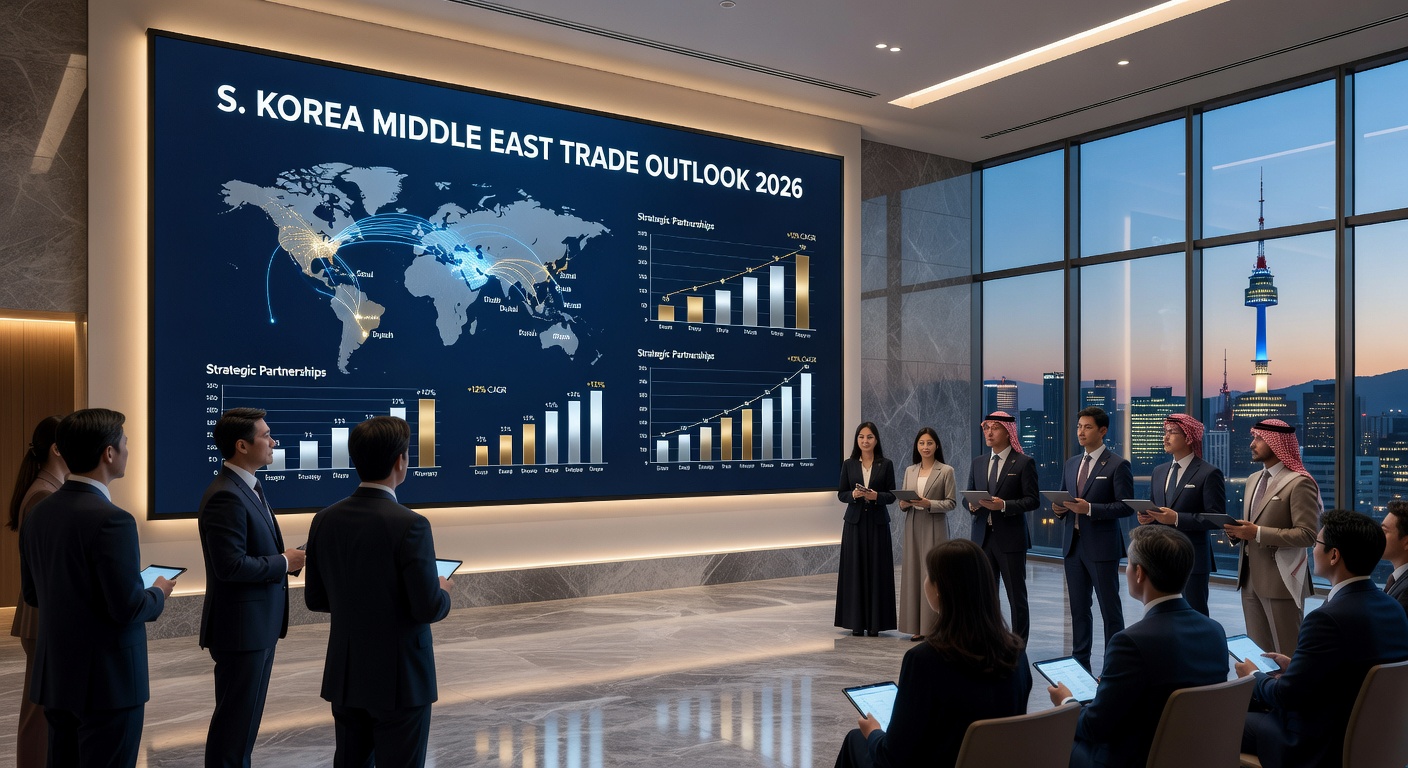
South Korea Middle East Trade Outlook 2026: Analyzing supply chain resilience, shifts in export sectors, and the broader global implications for international investors amid changing geopolitical dynamics. Understanding the balance between regulatory measures and market dynamics is vital for effective asset management and strategic planning.
Table of Contents
- 1. Market Overview
- 2. Current Situation
- 3. Global Implications
- 4. Actionable Insights
- 5. Expert Analysis
- 6. Conclusion & Next Steps
- 7. Frequently Asked Questions (FAQ)
1. Market Overview
The trade outlook for 2026 shows significant shifts for global markets. Recent regional diplomatic developments have prompted discussions regarding potential energy supply vulnerabilities. Currently, a substantial portion of oil imports face changing geopolitical dynamics and regional volatility.
For international investors, expatriates, and market analysts, observing these supply chains is highly important. Changes in foreign policy alignments can influence trade relationships. Observers are evaluating the balance between state-directed economic measures and market-driven energy security.
Understanding the data is key. Regulatory frameworks influence trade dynamics, and market conditions shift in response to both governmental policies and global forces. Global readers need to know how these shifts impact market conditions. Below is a look at what to expect and strategies for asset management.
Key Takeaways for International Stakeholders
| Focus Area | Core Insight | Market Impact |
|---|---|---|
| Energy Supply Chains | Global risk assessments are shifting due to changing diplomatic alignments. | Oil price fluctuations affect heavy manufacturing margins. |
| Geopolitical Risk | Forecasts indicate varying export levels across major sectors. | Broad market adjustments in heavily regulated industries. |
| Growth Alternatives | Investors are exploring defense and technology sectors aligned with international agreements. | Continued development in free-market and technology sectors. |
Research indicates that shifting away from established trade partnerships can introduce volatility into domestic markets. Shifts in policy priorities alter relationships with key trade partners and introduce complexities into supply chains. Global markets typically respond favorably to stable regulatory environments and clear property rights. You can review the KITA Q2 2026 Export Business Survey Index and reports on Asian Geopolitical Risks for comprehensive data.

2. Current Situation
To understand the market, key indicators must be analyzed. The Export Business Survey Index (EBSI) measures business sentiment regarding overseas sales. Currently, this index highlights notable shifts. A substantial portion of industrial sectors face adjustments due to shipping costs and energy price fluctuations linked to the Strait of Hormuz.
Recent 2026 data shows structural changes. Exports to the Middle East have experienced declines, largely attributed to regulatory adjustments and raw material constraints. The semiconductor sector remains robust with an index score of 191.4, up 151.4 percent year-over-year. Conversely, heavily regulated sectors are facing distinct challenges. Home appliances recorded an index score of 51.3, while plastics and rubber adjusted to 58.4. Naphtha supply dynamics and regulatory measures played a significant role in these shifts.
Q2 2026 Export Sector Outlook
| Industry Sector | EBSI Score | Current Trend | Key Driver of Change |
|---|---|---|---|
| Semiconductors | 191.4 | Strong Growth | Global market demand, limited constraints. |
| Petroleum Products | 102.9 | Marginal Gain | Oil price rises offset by export limits. |
| Home Appliances | 51.3 | Sharp Decline | Trade tariffs and shifting market positioning. |
| Plastics & Rubber | 58.4 | Sharp Decline | Naphtha shortages and supply adjustments. |
Visualizing this data clarifies the broader context. A comparative analysis illustrates the variance between robust technology exports and constrained heavy industries. For further review, readers can consult the OECD Economic Outlook 2026 and the Asian Development Bank Conflict Effects report.

3. Global Implications
These changes impact international investors, expatriates, and multinational corporations. Investment assessments are adapting rapidly in response to regional policy frameworks. Certain regulated sectors face adjusting profit margins. Expatriates and foreign entities are navigating new fiscal proposals, including wealth assessments and revised labor regulations, as administrations balance various domestic priorities.
Comparative analyses with global peers provide important context. Markets in North America and parts of Europe maintain focus on energy diversification and streamlined regulatory environments. Conversely, stringent regulatory measures highlight differing approaches to market management compared to nations prioritizing broad economic deregulation.
These dynamics introduce variables for foreign investment and supply chains. Realigning diplomatic priorities can impact established energy frameworks. Heavy manufacturing and chemical plants face potential supply chain interruptions. Should global oil markets encounter further volatility, energy-dependent industries may experience substantial operational strains.
Market Dynamics & Policy Frameworks
Understanding the balance between regulatory measures and market flexibility is crucial. Observers frequently monitor the Economic Freedom Index and Fraser Institute Rankings to gauge the stability of international markets.
- Deregulation Focus: Regions emphasizing streamlined supply chains often report high innovation levels.
- Subsidized Sectors: Industries relying heavily on state support frequently experience margin compression during global shocks.
- Energy Independence: Nations prioritizing self-sufficient energy frameworks tend to offer better price shock protection.

4. Actionable Insights
Global stakeholders are increasingly considering specific strategic steps. Reviewing portfolio allocations is a common practice in response to regulatory risks and export controls in heavy manufacturing and chemical sectors. Energy vulnerabilities tied to diplomatic shifts serve as an important indicator for asset reallocation.
Alternative investment options may offer different risk profiles. Allocating capital toward aerospace, defense, and technology companies operating within established international frameworks is one strategy. Additionally, expatriates often review residency and tax planning strategies in response to evolving fiscal policies and labor regulations.
Monitoring regulatory changes remains vital. A proposed supplementary budget for early April 2026 includes funding for various subsidies and social programs. Funding mechanisms relying on corporate tax revenues have sparked debate among economists regarding their long-term impact on corporate growth and broader economic expansion. Reference the State Department Investment Climate Statements 2026 and Global Trade Analyses for detailed policy tracking.
Strategic Asset Allocation Considerations
| Asset Class | Market Action | Risk Rationale |
|---|---|---|
| Asian Petrochemicals | REDUCE | High regulatory oversight, export limitations, regional volatility. |
| International Defense Tech | ACCUMULATE | Supported by established alliances and stable market reforms. |
| Home Appliances | REDUCE | Affected by supply chain adjustments and shifting consumer demand. |
| Diversified Energy Assets | ACCUMULATE | Secure operational rights and adaptable pricing models. |

5. Expert Analysis
Economic forecasts are undergoing revisions in 2026. Due to evolving geopolitical risk assessments in Asian markets, major financial institutions are adjusting their projections. The OECD recently revised its regional GDP growth estimate down to 1.7 percent. Similarly, Barclays adjusted its projection to 2.0 percent, citing energy import strains and inflationary pressures projected to exceed 2.2 percent.
Perspectives on fiscal policy often differ between domestic policymakers and international analysts. While local authorities suggest that new budgets and targeted export measures will stabilize the market without incurring substantial new debt, international economists note that such measures must balance short-term relief with long-term corporate profitability and innovation.
Expert analyses from recent studies highlight these complex dynamics:
- “Prolonged diplomatic friction in the Middle East could add a 15 percent risk premium to import costs, exacerbating inflation driven by government spending programs.”
- “Persistent Middle East disruptions pose downside risks, particularly for energy-dependent manufacturing industries prioritizing heavy exports.”
Economic Growth Forecasts (April 2026 Revisions)
| Financial Institution | Previous 2026 GDP | Revised 2026 GDP | Stated Economic Factor |
|---|---|---|---|
| OECD | 2.1% | 1.7% | Inflationary trends, energy policy shifts. |
| Barclays | 2.1% | 2.0% | Fiscal spending levels, supply constraints. |
| ING | 2.2% | 2.0% | Margin adjustments in regulated sectors. |
For comprehensive economic outlines, consult the IMF April 2026 World Economic Outlook and the World Bank Asian Markets Forecast.

6. Conclusion & Next Steps
Recent diplomatic and regulatory measures offer valuable insights into global market dynamics. Navigating relationships with international partners requires balancing domestic priorities with global trade dependencies. Emphasizing fiscal discipline and streamlining regulations are often cited by economists as pathways to sustainable business growth. Additionally, diversifying energy sources, including nuclear baseload capabilities, is frequently discussed as a strategy to reduce reliance on external energy imports.
We invite you to explore further international market analyses. Related reports cover regulatory reforms in the Asia-Pacific and the impact of international defense agreements on technology investments. These guides offer valuable data for those navigating complex investment landscapes.
Staying informed on data-driven market updates and regulatory shifts is an important component of a comprehensive financial strategy. Utilizing tools from the NATO Trade Portals, AUKUS Defense Monitors, and Heritage Foundation Data Center can assist investors in maintaining a clear perspective on global trade environments.
Next Steps Checklist for Global Investors
- Portfolio Review: Reassess exposure to highly regulated or energy-dependent asset classes.
- Strategic Reinvestment: Evaluate opportunities in robust technology and defense sectors aligned with international alliances.
- Tax Planning: Consult with financial advisors regarding evolving domestic tax proposals and expatriate asset management.
- Stay Informed: Monitor key economic indicators weekly to adapt to shifting trade policies.

7. Frequently Asked Questions (FAQ)
What is the projected GDP growth for South Korea in 2026?
Major financial institutions have revised their economic projections. The OECD adjusted its estimate down to 1.7%, while Barclays revised its forecast to 2.0%, largely citing energy import strains and inflationary pressures in the regional market.
Which industrial sectors are currently showing the strongest resilience?
The semiconductor sector remains robust, achieving an Export Business Survey Index (EBSI) score of 191.4. This growth is primarily driven by consistent global market demand and relatively streamlined regulatory environments compared to heavy manufacturing.
How do shifting diplomatic priorities impact supply chains?
Changes in foreign policy alignments, particularly concerning regions like the Middle East, can introduce new risk premiums to import costs. This exposes energy-dependent manufacturing industries to potential supply chain interruptions and operational challenges.
Why are financial analysts focusing on domestic regulatory policies?
Analysts closely monitor regulations—such as mid-March export limits on certain raw materials or proposed wealth taxes—because these policies can directly impact corporate profit margins, influence capital flows, and alter the overall investment climate for multinational businesses.