





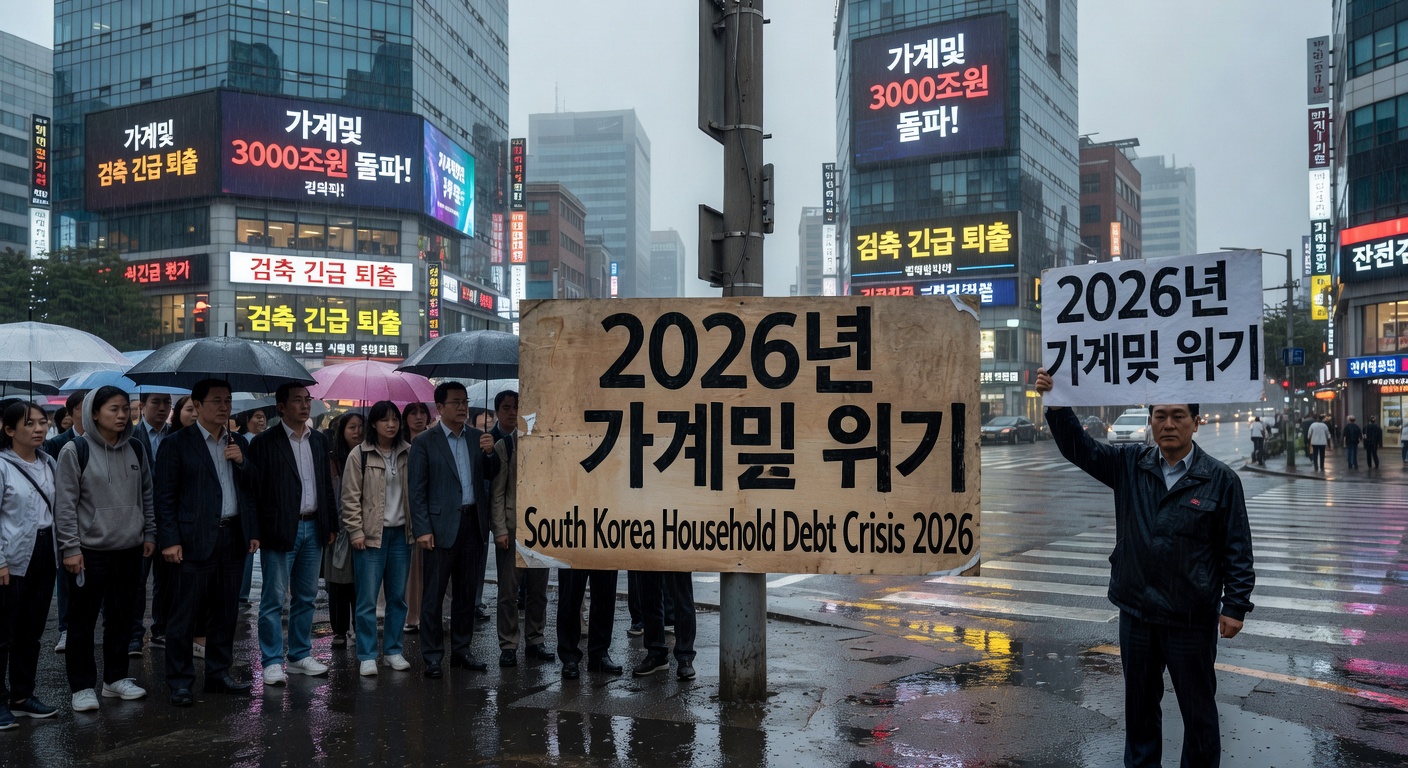
South Korea Household Debt Crisis 2026
Key Summary: The South Korea household debt crisis 2026 presents a critical macroeconomic risk, with national household debt nearing 2,000 trillion won and an alarming 89% debt-to-GDP ratio. Over-regulation and strict limits, such as the stressed DSR, have choked free market operations, shutting out first-time homebuyers and forcing expats to navigate drastically inflated living costs. To mitigate these risks, global investors are urged to shift their capital toward South Korea’s robust, export-driven defense and tech sectors, which are insulated from domestic property turmoil and strongly aligned with Western trade alliances.
Table of Contents
- 1. Introduction
- 2. Current Situation
- 3. Global Implications
- 4. Actionable Insights
- 5. Expert Analysis
- 6. Conclusion & Next Steps
- 7. Frequently Asked Questions (FAQ)

1. Introduction
The South Korea household debt crisis 2026 is a major event that global markets are watching very closely right now. With South Korea’s household debt surging to nearly 2,000 trillion won and its debt-to-GDP ratio lingering at an alarming 89% in early 2026, global markets are on high alert.
This huge amount of debt fundamentally changes how global investors look at Asian market stability and local consumer spending power. The crisis represents a critical macroeconomic risk for anyone doing business within the region. When governments step in with heavy rules instead of trusting free-market policies, everyday people face harder times. Top-down state controls inevitably block natural growth and hurt free trade.
This guide gives a quick look at the tightening Korean debt service ratio (DSR) limits. It explores the severe first-time homebuyer challenges South Korea faces today and offers clear, protective steps for international investors and businesses. The Heritage Foundation’s economic freedom index shows that strong property rights and free markets build wealth far better than strict state controls. However, South Korea’s current rules are blocking this vital economic freedom.
| Metric | South Korea (2026) | United States Benchmark | Impact on Free Markets |
|---|---|---|---|
| Household Debt Total | ~2,000 Trillion Won | Lower relative total burden | Very high risk for lenders |
| Debt-to-GDP Ratio | 89% | ~73% | Limits consumer spending power |
| Property Market Rules | Highly Regulated | More Flexible | Blocks new buyers from entry |
| Economic Freedom Rank | Slipping | Steady | Less room for business growth |
Supplemental Explanation: Understanding the Market Risk
The South Korea household debt crisis 2026 is not just a local problem—it is a loud warning sign for the whole world. When a country allows household debt to balloon to this extreme, it actively limits how much money consumers can spend on everyday goods and services. This drastically hurts foreign businesses attempting to penetrate the market.
Global investors constantly evaluate the economic freedom index to verify if a country is a safe haven for their capital. South Korea is showing signs of deep trouble because its government defaults to strict controls rather than implementing genuine market reforms to fix structural problems. These heavy-handed rules have created massive first-time homebuyer challenges; young professionals simply cannot afford to purchase homes.
This regulatory environment forces citizens to rent indefinitely or take on highly unfavorable debt from unsafe, unregulated lenders. For global expats and analysts, this means the local real estate market is frozen solid. If South Korea intends to resolve this issue, it must trust free-market policies once again. Government planners must step back and allow private buyers and sellers to make their own choices.
- Research source: CEIC Korea Household Debt Trackers
- Research source: Q4 Debt Growth Slows On Regulation

2. Current Situation
The Bank of Korea and the Financial Services Commission (FSC) have established a stringent new rule called the stressed DSR. This rule acts as an advanced regulatory ceiling that factors in future interest rate fluctuations, currently capping traditional bank lending at 40% of a borrower’s annual income.
Recent 2026 data exposes that the South Korea housing affordability index remains highly restrictive. Total household credit has skyrocketed to a record high of 1,978.8 trillion won ($1.49 trillion USD). Shockingly, this is occurring while the local property market is notably stagnant and sluggish. Consumers are finding it impossible to move their money freely.
These strict regulations have spawned disastrous unintended consequences. Low-income household debt skyrocketed by 18% immediately after these strict Korean debt service ratio (DSR) limits were enforced. Because standard citizens could no longer secure normal bank loans, they were pushed directly into the hands of shadow banks. These alternative lenders charge exorbitant interest rates.
This major government misstep has inadvertently driven up the Cost of living in South Korea for expats and local residents alike. Instead of stabilizing the economy, the complete lack of free-market policies harmed the most vulnerable citizens. Top-down controls almost always fail when applied to real-world economics.
| Lending Group | DSR Limit Impact | Borrowing Source | Financial Risk Level |
|---|---|---|---|
| High-Income Earners | Easily met | Traditional Banks | Low |
| Expats & Foreigners | Very restrictive | Savings or Corporate | Medium |
| First-Time Buyers | Locked out | Parent help or Cash | High |
| Low-Income Earners | Forced out completely | Shadow Banks | Very High |
Supplemental Explanation: The Cost of Over-Regulation
Conservatives and free-market thinkers frequently warn about the “balloon effect.” When you squeeze one side of a balloon, the other side simply pops out. This exact phenomenon is playing out within the South Korea household debt crisis 2026. The government attempted to squeeze traditional banks with the 40% DSR rule, but the massive demand for debt merely shifted to non-bank lenders charging astronomical fees.
This serves as hard proof that heavy state regulations often backfire terribly. Today, the cost of living in South Korea for expats is climbing at a breakneck pace. Expats are required to provide enormous piles of cash for “jeonse” rental deposits because regular loan avenues are blocked by the state.
Healthy market reforms would empower banks and borrowers to mutually decide what financial risks are safe. Instead, top-down rules are punishing normal, hard-working people every single day. Wall Street analysts agree that South Korea must urgently focus on cutting red tape. Free-market choices are the sole remedy to repair the broken housing sector, while more government rules will simply make the poor even poorer.
- Research source: AMRO Managing Household Debt
- Research source: DSR Tightening Backfires on Low-Income
3. Global Implications
The continually tighter Korean debt service ratio limits are severely chilling domestic consumption. Everyday citizens possess far less disposable income to spend on leisure, luxury, or consumer goods. This directly impacts the revenue and growth projections for major global retail, automotive, and luxury brands currently operating in the APAC region.
When evaluating global statistics, South Korea’s debt metrics stand out aggressively. For context, the US household debt-to-GDP ratio hovers around a manageable 73%. In stark contrast, South Korea’s ratio eclipses 89%. This alarming figure is one of the absolute highest within the entire OECD, creating systemic vulnerabilities to sudden currency fluctuations and global interest rate shocks.
The South Korea household debt crisis 2026 significantly raises supply chain and operational risks for foreign companies. When local partner firms are barred from securing credit, their growth stalls entirely. They cannot construct new manufacturing facilities or upgrade their operational tools. This starkly illustrates why relying on strong Western alliances is exponentially safer than betting on an overly restricted, slow local market.
| Economic Risk Factor | South Korea Status (2026) | Global Business Impact | Conservative Viewpoint |
|---|---|---|---|
| Consumer Spending | Dropping very fast | Lower global retail sales | High taxes and rules kill growth |
| Debt-to-GDP Ratio | Over 89% and rising | Currency shock risk | Need urgent market reforms |
| Business Credit | Very restricted today | Supply chain delays | State limits hurt private enterprise |
| Foreign Investment | Slowing down quickly | Capital moves to US/Japan | Money flows to freer markets |
Supplemental Explanation: Why the World Cares
Multinational companies look at South Korea as a pivotal partner in Asia, but the unmanageable high debt serves as a glaring warning sign. Global enterprises demand to see concrete market reforms that facilitate easy, unhindered investment. As it stands, the ongoing household debt crisis signifies less capital fluidity throughout the national system.
A conservative analysis reveals that South Korea must lean heavily on its established Western alliances, including the US and NATO. By supercharging export trades with these strong, free-market allies, South Korea can survive the weaknesses of its domestic market. Smart foreign investors are actively moving their money to nations with demonstrably superior free-market policies.
If South Korea intends to maintain the integrity of its supply chain, it must completely unleash business borrowing potentials free from state roadblocks. Authentic wealth is created exclusively by free individuals trading freely. The current financial climate underscores the reality that excessive state intervention predictably frightens away global wealth.
- Research source: South Korea Household Debt to GDP
- Research source: Systemic Vulnerabilities in Asian Markets
4. Actionable Insights
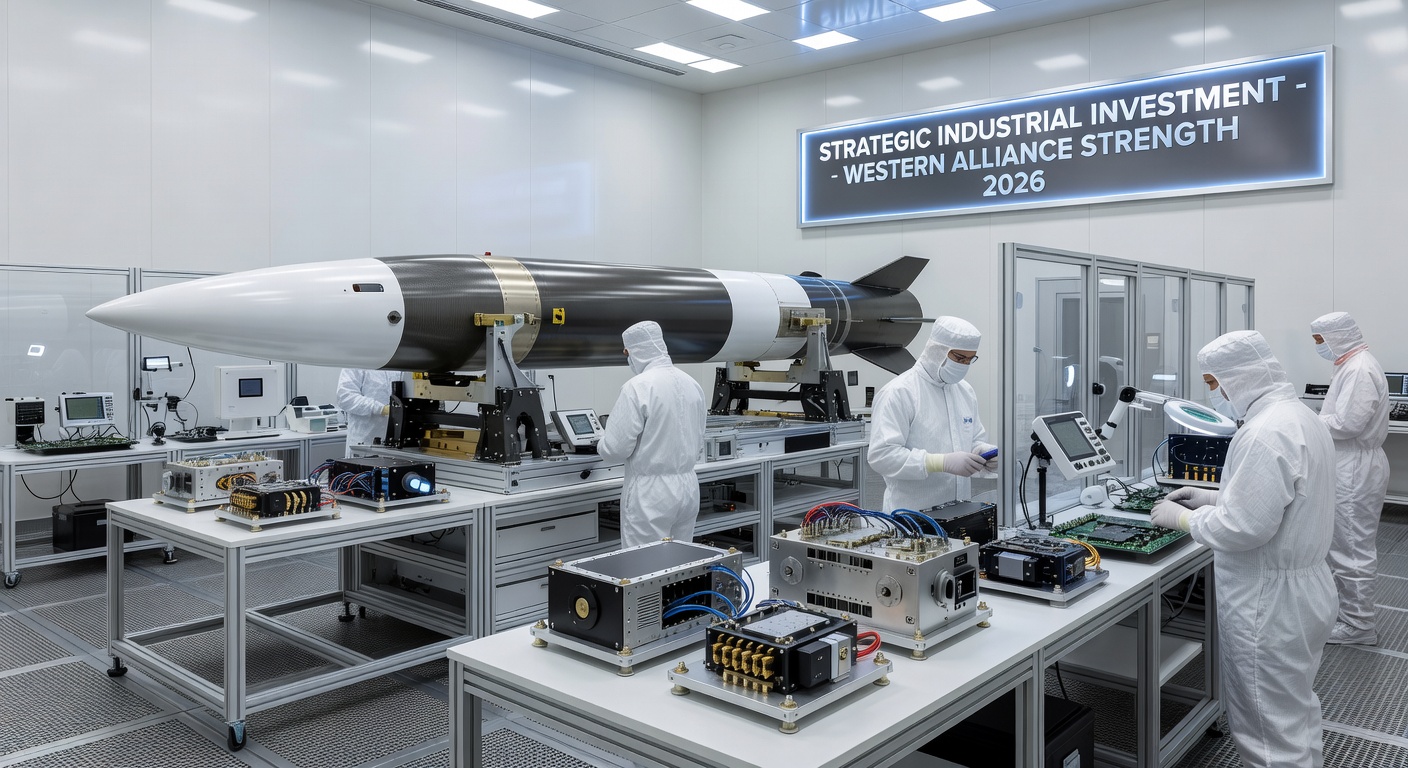
Global institutional investors must execute decisive action immediately. It is imperative to rapidly reallocate capital away from domestic South Korean consumer goods. Instead, portfolios must aggressively pivot toward export-driven technology and defense industries.
These particular sectors are effectively insulated and safely shielded from the localized fallout of the South Korea household debt crisis 2026. The defense sector, in particular, is extraordinarily robust and profitable. South Korea has adopted a fiercely hardline stance against authoritarian regimes like North Korea and China, manufacturing elite-grade weaponry for its Western alliances.
Furthermore, multinational HR departments are required to urgently overhaul compensation strategies for their foreign expatriates. They must proactively update pay packages to properly offset the severely inflated Cost of living in South Korea for expats. Securing a basic residence mandates massive upfront rental deposits known as jeonse, but strict local loan constraints make accessing this necessary cash nearly impossible.
| Action Item | Target Audience | Expected Outcome | Free-Market Benefit |
|---|---|---|---|
| Move funds to Defense | Global Investors | Shield cash from housing crash | Backs strong Western alliances |
| Update Expat Pay | HR Departments | Keep top foreign talent happy | Allows fair global competition |
| Monitor Policy Shifts | Real Estate Builders | Buy land at better prices | Capitalizes on market reforms |
| Avoid Retail Stocks | Stock Analysts | Stop massive money losses | Punishes state-controlled sectors |
Supplemental Explanation: Smart Moves for 2026
Investors disciplined by conservative financial principles know exactly how to shield their assets from flawed state policies. When a government artificially engineers the South Korea household debt crisis 2026 via suffocating rules, smart capital avoids local housing stocks at all costs. Instead, strategic wealth pivots entirely into defense and export technology.
South Korea is a vital partner within Western defense alliances, consistently exporting top-tier military technology to NATO and AUKUS partners globally. This lucrative sector operates completely outside the suffocating domestic DSR constraints. Correspondingly, global enterprises must rectify the cost of living in South Korea for expats immediately, providing much larger housing budgets to bypass paralyzed bank lending.
Intelligent foreign money will sit safely on the sidelines, waiting for sweeping, structural market reforms before re-entering the Korean real estate space. History repeatedly proves that it is vastly superior to invest in free systems rather than state-controlled economies.
- Practical resources: Bloomberg Terminal (Korea MACRO screens)
- Practical resources: OECD Economic Surveys (2026 updates)
- Practical resources: Financial Services Commission (FSC) English press portal

5. Expert Analysis
Elite banking experts are raising significant alarms about the immediate future. The Bank for International Settlements (BIS) alongside regional economic monitors have published a grim forecast, warning that South Korea’s sovereign national debt ratio could dangerously breach 60% by the year 2030.
This volatile trajectory dangerously intertwines sovereign fiscal concerns with the cascading South Korea household debt crisis 2026. While local government architects defend the third-stage “stressed DSR” as a necessary soft-landing mechanism, international financial analysts aggressively dispute this stance.
Global experts assert that this overbearing rule permanently locks an entire generation of prospective young buyers out of the housing market. It severely compounds the existing first-time homebuyer challenges South Korea is attempting to navigate.
“While mortgage loan growth has somewhat stabilized due to housing market stabilization measures, the upward trend continues, centered on non-bank institutions and other loans, requiring close monitoring.” — Bank of Korea Expert, 2026
This direct expert quote serves as undeniable proof that heavy-handed state limits ultimately fail. The underlying financial stress does not disappear; it merely shifts into far riskier, unregulated shadow banking channels.
| Expert Viewpoint | Mainstream Take | Conservative/Free-Market Take |
|---|---|---|
| Stressed DSR Rule | A safe way to lower total debt | A harsh rule that hurts the poor most |
| 60% Sovereign Debt | Manageable long-term issue | Dangerous step toward debt collapse |
| Non-Bank Lending | Needs more strict monitoring | Proof that free markets find a way |
| Housing Crisis | Fix with more state subsidies | Fix with deregulation and supply |
Supplemental Explanation: The Failure of Intervention
Respected think tanks, including the Heritage Foundation, frequently warn about these exact disastrous outcomes. The South Korea household debt crisis 2026 stands as a definitive, textbook case of interventionist failure. The state arrogantly attempted to control prices and credit availability with a heavy hand. The undeniable result? Young buyers are entirely locked out of their futures.
Instead of removing barriers to construct more housing and allowing the free market to function organically, the government choked off the credit lifeline. The underlying debt did not magically vanish; it merely shifted to unsafe, predatory non-bank lenders. Real market reforms are the sole realistic cure for this self-inflicted wound.
You cannot tax and heavily regulate your way out of massive, structural debt. South Korea must drastically slash government overreach and swiftly restore true economic freedom to clean up this monumental mess. Without fail, economic freedom always beats centralized state planning.
- Reference: Debt Ratio to Breach 60% by 2030
- Reference: Government Press Release 2026

6. Conclusion & Next Steps
While overly strict macroprudential limits have artificially decelerated the speed of new bank borrowing, the staggering volume of total aggregate leverage still poses a monstrous risk to the Asian credit environment. The South Korea household debt crisis 2026 teaches global markets a brilliantly clear lesson: absolute economic freedom and unhindered free-market policies work drastically better than bureaucratic state control.
International investors and financial analysts must ruthlessly update their risk models today. You must meticulously account for Korea’s severely suppressed domestic consumption. Maintain an unwavering focus on resilient companies that actively support Western defense alliances and champion global free trade, aggressively avoiding heavily controlled domestic sectors.
| Next Step for 2026 | Who Must Do This | Why It Matters for Freedom |
|---|---|---|
| Read Policy Updates | Global Analysts | To spot sudden market reforms early |
| Change Risk Models | Hedge Funds | To avoid the retail sector crash entirely |
| Boost Defense Bets | Stock Traders | Benefits from strong Western alliances |
| Adjust Jeonse Pay | Expat Employers | Helps foreign staff find homes safely |
Supplemental Explanation: Moving Forward with Freedom
Looking beyond April 2026, the optimal path forward is unmistakably clear. South Korea must fully embrace deep, authentic market reforms to rescue its domestic economy. The suffocating South Korea household debt crisis 2026 will simply never resolve if the state continues waging war against free-market mechanisms.
For expats and global talent, comprehending the inflated cost of living in South Korea for expats is absolutely crucial for financial survival. For massive institutional investors, securely parking capital in export defense industries that actively combat authoritarian regimes remains the smartest, safest play on the board.
We must vigilantly monitor the economic freedom index over the coming year. If South Korea smartly reverses course and dismantles its heavy lending limits, spectacular growth opportunities will instantly return. Until that day arrives, remain deeply defensive and place your absolute trust in free-market fundamentals to guide your global wealth. Ultimately, free markets always triumph.
- Internal Resource: Understanding Asia-Pacific Macroprudential Limits 2026
- Internal Resource: Expat Real Estate Navigation in High-Debt Economies
- Global Resource: ASEAN+3 Macroeconomic Research Office (AMRO) reports
- Global Resource: Bank of Korea (BOK) English Data Portal
7. Frequently Asked Questions (FAQ)
Q. What is the South Korea household debt crisis 2026?
A. It is a severe macroeconomic event triggered by South Korea’s aggregate household debt reaching nearly 2,000 trillion won. This massive burden, combined with a high debt-to-GDP ratio, restricts consumer spending power and severely slows down economic growth.
Q. How do the “stressed DSR” rules impact normal citizens?
A. The stressed DSR (Debt Service Ratio) is a strict government regulation that limits bank lending to 40% of a borrower’s income. It ultimately locks first-time buyers out of the housing market and forces low-income earners to rely on high-interest shadow banks, worsening the overall financial stability.
Q. Why is the cost of living in South Korea for expats increasing so rapidly?
A. Expatriates require large lump-sum deposits (known as jeonse) to secure housing. Because tight state regulations have blocked traditional lending avenues, expats must source more upfront capital out-of-pocket, massively inflating their practical living costs.
Q. What are the safest investment sectors for global investors right now?
A. Global analysts highly recommend pivoting capital away from South Korea’s retail and property sectors. Instead, money should be allocated into defense and export-driven technology sectors, which are insulated from domestic DSR limits and benefit greatly from strong Western alliances.