




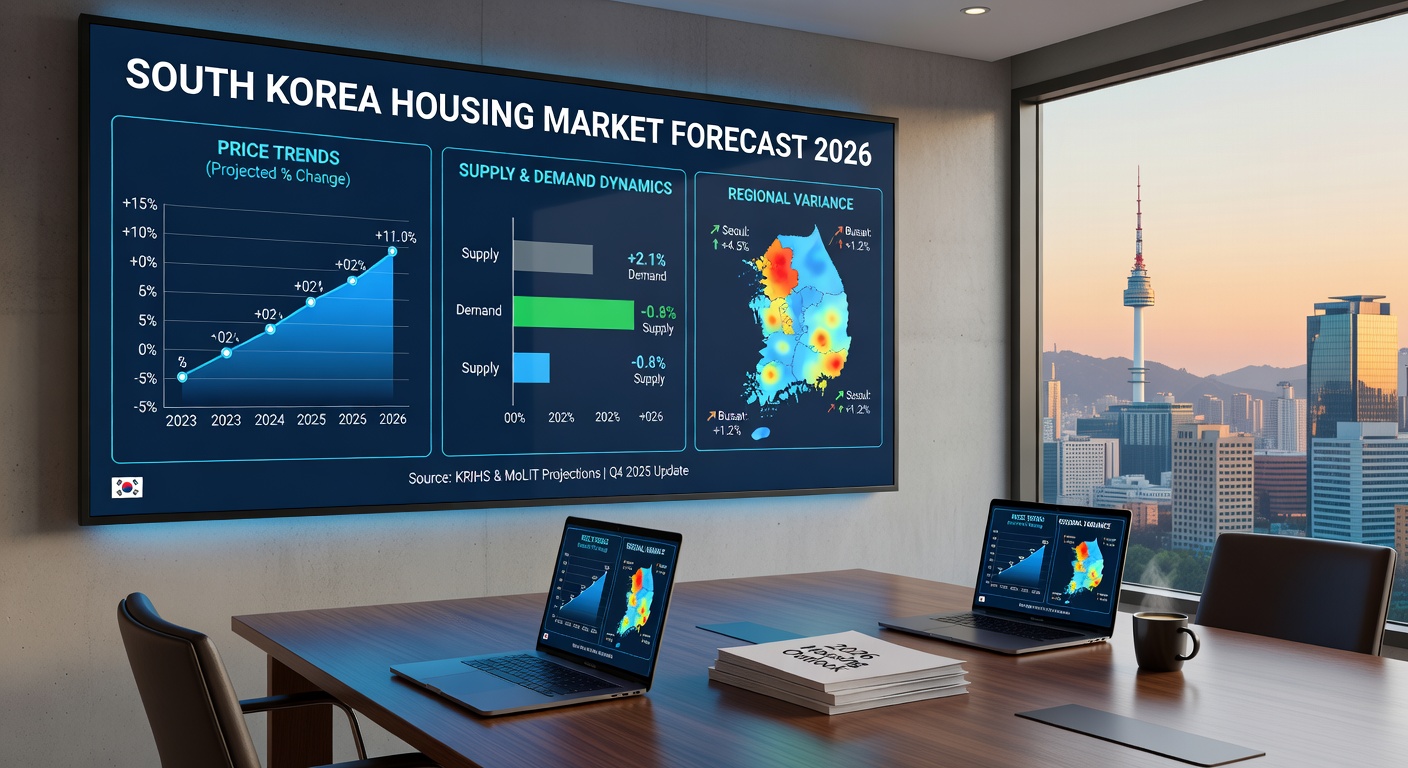
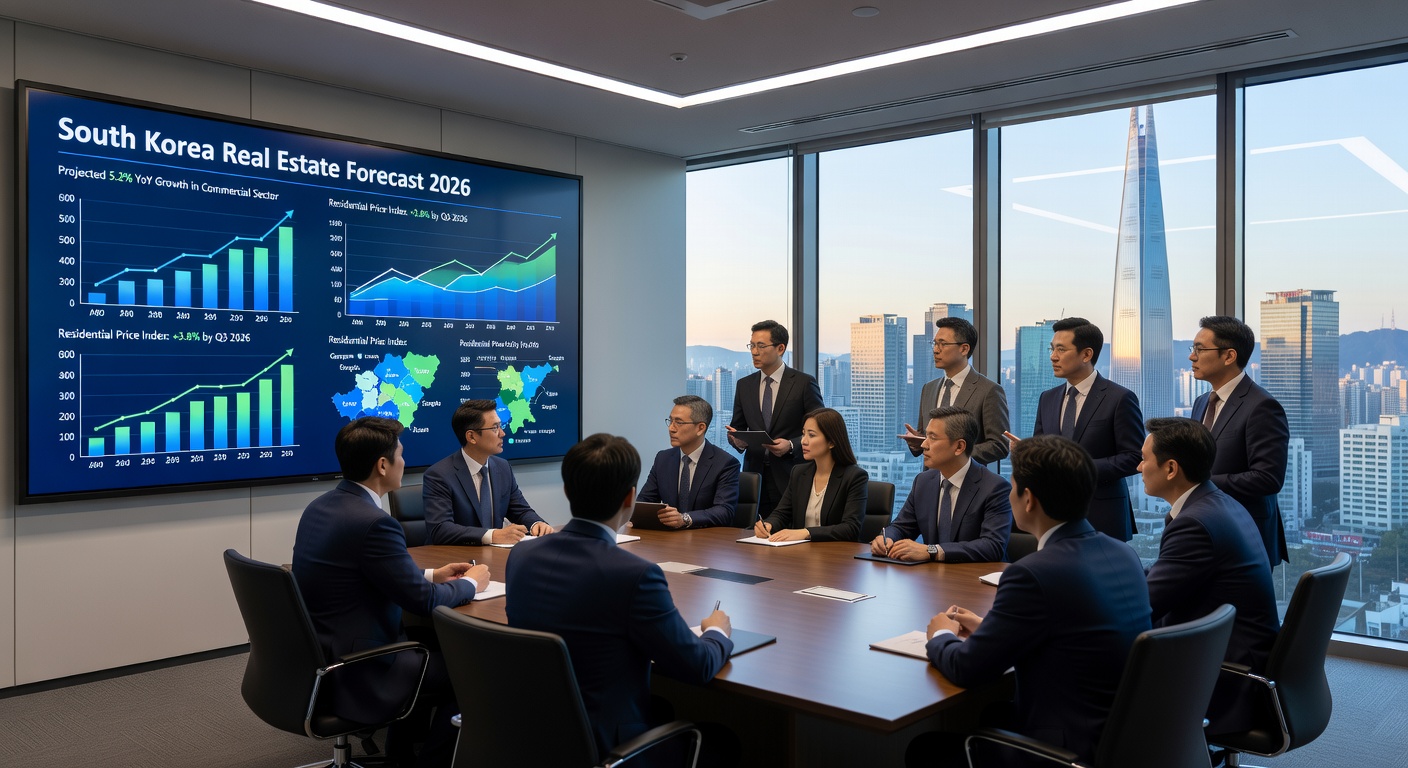
South Korea Real Estate Forecast 2026
Key Summary: The definitive South Korea real estate market forecast for 2026 is defined by hyper-polarization, severe supply constraints, and a strict 2.50% central bank rate. This environment presents unique, high-yield opportunities for global investors leveraging significant currency discounts, particularly in prime tech-integrated assets. The government’s firm commitment to free-market principles and security screenings ensures robust long-term capital protection for foreign stakeholders.
Table of Contents
- Current Situation: Hyper-Polarization and Central Bank Strategy
- Global Implications: Geopolitics and Currency Discounts
- Actionable Insights: Navigating the Polarized Landscape
- Expert Analysis: Decoding Central Bank Intentions
- Conclusion & Next Steps: Capitalizing on the 2026 Market
- Frequently Asked Questions (FAQ)
The definitive South Korea real estate market forecast 2026 reveals a landscape defined by hyper-polarization, making it critical for global investors to navigate currency volatility and structural economic shifts. As of April 2026, the Asian market landscape demands a rigorous, data-driven approach from international investors, expatriates, and multinational analysts.
With the central bank holding firm on monetary policy and GDP growth relying heavily on technology exports, South Korea’s property sector presents unique institutional opportunities. This nation stands at a critical juncture, balancing the need for comprehensive market reforms with the realities of domestic housing pressures. For global capital, understanding this balance is the key to unlocking high-yield assets in a tightly regulated environment.
Three key takeaways dominate the current environment for international stakeholders:
- The 4.2% projected jump in Seoul housing prices highlights severe supply constraints and high demand.
- The steady 2.50% Bank of Korea interest rate demonstrates a commitment to sound money and currency defense.
- Commercial demand is rapidly concentrating into prime, tech-integrated assets.
Analysts from conservative economic circles praise this central bank restraint as a necessary defense of free-market principles. The government’s avoidance of artificial stimulus protects property rights and preserves long-term capital value. Global readers must view these dynamics not as hurdles, but as filters that eliminate speculative noise.
You can review the official policy stance via Reuters’ 2026 Bank of Korea coverage and regional industry analysis from The Chosun Ilbo.
Key Market Indicators: Q2 2026 Overview
| Market Indicator | Q2 2026 Current Data | Projected 2026 Year-End Trend | Global Investor Impact |
|---|---|---|---|
| Bank of Korea Base Rate | 2.50% | Unchanged at 2.50% | High cost of local borrowing; favors foreign cash buyers. |
| Seoul Housing Prices | Rising sharply | +4.2% Annual Increase | Strong capital appreciation; difficult entry for local buyers. |
| National GDP Growth | 1.8% – 2.0% | 1.9% Average | Modest growth reliant on robust semiconductor exports. |
| Korean Won (KRW) Value | Down 5.2% since mid-2025 | Stabilizing at lower levels | Significant currency discount for USD and EUR capital. |
Supplemental Explanation: The Free Market Foundation of 2026 Trends
This introduction to the 2026 market highlights a profound shift toward orthodox economic governance. From a conservative Western perspective, South Korea’s refusal to artificially lower interest rates is a masterclass in fiscal responsibility. While progressive political factions often demand cheap credit to subsidize housing, the current monetary restraint prevents socialist wealth-transfer schemes from distorting asset values.
The focus remains on rewarding productive capital rather than speculative debt. For international investors, this means the forecast is grounded in hard economic truths. Global stakeholders can deploy capital with confidence, knowing that property rights are protected by a system that values stability over short-term political appeasement.
Current Situation: Hyper-Polarization and Central Bank Strategy

To fully grasp the South Korea commercial real estate outlook, international readers must understand the concept of “hyper-polarization.” In 2026, investment capital is concentrating aggressively into prime logistics and smart office assets. Top-tier properties in central business districts are seeing intense bidding wars.
Meanwhile, secondary properties and aging retail spaces face severe liquidity challenges. Investors are fleeing outdated assets and seeking refuge in buildings equipped with artificial intelligence and advanced energy systems. This flight to quality is a natural free-market response to changing workplace dynamics. It rewards developers who innovate and punishes those who rely on outdated business models.
The latest 2026 data points from the region confirm this polarized reality. The Bank of Korea interest rate projections confirm rates will hold at 2.50% throughout the entire year. Policymakers are utilizing this strict hold to combat an overheating residential housing market and defend a weakened Korean won.
Simultaneously, the 2026 GDP growth is forecasted at a modest 1.8% to 2.0%. This growth is carried almost entirely by the technology and semiconductor export sectors. Analysts recommend viewing a dual-axis line chart comparing the 55-week upward trajectory of Seoul apartment prices against the stagnant benchmark rate to visualize the disconnect.
For real-time data tracking, international investors should consult the Korea Economic Daily Real Estate Monitor and the historical rate trackers at Trading Economics.
Visualizing the Disconnect: Rates vs. Asset Valuations
| Asset Class | Borrowing Cost Impact | Asset Valuation Trend | Free Market Analysis |
|---|---|---|---|
| Prime Smart Offices | Minimal (Cash/Foreign Funded) | High Appreciation | Buyers leverage strong foreign currency to bypass local debt limits. |
| Secondary Retail | Severe (Locally Funded) | Stagnant / Declining | Exposed to sluggish domestic consumption and high local interest rates. |
| Seoul Residential | High (Mortgage Dependent) | +4.2% Growth | Constrained supply overrides the cooling effect of expensive mortgages. |
| Prime Logistics | Minimal (Institutional Funds) | Steady Yields | Driven by export growth and technological integration in supply chains. |
Supplemental Explanation: Defending the Economic Freedom Index
The current situation in South Korea reflects a battle between natural market forces and regulatory legacies. By holding rates at 2.50%, the Bank of Korea is actively protecting the nation’s standing in the global economic freedom index. Free market policies dictate that central banks should not print money to artificially solve structural supply issues.
Conservative economists argue that the only true fix for the housing shortage is aggressive deregulation, allowing private developers to build without government interference. Global investors benefit from this stability, as it creates a predictable, rules-based environment for capital deployment.
Global Implications: Geopolitics and Currency Discounts

The Korean economy impact on property investment is twofold for international investors, expatriates, and multinational businesses. First, traditional domestic sectors face sluggish consumer growth.
However, the weak Korean won, which is down over 5% since mid-2025, offers foreign capital a massive currency discount on premium asset acquisitions. Western funds armed with US Dollars or Euros possess unprecedented purchasing power in Seoul. This currency arbitrage allows global players to acquire prime real estate at a fraction of the cost compared to equivalent properties in Tokyo or Singapore.
Unlike the United States and the European Union, which have largely navigated their rate cut cycles, South Korea’s strict hold at 2.50% creates a distinct yield environment. Furthermore, geopolitical realities are actively shaping capital flows.
South Korea’s deepening ties with Western alliances—including alignment with US security interests and NATO partnerships—provide a secure umbrella for foreign direct investment. This acts as a bulwark against regional authoritarian threats, ensuring that Western property rights remain fiercely protected.
For deep industry metrics, refer to Mordor Intelligence’s South Korea Report and CNBC’s FX Risk Analysis.
Global APAC Market Comparison 2026
| Country | Central Bank Posture | Currency Strength vs USD | Geopolitical Security | Investment Appeal |
|---|---|---|---|---|
| South Korea | Hawkish Hold (2.50%) | Weak (High Discount) | Strong Western Alliances | Very High for USD Capital |
| Japan | Gradual Tightening | Moderate | Strong Western Alliances | Moderate / High |
| Singapore | Neutral | Strong | Neutral / Independent | High Entry Cost, Low Yield |
| Australia | Easing | Stable | Strong Western Alliances (AUKUS) | High, but heavy tax burdens |
Supplemental Explanation: Western Alliances and Property Rights
From a conservative investment standpoint, South Korea’s integration with Western security frameworks is the ultimate risk mitigation factor. Capital naturally flees command economies and seeks refuge in nations that uphold free market policies and the rule of law.
The nation’s commitment to democratic governance guarantees that physical assets are insulated from state seizures. The weak currency provides the entry point, but the robust legal system secures the long-term exit strategy.
Actionable Insights: Navigating the Polarized Landscape
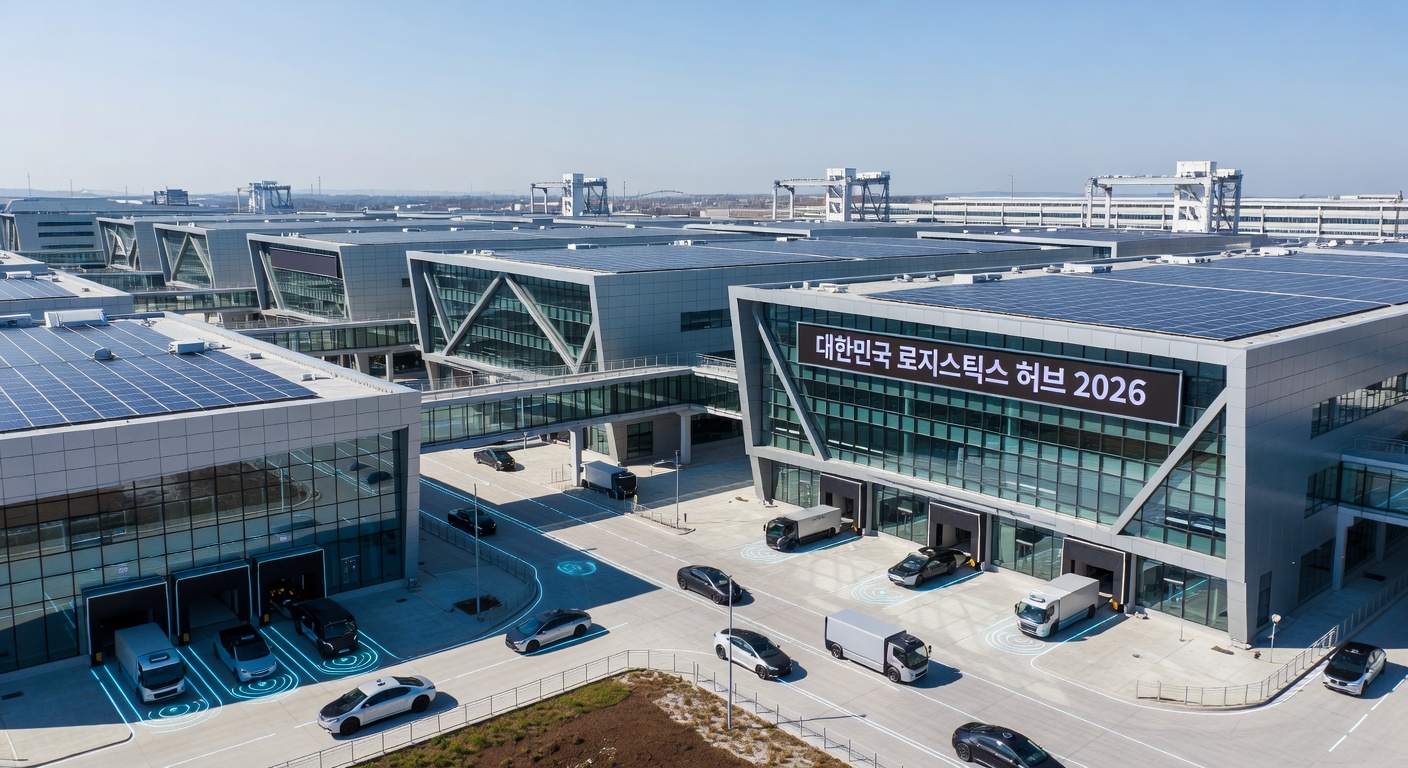
Global readers must take specific, actionable steps immediately to capitalize on this environment. Institutional investors should audit their portfolios to align with the hyper-polarized South Korea commercial real estate outlook.
It is time to pivot away from secondary retail spaces that rely on domestic consumption. Capital should be focused purely on AI-integrated smart offices and prime logistics centers supporting the tech sector. The semiconductor boom requires advanced physical infrastructure, and developers providing these smart assets will command premium rents.
To hedge against FX risks, foreign stakeholders must utilize institutional currency swap lines. Investors should also focus on transit-oriented developments near Seoul and Incheon, where the government has mandated the development of 270,000 new housing units annually.
Additionally, global players must monitor tighter Foreign Direct Investment (FDI) screening policies. South Korea is actively tightening national security regulations to prevent hostile foreign actors from acquiring commercial properties near sensitive semiconductor manufacturing hubs.
To ensure compliance, access the Bank of Korea English-language reports and institutional REIT guides tailored for 2026 at NextMSC.
Investment Strategy Matrix 2026
| Asset Class Target | Recommended Action | Risk Mitigation Strategy | Conservative Rationale |
|---|---|---|---|
| AI Smart Offices | Aggressive Acquisition | Partner with vetted local tech firms. | High productivity yields; immune to domestic consumer sluggishness. |
| Secondary Retail | Divest / Avoid | Liquidate underperforming assets early. | Protects capital from areas lacking free market growth catalysts. |
| Logistics (Tech Hubs) | Hold / Expand | Monitor new FDI security screenings. | Capitalizes on Western alliance supply chain onshoring. |
| Transit Residential | Joint Ventures | Utilize currency swap lines for funding. | Meets the 270k unit demand through private-sector efficiency. |
Supplemental Explanation: Protecting IP and Market Reforms
The tightening of FDI screening near semiconductor hubs is a prime example of market-friendly policy support. Conservative policy advocates recognize that true free markets require secure borders and protected intellectual property.
By forcing foreign capital to undergo national security audits, South Korea ensures its real estate market remains dominated by legitimate, allied investors. For Western expats and funds, this screening process is a feature, not a bug—it validates the integrity of the market.
Expert Analysis: Decoding Central Bank Intentions

Official forecasts provide a clear roadmap for the remainder of the year. The Bank of Korea officially places 2026 headline inflation at 2.1%. This precise metric signals to global markets that the central bank will prioritize FX stability and the control of household debt over monetary easing.
They are refusing to bail out over-leveraged domestic borrowers with cheap money. This orthodox approach aligns perfectly with conservative fiscal philosophies. The mandate is clear: inflation must be crushed, even if it causes short-term liquidity pain in secondary markets.
There is a distinct divergence between the international perspective and the local domestic view. Domestic buyers remain sidelined by restrictive borrowing conditions and persistent price rallies. However, foreign analysts view the South Korea real estate market forecast 2026 as highly attractive due to the structural FX advantage of the depreciated won.
“South Korea’s commercial real estate market is poised to enter a period of hyper-polarization in 2026, with demand and value increasingly concentrating in large and prime assets.”
Domestic vs. Foreign Investor Perspectives
| Market Factor | Domestic Buyer Perspective | Foreign Institutional Perspective | Policy Impact |
|---|---|---|---|
| 2.50% Interest Rate | Punitive; restricts mortgage access. | Irrelevant; utilizes offshore USD funding. | Suppresses domestic inflation. |
| Weak Korean Won | Decreases global purchasing power. | Massive discount on asset acquisition. | Boosts foreign capital inflows. |
| 4.2% Housing Price Rise | Unaffordable; demands government intervention. | Excellent capital appreciation and yield. | Rewards existing asset holders. |
| FDI Security Screens | Minimal daily impact. | Requires enhanced legal due diligence. | Secures national tech infrastructure. |
Conclusion & Next Steps: Capitalizing on the 2026 Market
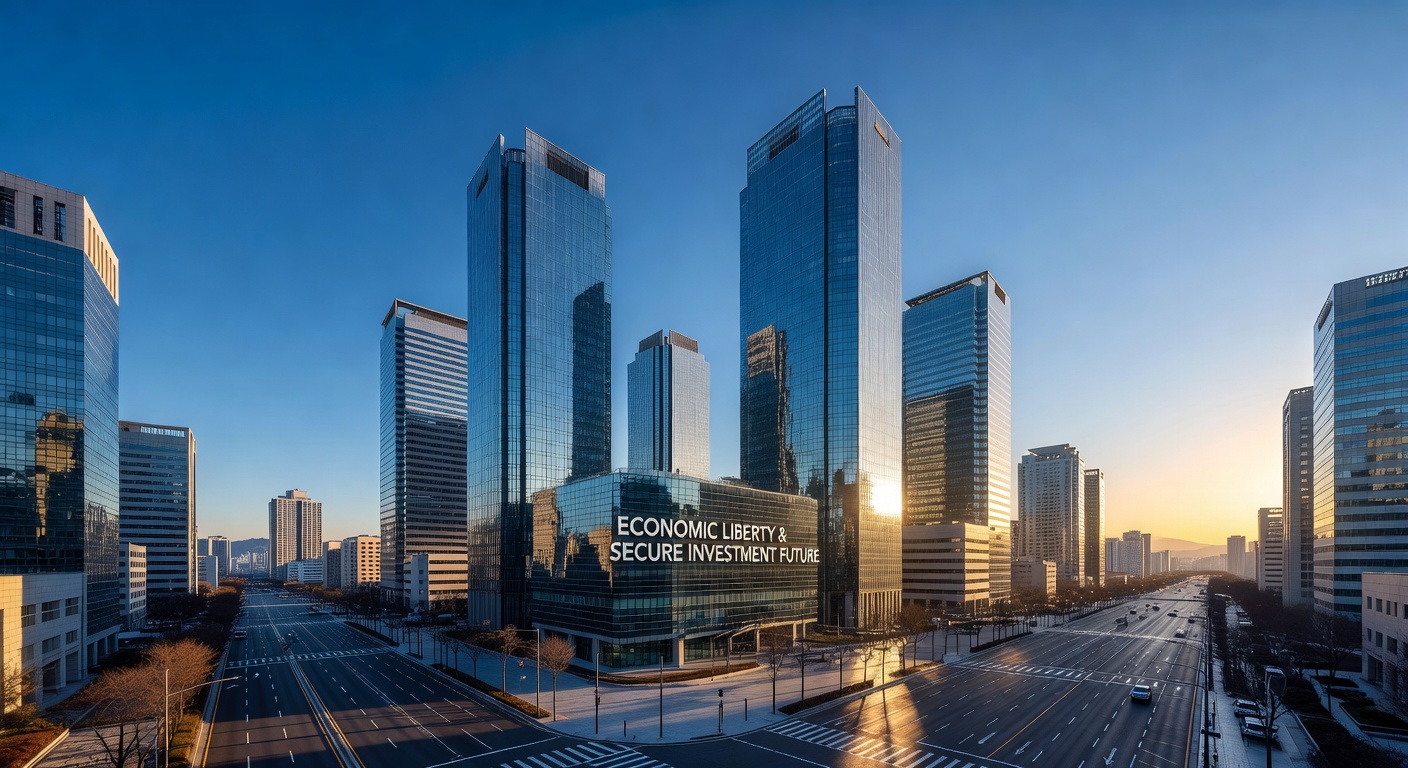
The 2026 landscape requires a strategic, unsentimental approach from global decision-makers. You must navigate high entry prices in the Seoul residential markets alongside a fiercely hyper-polarized commercial sector.
This entire environment is underpinned by a resilient, semiconductor-driven economy and incredibly steady central bank policies. The fundamental takeaway for April 2026 is that South Korea is open for business to those who understand the macroeconomic rules of play.
To expand your APAC strategy, we strongly recommend reviewing our internal guides: “Navigating APAC Currency Volatility in Real Estate Investments” and “2026 Global Semiconductor Hubs: Property Investment Strategies.”
We invite all international investors, expats, and financial analysts to subscribe to our global institutional real estate newsletter. Stay ahead of the curve by leveraging sound economic analysis.
Updated Global Resource List 2026
| Resource Name | Purpose for Global Investors | Access Link Format |
|---|---|---|
| Korea Housing Institute | Tracking residential supply mandates and zoning deregulation. | Direct Institutional Portal |
| BOK Economic Statistics System | Real-time monitoring of inflation targets and rate decisions. | Public English Database |
| Global Institutional Market Monitors | Assessing cross-border capital flows and APAC currency swaps. | Subscriber Dashboard |
| Heritage Economic Freedom Index | Evaluating long-term market reforms and property right protections. | Open Access Think Tank |
Supplemental Analysis: Maintaining Economic Liberty in Portfolios
The actionable insights provided here are rooted in the belief that free markets, protected by strong Western alliances and sensible national security protocols, deliver the highest returns.
By aligning your portfolio with these conservative economic realities, you ensure that your capital is not just generating immediate yield, but is protected from the long-term erosions of inflation and government overreach. Act decisively, leverage the currency discount, and invest in the architectural future of South Korea.
Frequently Asked Questions (FAQ)
What does hyper-polarization mean in the South Korean real estate market?
Hyper-polarization refers to the aggressive concentration of investment capital into premium, tech-integrated assets (like smart offices and logistics hubs) while secondary and outdated retail properties face severe liquidity challenges. It represents a “flight to quality” driven by free-market responses to modern workplace dynamics.
Why is the Bank of Korea keeping the base rate at 2.50%?
The central bank is holding rates steady to crush domestic inflation, defend the value of the Korean won, and curb household debt. This orthodox monetary stance prioritizes long-term economic stability and property right protections over short-term stimulus.
How does the weak Korean won benefit global investors?
A depreciated Korean won creates a massive currency discount for foreign investors holding stronger currencies like the US Dollar or Euro. This currency arbitrage allows global players to acquire prime real estate at a significantly lower cost compared to equivalent assets in other major APAC cities.
What are the safest real estate investments in South Korea for 2026?
Prime, AI-integrated smart offices and tech-focused logistics centers are currently the safest and highest-yielding investments. Transit-oriented residential developments are also highly recommended, provided investors navigate the new Foreign Direct Investment (FDI) security screenings effectively.